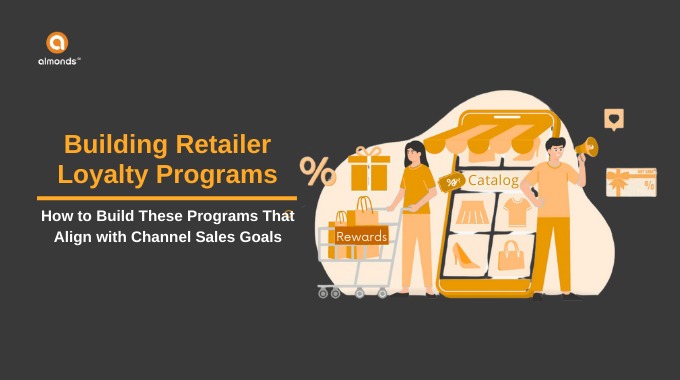

Retailer loyalty programs of retailers have developed way beyond the points and rewards. In a B2B ecosystem, i.e., brands are closely relying on retailers, distributors, and dealers, the retailer loyalty programs should not simply promote participation.
They should directly facilitate channel sales objectives, including increased sell-out, increased product visibility, order consistency, and retention of partners.
In cases where the brands have indirect sales channels, it is not an option anymore to align loyalty programmes with the sales results that are measurable.
Know Your Channel Sales Goals First
Prior to the development of any retailer loyalty programs, it is important to understand the channel sales objectives. Do you want to do more secondary sales? Push specific SKUs? Enhance market penetration in some of the regions? Get less reliant on discounts?
Once the loyalty programmes are constructed without any clear goal, they usually become cost centres instead of growth drivers. Effective B2B loyalty programmes begin with mapping incentives to results such as volume increase, assortment growth, purchase frequency, or quality of execution of the market.
Segment Retailers on Business Value
Retailers do not all perform equally on the channel. One-size-fits-all loyalty strategies are not very effective with B2B. The brands can tailor the loyalty journeys by segmenting retailers according to sales volume, location, category focus, and growth potential.
As an illustration, top retailers can be inclined towards exclusive rewards or experiential benefits, whilst up-and-coming retailers can better react to milestone-based rewards. The segmentation will enable the retailer loyalty programmes to back differentiated sales policies instead of generic involvement.
Link Rewards Directly to Desired Sales Behaviour
Rewarding activity rather than impact is one of the greatest errors made in retailer loyalty programmes. With B2B, rewards must be based on behaviours that affect channel sales, e.g., meeting monthly sales targets, selling priority products, recruiting new outlets or sell-through.
Loyalty programmes should be a performance tool, not a passive scheme, when the retailers can clearly see the relation between action and reward. This alignment will ensure that all incentives expended will lead to wider channel sales objectives.
Go Beyond Discounts and Cash Incentives
Although discounts may be effective in stimulating short-term volume, they do not tend to create long-term loyalty. Contemporary loyalty schemes of retailers revolve around additional incentives like digital vouchers, business aid, access to training, or dream experiences.
These non-cash rewards help brands to be distinct in the saturated markets and to minimise competition based on prices. More importantly, they foster emotional loyalty – this makes retailers give priority to one brand over another even in the case of similar margins.
Performance Tracking and Optimisation
The key issue with the indirect sales model is the data visibility. Digital-first retailer loyalty programs help brands in getting real-time information about the activity of retailers, redemption trends, and sales performance.
The appropriate analytics will help the brand to see what is working, what incentives are producing results, and where the engagement is faltering. The fact-based practice will enable it to keep on optimising, as the retailer loyalty programs will be in line with changing channel sales priorities.
Digitise the Loyalty Experience.
Paper schemes, manual schemes, and rewarding schemes that are delayed decrease trust and participation. The digitised loyalty programmes of retailers provide channel partners with transparency, quicker gratification, and smooth interaction.
The mobile-friendly platforms enable the retailers to monitor the advancement, earn rewards, and keep in touch with the brand. To the brands, digital systems offer superior control, scalability, and compliance in large channel networks.
Align Internal Teams Around the Programme
To make the retailer loyalty programmes really count on the channel sales, there must be internal alignment. The teams of sales, marketing, and channel management should collaborate to set the targets, preach programme benefits, and support ground participation.
Loyalty initiatives are integrated into the day-to-day channel activities and not operated as isolated programmes when field teams actively stimulate the programme and connect it to the sales discussions.
Build Long-Term Partnerships, Not Short-Term Wins
The best retailer loyalty schemes are based on relationships as opposed to rapid payoffs. The most important element of maintaining the engagement with the time is consistency, transparency, and relevance.
The brands can form partnerships that will achieve long-term growth rather than short-term bursts by aligning the loyalty programmes with long-term channel goals like market expansion, brand advocacy and retention of retailers.
Final Thoughts
The loyalty programmes in the retailers today in its competitive business-to-business environment should not be reward practices but rather be strategic facilitators of channel sales. They can change the engagement and growth of brand channel networks when strategised with clear goals, data-driven understanding, and proper technology.
Almond Ai focuses on creating smart, scalable B2B customer loyalty programmes that are designed to meet the needs of retailers, distributors and channel partners – an effort to align incentives with actual sales performance and growth over time.
Ready to turn your retailer loyalty program into a channel growth engine? Partner with Almond Ai today.