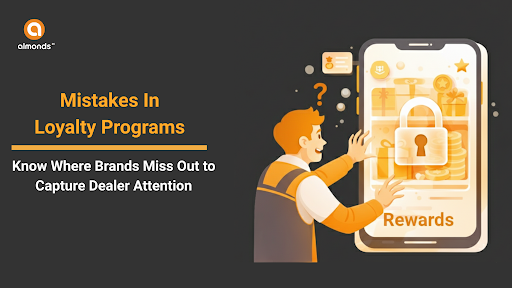

Price margins are no longer enough to win the loyalty of dealers in the modern competitive B2B environment. The dealers get more options and more brands to deal with and have more expectations than ever. An effective loyalty program for dealers may serve as a strong driver of growth: achieving repeat purchases, greater sell-through, and enduring channel relationships.
Yet, a lot of brands invest in loyalty program for dealers, but the participation is low, the engagement is weak, or the ROI is low. It is not the concept of loyalty but the performance. The most typical pitfalls brands commit when creating loyalty programs for dealers and how B2B-oriented businesses can evade them are listed below.
- Dealer Loyalty as Consumer Loyalty
There is one of the biggest errors made by brands that imitate the B2C loyalty models and implement them for dealers. Dealers are not final consumers. Their incentive is profitability, ease of doing business, stock turnover, and brand assistance, but not emotional payoffs or generic discounts.
An effective loyalty program for dealers should be in line with business results that include increased order value, quicker stock turnover, broader product implementation, and market growth. Any program that does not acknowledge such B2B realities becomes irrelevant very fast.
- Giving Irrelevant or Low-Value Rewards
The other mistake made is to reward using the lures that do not appeal to dealers. Business-unrelated generic vouchers, low-value gifts, or rewards do not tend to encourage regular engagement.
Successful loyalty programs for dealers provide the generous rewards of quality merchandise, digital wallets, business tools, travel, or experience rewards. Loyalty becomes strategic when the dealers perceive the value of the transaction.
- Absence of Personalization by Dealer Group
Not all dealers are the same. Rewarding a distributor who performs high and a small retailer with the same reward system is limiting the effectiveness of the program. Brands fail to capture a chance of segmenting dealers by performance, region, product mix, or growth potential.
A contemporary loyalty program for dealers must utilize information to target and incentivize individuals. Customized challenges, differentiated rewards, and role-specific rewards sustain all categories of dealers, without turning away smaller ones.
- Disregarding Digital Enablement
Delayed reward updates, offline communication, and manual tracking are among the key areas of friction in conventional loyalty programs for dealers. Trust and interaction wane when dealers are not able to monitor their progress in real time.
Online-only loyalty programs allow visibility, automatic reward tracking, and redemption. Brands that do not use technology-based loyalty systems might lag behind the competitors who provide a more transparent and smooth experience.
- Weak Communication and Intermittent Interaction
Most brands repeat the error of launching the program and hoping dealers will remain interested for life. Regular communication is crucial, i.e., a notification, a dashboard, a progress update, and campaign reminders. A dealer loyalty program has to be high-minded, keeping the focus on goals and the wins to keep the momentum going throughout the year.
- Failure to Align Loyalty with Business Objectives
Other loyalty programs for dealers are addressed on an isolated basis with the core sales and channel strategies not being linked. Incentives that are not tied to brand priorities, including new product releases, market penetration, or clearing inventory, provide minimal impact.
Effective loyalty programs for dealers are directly associated with quantifiable business KPIs. All incentives must lead to a specific result, whether it be a higher share of shelf, better sell-through, or lessening channel conflict.
- Absence of Performance Measurement and Optimization
Loyalty initiatives do not necessarily allow the brands to monitor their performance. It is impossible to know what works and which dealers are active and where there should be improvements without analytics.
A dealer loyalty program based on data is a real-time analytics-based system that optimizes campaigns, rewards, and ROI. The regular optimization is used to make sure it continues to change according to the market requirements and the expectations of the dealer.
Creating Smarter Dealer Loyalty Programs
To prevent such errors, it is necessary to use a technology-driven and strategic approach aimed specifically at B2B channel partners. Loyalty does not mean doing more, but rewarding the correct behaviors, at the correct time, and in the correct manner.
We have a focus on intelligent, scalable loyalty programs at Almond Ai for dealers, retailers, and distributors. Our AI-enabled platform simplifies the process of brands creating custom incentives, real-time performance tracking, and churning channel growth through a smooth online experience.
Create a loyalty program for dealers with Almond AI and make a real leap in your channel.