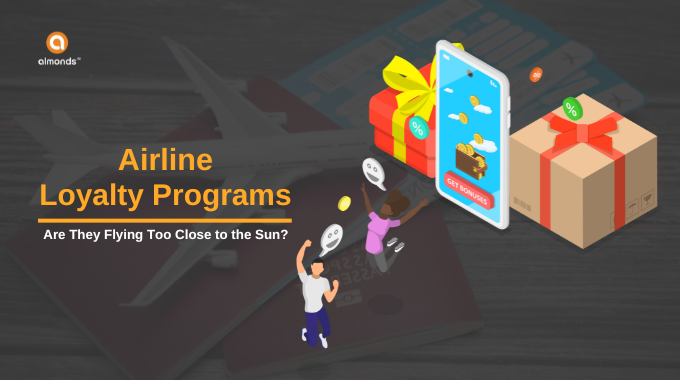

In 2025, the true currency of airlines isn’t airfare—it’s loyalty.
From first-class upgrades to “free” flights, airline loyalty programs were once seen as a traveler’s golden ticket. But today, they’ve evolved into financial juggernauts that are less about rewarding frequent flyers and more about raking in revenue from swipe-happy cardholders. As airlines turn into what one expert calls “credit card companies with wings,” it’s time to ask—are these loyalty programs still working in favor of the customer, or are they quietly losing altitude?
The Rise of the Mile Machine
Airline loyalty programs were born in the 1980s, revolutionizing how carriers kept fliers loyal. Fast forward to now; 82% of travelers globally are enrolled in at least one airline loyalty program, and more than half the points earned are no longer from flying, but from credit card spending. Delta SkyMiles alone boasts over 120 million members. Delta, American, United, and Southwest collectively make over $25 billion annually from their loyalty programs.
Let that sink in, airlines are now profiting more from selling miles than from flying planes. For example:
- Delta made $7.4B from loyalty in 2024 (12% of total revenue)
- American earned $6.1B (11.3%)
- United pulled in $2.9B (5%)
- Southwest clocked $2.2B (8%)
How the Game Works
Here’s the flywheel:
Airlines Sell Points to Banks → Banks Offer These Points to Cardholders → Customers Spend & Earn → Airlines Get Paid Upfront.
Then, when customers redeem those miles, the cost to the airline is often far less than what they earned originally.
In theory, it’s a win-win-win. But in practice? It’s murky. Redemption rules keep changing, points get devalued, and customers find their “free flight” dreams grounded by limited inventory or blackout dates. And let’s not forget – airlines benefit every time a point goes unused. Southwest, for instance, holds $4.8B in unused points; Delta’s balance sheet carries $9B.
From Loyalty to Liability
Airline points are now more like IOUs created out of thin air, and they come with fine print. Carriers can (and do) change redemption values without warning. They limit seat availability, restrict lounge access, increase credit card fees, and shift to spend-based status models, making it harder than ever for the average traveler to “win.”
Just in the past year:
- Delta and United hiked credit card annual fees (by up to ₹20,000 in some cases)
- Delta restricted Sky Club access and made status harder to earn
- United introduced perks that felt more like coupons than loyalty rewards
Despite that, airlines still saw massive loyalty-based revenue gains. Delta’s loyalty revenue jumped 7% YoY, United grew 9.4%, and even without profits, loyalty propped up quarterly earnings.
The Problem?
In 2018, McKinsey estimated that 30 trillion airline miles were unused. That’s billions of dollars in liabilities airlines don’t have to pay out. Many customers, especially occasional travelers, never rack up enough points to redeem meaningfully. Even for seasoned flyers, constantly changing redemption values mean your miles could be worth less tomorrow than they are today.
So, while you’re dreaming of a business class trip to Paris, your points are quietly collecting dust and padding the airline’s bottom line.
The Future is Financial Engine or Consumer Trap?
Airline loyalty programs aren’t going away. If anything, they’re becoming the backbone of airline profitability, especially in times of low-ticket sales or market downturns. But they’re no longer just about rewarding your loyalty, they’re about monetizing it.
And that’s sparked a reckoning.
The US Department of Transportation is now investigating major US carriers for potentially deceptive or anticompetitive practices related to loyalty programs. Even as airlines defend their models, the core question remains: are loyalty programs still working for the traveler, or just for the balance sheet?
What Indian Brands Can Learn
For Indian travel, hospitality, and retail brands building or scaling their own loyalty ecosystems, the airline playbook is both a cautionary tale and a strategic benchmark:
- Prioritize transparency in point value and redemption rules
- Avoid over-promising and under-delivering
- Balance financial gain with genuine customer value
- Make loyalty a lever for long-term trust, not short-term cash flow
Final Boarding Call
Loyalty shouldn’t feel like a trap. For it to work, customers must trust that their points mean something, and brands must resist the urge to turn loyalty into a game of hide-and-seek.
Because in the end, the most valuable currency isn’t points. It’s trust.