
A channel partner can be active in a loyalty program without being loyal to the brand.
They may register, earn points, redeem rewards and participate in campaigns. But when another brand offers better margins, stronger support, easier processes or a more relevant proposition, that same partner may quickly shift attention.
This creates an important gap between program participation and genuine channel loyalty.
A recent channel partner engagement study covering more than 700 partners across six industries in India found that only 22% of channel partners were classified as engaged. The remaining partners fell into categories reflecting weaker relationships with the brands they represented.
Only 22% of surveyed channel partners were classified as engaged.
For brands investing in channel loyalty programs, this raises a more important question than how many partners have enrolled:
Are partners becoming more committed to the brand, or are they simply becoming better at using the rewards program?
The distinction matters because channel loyalty is not created by points alone. It develops through the complete experience a dealer, distributor or retailer has with a brand.
Participation Is Not the Same as Channel Loyalty
Enrollment is one of the easiest loyalty metrics to measure.
Brands can track registrations, active users, points earned, campaigns completed and rewards redeemed. These numbers are useful, but they do not necessarily tell a brand whether partners prefer it over competing brands.
A partner can be highly active because the rewards are attractive. Another may participate because the program is linked to purchases they were already planning to make. A third may genuinely prefer the brand and actively recommend it to other businesses.
All three can appear as “active partners” in a conventional loyalty dashboard.
This is why channel loyalty needs to be viewed through more than program activity. A stronger assessment considers satisfaction, preference, engagement and behaviour together.
Participation tells you that a partner is active. It does not tell you why they are active.
That difference becomes particularly important in multi-brand channel environments, where retailers and dealers often have several brands competing for their attention.
The 49% Problem: Partners Can Stay Without Feeling Satisfied
One of the most revealing findings from Indian channel-partner research is the size of the “Trapped” partner segment.
Around 49% of surveyed channel partners were classified as Trapped—partners who showed preference for a brand but were not sufficiently satisfied with the overall relationship.
This is an important warning for channel leaders.
A partner can continue working with a brand because it has strong consumer demand, established distribution, good product acceptance or simply because switching suppliers creates additional effort. Continued business therefore does not automatically mean the relationship is healthy.
The danger is that brands can mistake relationship inertia for loyalty.
A partner may stay today because leaving is inconvenient. That does not mean the partner will remain when a competitor provides a better experience or a stronger commercial proposition.
49% of surveyed channel partners fell into the “Trapped” relationship category.
This is where a channel loyalty program can play a much larger role. Instead of simply rewarding transactions, it can help brands understand partner behaviour and identify where the relationship is becoming weaker.
The Channel Partner Experience Is Bigger Than the Loyalty Program
A loyalty platform is only one touchpoint in a partner’s relationship with a brand.
For a retailer, the experience may include ordering, product availability, sales representative interactions, scheme communication, claims, billing, training, incentives and after-sales support.
For a distributor, it can extend to inventory planning, sales targets, market support, product information, claims and commercial processes. The loyalty program sits inside this larger ecosystem.
Industry research identifies operational excellence, rewards and incentives, recognition, learning, brand affinity, communication, well-being and events as important drivers of channel partner engagement.
This provides an important perspective for brands. Rewards remain important. But the partner’s perception of the brand is shaped by many interactions outside the rewards catalogue.
A strong reward cannot permanently compensate for a difficult business relationship.
Operational Friction Can Undermine a Good Loyalty Program
Consider the experience from a retailer’s point of view.
The retailer already manages customers, inventory, payments, staff and multiple suppliers. If participating in a loyalty program requires repeated documentation, complicated claims or uncertainty about reward eligibility, the program creates another task to manage.
Recent industry research into channel loyalty found that 46% of organisations surveyed reported low channel-partner engagement. Complicated reward redemption, poor program communication, manual incentive processing and inadequate system integration were among the challenges identified.
A loyalty program should reduce friction for the channel partner, not create another administrative process.
This is why program design cannot focus only on earning mechanics.
The partner should be able to understand what they need to do, how they are progressing, and what they can receive without repeatedly seeking assistance from the sales team.
The simpler that journey becomes, the easier it is for the program to become part of normal channel behaviour.
Rewards Create Participation. The Experience Creates Preference.
It would be a mistake to argue that rewards are no longer important.
They are.
Research into channel partner preferences has found strong satisfaction with several reward categories, including travel, luxury and business-related rewards. Travel rewards, for example, received a satisfaction score of 68% among surveyed partners.
The important point is that reward value and relationship value are not the same thing.
A retailer may join because the reward is attractive. They may remain active because the earning opportunity is worthwhile. But stronger preference develops when the overall relationship consistently makes it easier and more valuable to work with the brand.
This is why simply increasing the incentive budget may not solve a loyalty problem. If competing brands keep increasing their incentives, partners can become loyal to the best offer, rather than to the brand itself.
Communication Can Be Frequent Without Being Relevant
Many brands communicate regularly with their channel partners but still struggle with engagement.
The problem is often not communication volume. It is relevance. A channel partner does not necessarily need more messages. They need the right information at the right time and through a channel they actually use.
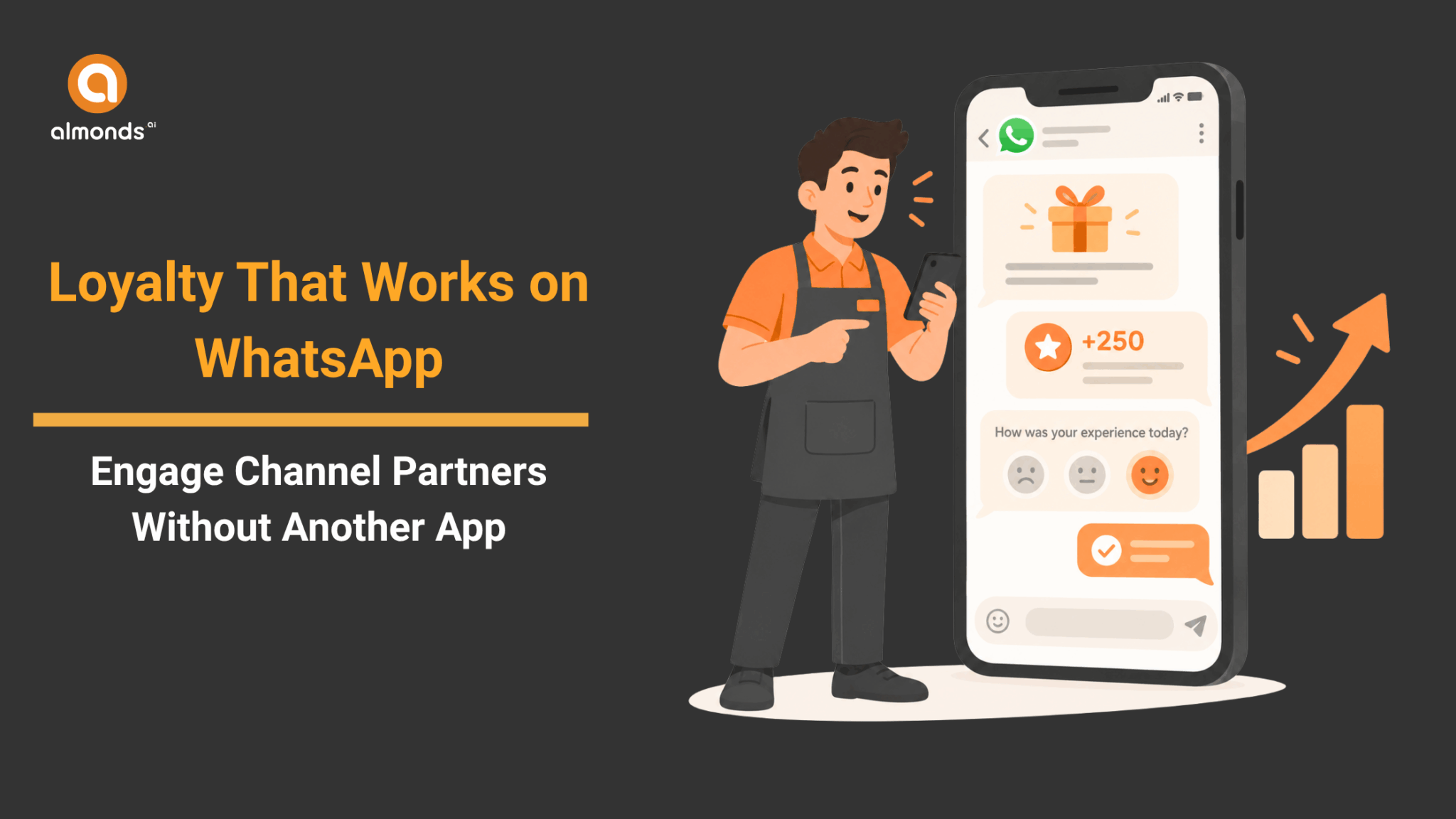
Research involving Indian channel partners found that 78% preferred voice calls for brand communication, while 50% preferred messaging platforms such as WhatsApp, 42% preferred SMS and 37% preferred email.
78% of surveyed channel partners preferred voice calls for brand communication.
The same research found that two out of three channel partners use mobile apps for business purposes.
These findings should not be interpreted as a choice between offline and digital communication. Instead, they show why brands need to understand the communication habits of different partner groups. A retailer approaching a sales target may need a different message from a distributor receiving a new-product update.
The objective should be useful communication, not simply frequent communication.
One Channel Does Not Mean One Partner Experience
A channel network may contain thousands of businesses, but those businesses do not necessarily have the same motivations.
A high-performing dealer may value premium rewards and recognition. A developing retailer may need product education and achievable milestones. An inactive partner may need a simple reason to re-engage.
Giving all of them exactly the same journey can reduce relevance.
Research into channel partner engagement has found differences in the relative importance of engagement drivers across partner types and industries. For example, recognition has strong relevance among retailers, while learning is particularly important for distributors and in categories such as agriculture and building and construction.
This is where partner segmentation becomes important.
Personalisation does not mean creating a completely different loyalty program for every partner. It means changing the message, incentive, learning content or engagement journey according to the partner’s role and behaviour.
Recognition Is More Than Another Reward
Most loyalty programs are good at telling partners what they have earned. Fewer are equally good at telling partners that the brand has noticed their contribution.
Recognition can be connected to sales performance, improvement, consistency, product adoption, learning, or participation. It can also take forms that do not involve direct monetary rewards.
This matters because many channel programs naturally concentrate attention on their largest sellers.
A smaller retailer may never qualify for the highest sales slab. But that retailer could still be recognised for achieving a significant improvement, completing product training or becoming an active advocate for a priority product.
Recognition creates another path to engagement.
Not every partner needs to be the biggest seller to feel like a valuable partner.
A more inclusive recognition structure can therefore make a loyalty program relevant to a broader portion of the network.
Learning Can Turn Loyalty Into Channel Enablement
Loyalty programs traditionally ask a simple question:
What did the partner buy?
A more mature program can also ask:
What does the partner know?
Product education can be particularly valuable in categories where product knowledge influences recommendation and sales.
A retailer who understands a new product may be more confident recommending it. A distributor who understands product applications may be better equipped to support downstream sales. An agricultural channel partner may benefit from seasonal product and application knowledge.
Research into Indian channel engagement identifies learning as an important driver and shows particular relevance for distributors and several technical categories.
This creates an opportunity to connect loyalty with channel enablement.
A partner can learn about a new product, complete a short module, participate in an assessment and then receive recognition or incentives for applying that knowledge.
The relationship becomes broader than:
Buy → Earn → Redeem.
It becomes:
Learn → Engage → Perform → Earn → Grow.
The Five Layers of a Strong Channel Loyalty Experience
Brands evaluating their channel loyalty programs can look at the partner experience through five simple layers.
Access
Can partners easily join, navigate the program and understand what they need to do?
Value
Are the rewards and benefits meaningful enough to justify continued participation?
Relevance
Does the program reflect the partner’s role, business potential and behaviour?
Recognition
Does the brand acknowledge contribution and progress beyond basic transactions?
Relationship
Does the overall experience give the partner a reason to prefer the brand over alternatives?
The first four can be influenced directly through program design and technology. The fifth requires a broader view of the relationship. That is where the difference between a loyalty program and channel loyalty becomes most visible.
How Brands Can Close the Channel Loyalty Experience Gap
Closing this gap does not require brands to abandon points, incentives or rewards. It requires those elements to become part of a broader partner journey.
The first step is to identify where the experience is actually breaking down. A fall in reward redemption might indicate that the rewards are no longer relevant, but it could also indicate a complicated redemption process or poor communication.
The solution should follow the problem.
Reduce Friction Before Increasing Rewards
Brands should review every stage of the partner journey.
Registration, transaction capture, target tracking, claims, points visibility and redemption should require as little unnecessary effort as possible.
When partners can see their progress clearly and understand the next action, the program becomes easier to integrate into their normal business routine.
Segment the Partner Journey
Different partners should have different reasons to engage.
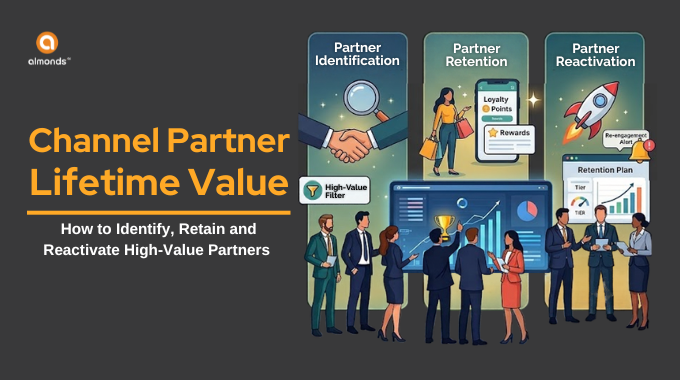
High-value partners may respond to recognition and premium experiences. Developing partners may need product learning and achievable milestones. Inactive partners may need a reactivation journey.
Segmentation makes the program more relevant while allowing brands to use incentive budgets more intelligently.
Create Reasons to Engage Beyond Purchasing
A loyalty program should not disappear between sales campaigns.
Product learning, new-product information, surveys, challenges, recognition, and partner events can create additional reasons for partners to return. This can help transform the program from an incentive portal into an ongoing engagement channel.
Make Communication More Relevant
Communication should reflect the partner’s context.
A partner approaching a target may need progress information. A partner who has stopped buying a particular product may need a targeted campaign. A newly registered retailer may need onboarding content.
The objective is not to send more messages. It is to make every important message more useful.
Measure Relationship Quality Alongside Program Activity
Program metrics remain important, but they should not be the only measures.
Brands should combine participation and redemption with partner retention, product adoption, repeat purchasing, recommendation, preference and other relationship indicators.
That changes the conversation from:
“Are partners using the program?”
to:
“Is the relationship becoming stronger?”
What Should Channel Leaders Measure?
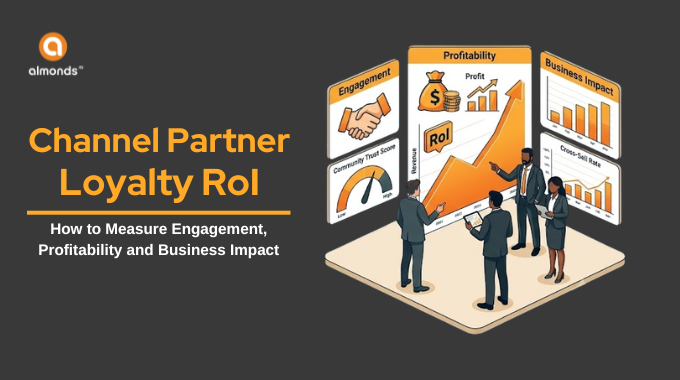
A mature channel loyalty program should connect activity, behaviour and business outcomes.
Program activity includes registrations, active users, campaign participation, learning completion and reward redemption. These metrics show whether partners are interacting with the program.
Behavioural metrics go deeper. Purchase frequency, product mix, new-product adoption and response to targeted campaigns indicate whether engagement is influencing what partners actually do.
Business metrics complete the picture. Partner retention, secondary sales, share of wallet, revenue per partner and preference can help determine whether the relationship is creating commercial value.
A program can perform well at the first level and poorly at the third.
High app usage does not automatically mean higher secondary sales. High reward redemption does not automatically mean stronger channel preference.
The strongest programs connect all three levels.
From Loyalty Program to Partner Relationship Platform
The direction of channel loyalty is moving beyond isolated incentive campaigns.
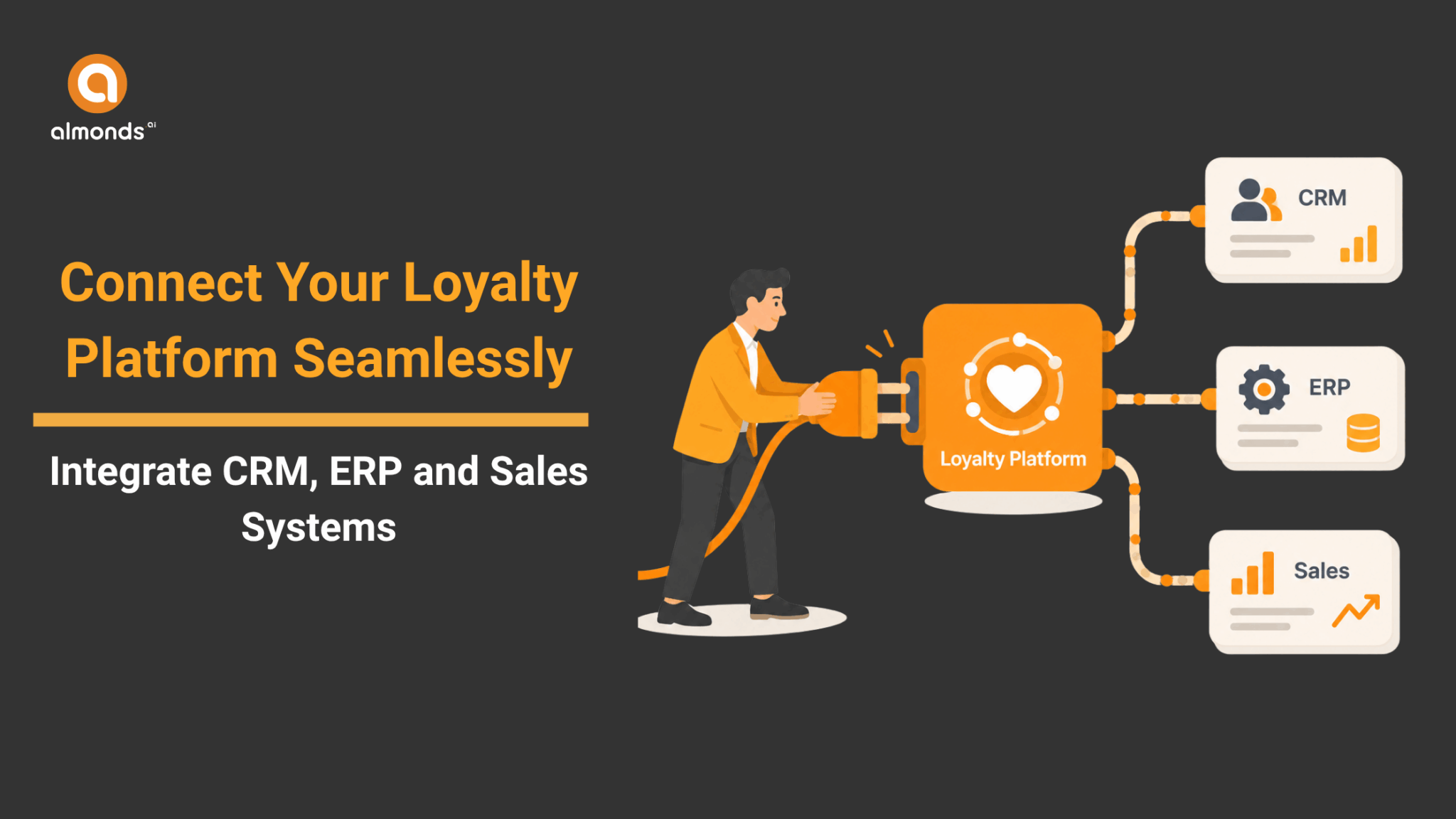
Modern channel programs can connect incentives with product education, recognition, communication, surveys, gamification and behavioural data. The technology makes these interactions easier to manage, but the strategy determines whether they are valuable to the partner.
This is particularly important in multi-brand channel environments.
A retailer may have several brands competing for shelf space. A distributor may represent several manufacturers. An influencer may recommend products from multiple companies. In such environments, simply having a loyalty program is not enough.
The brand needs to become easier to work with, more relevant to the partner and more valuable over time.
The Real Test of Channel Loyalty
The real test comes when the partner has a choice.
Does the retailer continue recommending the brand? Does the dealer prioritise its products? Does the distributor continue investing in the portfolio? Does the partner adopt a new product? Does the relationship survive when another brand offers a short-term incentive?
These behaviours tell us much more about loyalty than enrollment numbers.
- A partner who participates because of points may be active.
- A partner who continues to choose the brand even when another option is available demonstrates something stronger: preference.
That is ultimately what channel loyalty programs should help brands build.
The objective is not simply to create active partners. It is to create partners who have a reason to prefer the brand.
Closing the Gap Between Participation and Preference
Channel loyalty programs have become an important part of how brands engage dealers, distributors, retailers and other channel partners. But the presence of a loyalty program does not automatically create loyalty.
The evidence is clear that partner engagement is influenced by much more than rewards. Operational experience, communication, recognition, learning and brand relationships all contribute to how partners perceive and engage with a brand.
That changes how brands should evaluate their programs. Instead of asking only how many partners enrolled, how many points were issued or how many rewards were redeemed, channel leaders should ask whether the program is improving the overall partner relationship.
- Is participation becoming easier?
- Are communications becoming more relevant?
- Are partners learning more?
- Are contributions being recognised?
- Are previously inactive partners becoming active?
Most importantly, are partners developing a stronger preference for the brand?
The strongest channel loyalty programs will not be the ones that simply distribute the most rewards. They will be the ones that make the entire relationship more valuable because participation can be bought with an incentive. Long-term channel loyalty has to be earned through the experience.
Frequently Asked Questions
What is the channel loyalty experience gap?
The channel loyalty experience gap is the difference between a partner’s visible participation in a loyalty program and the strength of their underlying relationship with the brand. A partner can earn rewards and remain active while still having limited satisfaction or preference for the brand.
Does participating in a channel loyalty program mean a partner is loyal?
No. Participation shows that a partner is interacting with the program, but it does not necessarily demonstrate long-term preference. Brands should combine participation data with behavioural and relationship indicators.
Why do channel partners participate but not become loyal?
Partners may participate because rewards are attractive while remaining dissatisfied with other parts of the relationship. Operational friction, irrelevant communication, limited recognition, poor product support and a lack of relevant engagement can prevent participation from developing into stronger loyalty.
Are rewards still important in channel loyalty programs?
Yes. Rewards and incentives remain important drivers of channel engagement. However, they work alongside operational excellence, recognition, learning, communication and other elements of the partner experience.
How can brands improve channel partner loyalty?
Brands can improve channel partner loyalty by reducing friction, making engagement more relevant, segmenting partner journeys, improving communication, introducing recognition and learning, and measuring relationship quality alongside program activity and sales.
How should brands measure channel partner loyalty?
Brands should combine program, behavioural and business metrics. Participation and redemption show program activity; product adoption and purchasing show behavioural change; retention, preference, recommendation and secondary sales provide stronger indicators of relationship and commercial value.
Can a loyalty platform improve channel partner experience?
Yes, when it is designed around the complete partner journey. A loyalty platform can connect rewards, communication, learning, recognition, engagement and partner data, but technology alone cannot resolve wider operational or relationship issues.