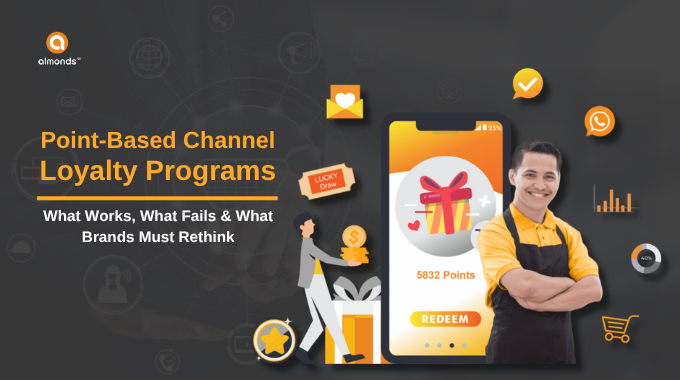

Across industries, brands rely on points to incentivize distributors, dealers, retailers, and contractors, rewarding purchases, driving sales targets, and encouraging repeat behavior. For years, points-based loyalty programs have worked because it is simple, scalable, and easy to communicate.
Channel partners understand points, track progress, and redeem rewards. However, as channel ecosystems become more competitive and partners engage with multiple brands simultaneously, the effectiveness of points-based systems is being increasingly questioned.
The challenge is not that points no longer work. The challenge is that points alone are no longer enough. To build meaningful channel loyalty, brands must move beyond transactional incentives and rethink how points fit into a broader engagement strategy.
Why Points Became the Default in Channel Loyalty
Points-based loyalty systems gained popularity because they offer a flexible and intuitive way to influence partner behavior. At their core, they are rooted in behavioral science—the idea that visible progress and accumulation create motivation.
When partners see points building up over time, it creates a sense of achievement and anticipation. The ability to “work toward” a reward encourages continued engagement and repeat activity.
For brands, points provide control. They can adjust earning rates, introduce bonus campaigns, and influence specific behaviors such as increasing order size, promoting certain products, or participating in schemes. This flexibility makes points a powerful tool for managing channel performance.
In addition, points systems are relatively easy to scale. Once the structure is in place, they can be extended across large partner networks without significant changes.
The Real Value of Points in Loyalty Programs
When designed correctly, points-based loyalty programs can deliver meaningful business outcomes. They are particularly effective in influencing specific partner behaviors that align with business goals. Points can be used to:
- Encourage repeat purchases and improve order frequency
- Increase average order value by incentivizing higher basket sizes
- Promote new or slow-moving products
- Drive participation during low-demand periods
- Influence partner engagement with campaigns and initiatives
This flexibility allows brands to align incentives with strategic priorities. As highlighted in industry insights, companies often use points to maximize lifetime value, stimulate demand, and optimize performance across different business cycles. However, the effectiveness of these programs depends on how well they are designed and executed. Without careful planning, the same flexibility that makes points powerful can also lead to inefficiencies.
Where Points-Based Programs Start to Fail
While points offer clear advantages, many channel loyalty programs struggle to deliver sustained impact. The issues are rarely with the concept itself, but with how it is implemented.
When Channel Partners Start “Gaming System”
Over time, partners become familiar with how points are earned and redeemed. Instead of driving genuine engagement, programs often encourage partners to optimize their behavior purely for rewards.
Purchases may be timed around schemes, and engagement may be limited to high-incentive periods. This shifts the focus from long-term loyalty to short-term gain.
When Loyalty Becomes Purely Transactional
Points-based systems often reward only one type of behavior—purchases. While this drives sales in the short term, it does little to build deeper relationships.
If loyalty is driven only by incentives, partners are likely to shift their attention to whichever brand offers better rewards at any given time. This creates a fragile form of loyalty that is easily disrupted.
When Too Much Choice Creates Friction
One of the advantages of points is that they offer flexibility in redemption. However, when reward catalogs become too complex or difficult to navigate, this flexibility turns into friction.
Partners may struggle to understand how to redeem points or feel overwhelmed by the number of options. As a result, engagement drops and the perceived value of the program declines.
When Point Value Feels Unclear
Transparency plays a critical role in loyalty programs. If partners do not clearly understand what their points are worth, they are likely to undervalue them.
Complex conversion structures or unclear redemption rules can create confusion, reducing trust in the program and limiting its effectiveness.
When Points Lose Their Perceived Value
Over time, channel partners may begin to feel that points are not as valuable as they once were. This can happen due to inflation in reward thresholds, reduced redemption value, or inconsistent program communication.
When the perceived value of points declines, engagement drops significantly. Research indicates that a large proportion of participants feel that loyalty points no longer deliver the same value, leading to reduced participation.
The Hidden Cost of Points Programs
Points-based loyalty programs are often seen as cost-effective because they do not involve immediate cash payouts. However, the reality is more complex.
Every point issued represents a future financial liability. Until points are redeemed or expire, they remain on the company’s balance sheet as deferred value. In large-scale programs, this can translate into significant financial exposure. In addition to financial costs, there are operational challenges. Managing a points program requires:
- Tracking issuance and redemption
- Forecasting liabilities
- Maintaining reward catalogs
- Ensuring system reliability
These behind-the-scenes requirements make points programs more complex than they appear.
Why Points Alone Cannot Build Channel Loyalty
Points can influence behavior, but they do not define relationships. True channel loyalty is built on a combination of trust, experience, and consistent engagement. Channel partners value:
- Ease of doing business
- Reliable support
- Clear communication
- Relevant opportunities
If these elements are missing, even the most generous points program will struggle to retain engagement. Points should be seen as one component of a broader strategy, not the strategy itself.
What Modern Channel Loyalty Programs Do Differently
To remain effective, channel loyalty programs must evolve beyond traditional structures. Modern programs integrate points with deeper engagement strategies.
Combining Points with Engagement
Points remain relevant, but they are combined with ongoing interaction. Programs now include communication, training, and participation-based incentives.
Focusing on Behavior, Not Just Transactions
Instead of rewarding only purchases, modern programs incentivize behaviors such as product promotion, training participation, and platform engagement.
Simplifying the Redemption Experience
Ease of redemption is critical. Programs that allow partners to quickly understand and use their points see higher engagement and satisfaction.
Making Value Transparent
Clear communication of point value builds trust. Partners should easily understand how points translate into rewards.
Personalizing Incentives
Not all partners are the same. Tailoring rewards and communication based on behavior and preferences improves effectiveness and engagement.
The Role of Data in Optimizing Points-Based Programs
As channel ecosystems grow, managing loyalty programs without data becomes increasingly difficult. Analytics plays a crucial role in understanding how partners interact with points systems and identifying areas for improvement.
Channel loyalty analytics enables businesses to:
- Track redemption patterns
- Identify disengaged partners
- Measure program effectiveness
- Optimize reward structures
- Improve ROI
Solutions such as Insights Ai by Almonds Ai bring this intelligence into loyalty programs by analyzing partner behavior and providing actionable insights. This allows organizations to move from static program management to continuous optimization.
The Future of Points in Channel Loyalty
Points are unlikely to disappear from loyalty programs. They remain a familiar and effective mechanism for influencing behavior. However, their role is evolving. The future lies in combining points with:
- Experience-driven engagement
- Behavior-based incentives
- Real-time analytics
- Personalized interaction
In this model, points are no longer the centerpiece. They become part of a broader system designed to build meaningful and lasting partner relationships.
Conclusion
Points-based loyalty programs are not inherently flawed. They have played a critical role in shaping channel engagement strategies and continue to offer value when used correctly.
However, relying on points alone is no longer sufficient in today’s competitive environment. To build sustainable channel loyalty, brands must integrate points into a broader framework that includes engagement, personalization, and data-driven decision-making.
The shift is not about replacing points, but about redefining their role within modern loyalty systems.
FAQs
Are points-based channel loyalty programs still effective?
Points-based channel loyalty programs are still effective when used as part of a broader engagement strategy. They work well for incentivizing repeat purchases and driving short-term partner activity. However, relying only on points often leads to transactional behavior. To improve effectiveness, businesses should combine points with personalization, engagement initiatives, and data-driven insights to build long-term partner loyalty.
Why do partners lose interest in loyalty points?
Partners lose interest in loyalty points when the perceived value declines or the program becomes difficult to understand. This can happen due to unclear redemption processes, low-value rewards, or overly complex structures. When partners feel that points do not translate into meaningful benefits, engagement drops. Maintaining transparency, relevance, and ease of redemption is essential to sustain interest in points-based loyalty programs.
How can brands improve points-based loyalty programs?
Brands can improve points-based loyalty programs by focusing on simplicity, personalization, and behavioral engagement. This includes offering relevant rewards, simplifying redemption processes, and rewarding actions beyond purchases, such as training participation or product promotion. Using channel loyalty analytics to track partner behavior also helps optimize program design and ensure that incentives drive meaningful engagement and long-term value.
What are the risks of points-based loyalty programs?
Points-based loyalty programs carry several risks, including financial liability, declining engagement, and over-reliance on transactional incentives. Every point issued represents a future cost, which can accumulate significantly over time. Additionally, poorly designed programs may lead to low redemption rates or partner disengagement. Without proper analytics and optimization, these programs can become costly without delivering strong returns on investment.
How can analytics improve channel loyalty programs?
Channel loyalty analytics helps businesses understand partner behavior, measure engagement, and optimize program performance. By tracking metrics such as redemption rates, purchase frequency, and engagement levels, organizations can identify what drives loyalty and where improvements are needed. Advanced solutions like Insights Ai enable real-time insights, allowing brands to personalize incentives, reduce churn, and improve overall ROI from their loyalty programs.
What is the difference between transactional and behavior-based loyalty?
Transactional loyalty focuses on rewarding purchases and short-term actions, typically through points or incentives. Behavior-based loyalty, on the other hand, rewards a broader set of partner activities such as engagement, training, and product advocacy. While transactional programs drive immediate results, behavior-based loyalty builds deeper relationships and long-term commitment, making it more sustainable in competitive channel ecosystems.
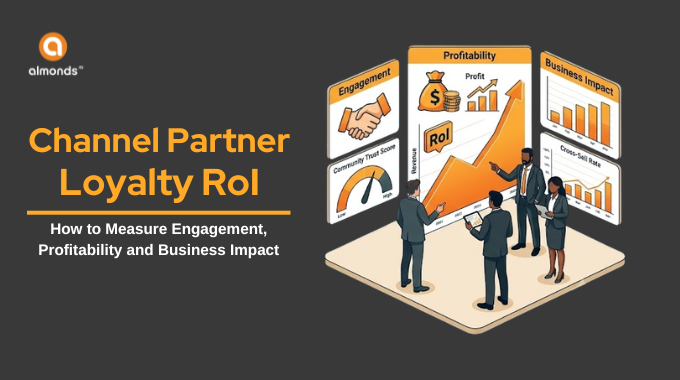
How do you measure ROI in channel loyalty programs?
ROI in channel loyalty programs is measured by comparing the cost of incentives and program management with the value generated through increased sales, engagement, and partner retention. Key metrics include repeat purchase rate, partner lifetime value, and reward redemption rate. Using analytics platforms helps businesses track these metrics accurately and identify which program elements contribute most to long-term growth.