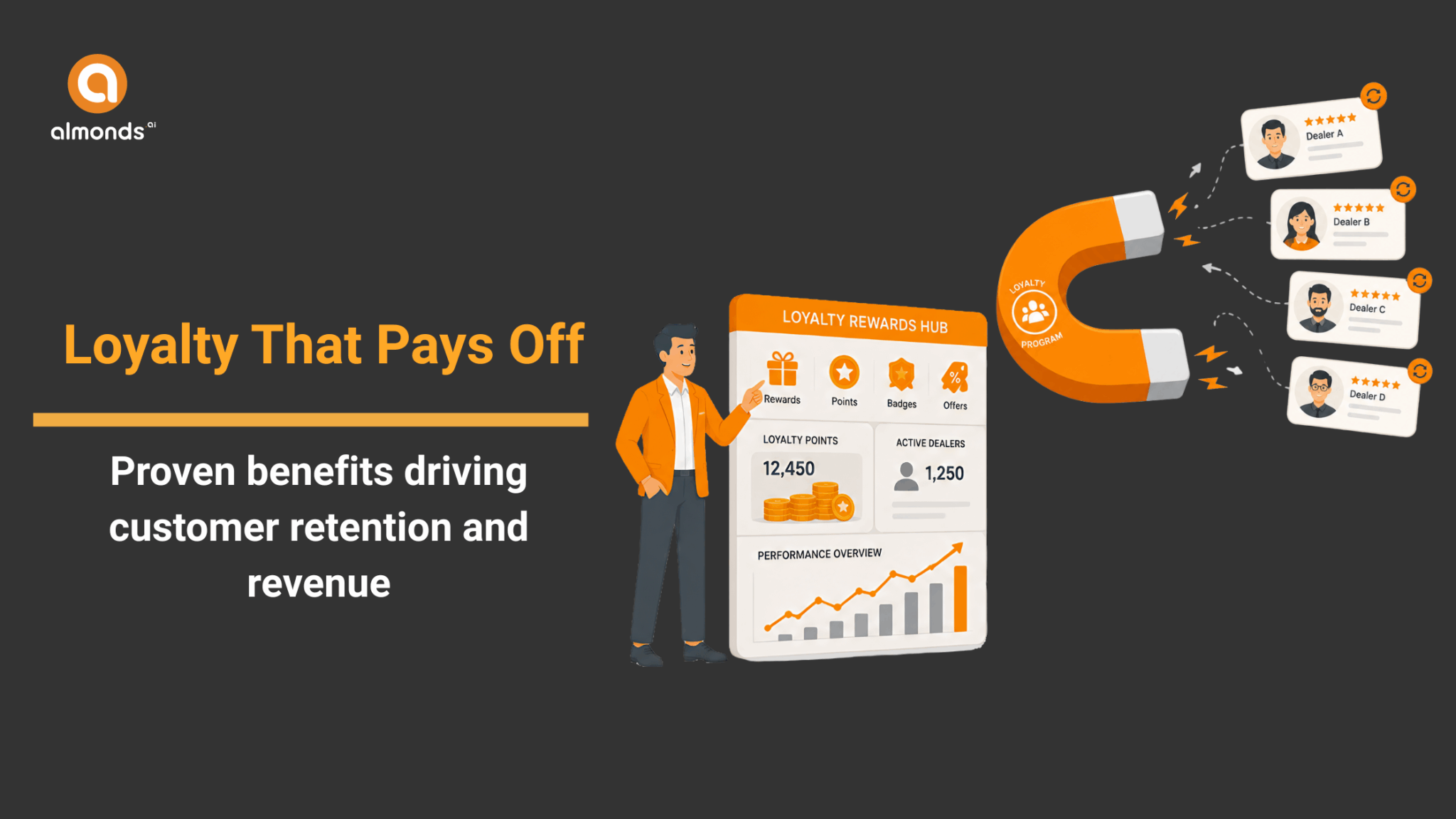

In 2026, the customer loyalty landscape has shifted from simple points and rewards to advanced engagement systems powered by data, personalization, and AI-driven insights. Loyalty programs come in at this point as a differentiator. No longer just a nice-to-have, loyalty programs are now revenue generators, engagement drivers, and customer relationship multipliers.
In the case of Almond AI, which knows the strength of using AI to understand customers, making a loyalty program is not all about points and discounts but about creating the value of a customer.
In this 2026 guide, we unpack how loyalty programs drive revenue, the benefits they deliver, best practices for creation and measurement, and pitfalls to avoid.
What are loyalty programs?
A loyalty program rewards repeat customers for engaging with your brand through purchases, referrals, social actions, feedback, or other desired behaviors. These programs make transactional relationships emotional and provide a reason to return to customers.
Loyalty programs have been developed, starting with digital punch cards and then moving to AI-assisted customized rewards. Today’s best programs integrate data analytics and personalization, turning each interaction into a strategic opportunity.
Advantages of establishing a Loyalty Program
Implementing a loyalty program in 2026 offers multi-layered strategic benefits that extend beyond simple repeat purchases.
1.Higher Customer Retention
Repeat customers spend more frequently, purchase more frequently, and are immune to more competitive prices. A loyalty program will provide incentives so as to come back and engage with customers.
Research indicates that a 5-percent customer retention growth can result in 25-95 percent profit growth. The strength of loyal deeds.
2.Greater Customer Lifetime Value (CLV)
Loyalty program customers will spend much more in their lifetime than non-customers. They feel appreciated and reciprocate through buying more.
3.Greater Customer Engagement
Loyalty programs provide opportunities for multichannel interaction—via apps, email, SMS, social media, and in-store experiences. Interaction makes your brand stand out as ever.
4.Rich Customer Data
Loyalty systems accompany the purchase patterns, preferences, behaviors, and interactions. It lets us offer personalized offers to this data, which boosts conversion and customer satisfaction enormously.
5.A Strong Competitive Advantage
Loyalty programs can distinguish your brand and create emotional attachment despite the pricing in a market that is flooded with choices.
6.Intensive Word-of-Mouth and Referrals
Feeling valued and appreciated, such customers are much more likely to refer friends, leave comments, and market your business by word of mouth.
7.Premium Brand Positioning
By going beyond discounts to exclusive experiences and VIP access, customers will view your brand as more high-quality and premium.
How Do Loyalty Programs Drive Up Sales and Revenue?
Loyalty programs directly impact your bottom line in multiple ways.
1.Repeat Purchases
Frequent purchasing is encouraged by rewarding customers because customers feel loyal to the companies. With points or rewards, customers feel motivated to buy again sooner, transforming occasional purchasers into those who generate revenue in the long term.
2.Upselling and Cross-Selling Opportunities
Purchase customer information is used through loyalty platforms to provide customers with relevant product recommendations. By suggesting complementary or higher-value items at the right time, brands can increase basket size while maintaining a personalized, non-intrusive shopping experience.
3.Emotional Connections Drive Premium Spending
Individual gifts bring about emotional attachment to the customer in that s/he feels coupled but not pursued. This emotional bond generates trust and a tendency to invest more in high-quality or higher-margin items that boost both revenue and brand loyalty.
4.Reducing Churn
An organized loyalty program helps maintain customer interactions beyond the one-time purchase. Ongoing rewards, recognition, and personalized communication reduce churn by giving customers meaningful reasons to stay connected with your brand across multiple touchpoints.
5.Increased Frequency
Rewards like buy five get one free boost purchase cycles. With rewards unlocked sooner and more frequently, customers will buy more frequently, growing purchase frequency and yielding more predictable and steady revenue streams.
6.Referral-Driven Growth
Referral incentives make regular customers brand ambassadors. Loyalty programs draw in new clients due to a lower acquisition cost by incentivizing sharing, but with greater levels of trust and conversion rates also due to word of mouth.
7.Data-Driven Personalization
When loyalty systems integrate with CRM and AI platforms like Almond AI, brands can deliver personalized offers based on behavior and preferences. This accuracy boosts participation, conversions, and average order value without extreme discounting.
Four Types of Loyalty Programs in 2026
There are a variety of flavors of loyalty programs. The most appropriate option is based on your business model, audience, and objectives.
1.Points-Based Loyalty Programs
The points-based schemes reward the customers with the purchase or engagement activities like reviews or referrals. Customers earn points, which are redeemed into discounts, products, or exclusive offers.
These services are effective since they are understandable, known to the majority of shoppers, and make customers purchase again. But when not individualized, they may be relationship-free and transactional.
Best for: Retail, e-commerce, grocery chains
Example:
A fashion retailer offers 10 points for every $1 spent. Once customers reach 500 points, they receive $10 off their next purchase, encouraging faster repeat buying.
2.Tiered Loyalty Programs
Tiered loyalty programs motivate customers with their level of engagement or levels of spending. The fact that customers receive enhanced benefits as they ascend in their tier generates a sense of success and exclusivity.
This system encourages customers to spend larger sums, enabling them to achieve the next level. Although very useful, tier benefits need to be planned well so that every level will feel special.
Best for: Travel, luxury brands, subscription services
Example:
An airline offers:
Silver: 2× points on flights.
Gold: 3× points + free seat upgrades
Platinum: priority boarding + VIP lounge.
3.Paid (Subscription) Loyalty Programs.
Paid loyalty programs are programs where the customer is charged to engage in premium features. Customers invest initially so they can shop more often to utilize all the benefits of membership. Such programs generate predictable revenues and more robust retention, but they require rewards of high quality to merit spending and reduce dissatisfaction.
Improved use: Marketplaces, high-frequency shoppers.
Example:
One of the e-commerce brands has an annual membership of 999 including limitless free delivery, early sale promotions, and member-only discounts.
4.Cashback & Credit-Based Loyalty Programs
Cashback or credit programs give customers back a percentage of their spending in terms of cashback or store credits. The value provided by this model is immediate and tangible; hence, it is very attractive. However, businesses must carefully structure cashback rates to avoid margin erosion while still offering attractive incentives.
Best: Financial services, marketplaces.
Example:
A digital wallet provides 5% cashback on all online purchases, which customers can redeem as wallet balance for future transactions or bill payments.
How to Create a Successful Loyalty Program (Step-by-Step)?
The development of a loyalty program should be planned properly and fitted to your brand image.
Step 1: Identify Specific Goals
Begin by determining the main aim of your loyalty program. Do you want to retain more and more, get more repeat revenue, get more referrals, and get better customer data? Clear objectives define the program structure and reward logic as well as metrics of success at the very outset.
Step 2: Know Your Customers
Examine the history of purchase, level of engagement, taste, and segments of customers to know what may drive them. Using data platforms like Almond AI enables predictive modeling, allowing brands to personalize rewards, timing, and messaging for maximum relevance and long-term engagement.
Step 3: Choose the Right Loyalty Model
Choose a type of loyalty depending on your business objectives and customer needs. Whether points-based, tiered, paid, cashback, or hybrid, the right model balances simplicity for users with profitability and scalability for the business.
Step 4: Reward Mechanics Design
Clarify clearly on how consumers can receive rewards: through purchases, referrals, social interaction, reviews, or by simply using the app. Equally important is designing redemption options that feel achievable, valuable, and motivating, ensuring customers stay engaged rather than frustrated by unreachable rewards.
Step 5: Set Up Technology Infrastructure
An effective loyalty program must have the correct foundation of technology. Your system should track customer behavior accurately, sync across online and offline channels, automate reward delivery, and integrate seamlessly with CRM and AI platforms for real-time personalization.
Step 6: Launch and Market Strategically
A powerful launch is a guarantee of adoption. Market your loyalty program by email, messaging, social media, paid advertising, and in-store signs. Early awareness and incentives help customers enroll quickly and build engagement momentum from day one.
Step 7: Continuously Optimize
Loyalty programs have to be continuously fine-tuned. Keep track of performance indicators, customer impressions, and experiment with offers or levels. Constant optimization keeps the program current, valuable, and correlated with evolving customer behavior and business objectives.
Measuring a Loyalty Program’s Success
Measurement is critical to understanding whether your loyalty program is driving results.
Key Loyalty Metrics
- Repeat Purchase Rate
- Customer Lifetime Value (CLV)
- Average Order Value (AOV)
- Redemption Rate
- Active vs. Dormant Members
- Churn Rate
- Referral Conversion Rate
- Net Promoter Score (NPS)
These KPIs show whether customers are spending more, staying longer, and advocating for your brand.
How to Calculate the Cost (and ROI) of Your Loyalty Program?
Any loyalty program needs to be invested in. The secret of success in the long run is to know these costs well and compare them with the value they bring to the program. Loyalty programs usually can be strong profit generators instead of expense lines when properly assessed.
Initial and recurrent expenses
Costs of a loyalty program generally take a two-fold form: initial costs and operating costs. Setting both early aids in establishing realistic expectations and benchmarks.
Upfront Costs
The upfront cost is spent to launch or in advance and may involve customer research on motivation and behaviors; technology and software installation; and program assets, e.g., branding, loyalty pages, mobile application or dashboard, design, and development. Initial investment also consists of marketing and launch costs, including advertising, email campaigns, and PR.
Ongoing Costs
The program is supported by ongoing expenses that aid the daily activities of the program. These are software licensing and maintenance, reward fulfillment expenses (discounts, gifts, experiences), communication expenses such as emails, SMS, and push notifications, and staff training or program administration expenses. These costs increase with the program growth and participation.
Calculating the ROI of Your Loyalty Program
To calculate ROI, compare the net profit generated by the loyalty program against its total cost:
ROI (%) = (Net Profit from Loyalty Program – Total Program Costs)/Total Program Costs x 100.
Incremental revenue on repeat purchases, upsells, cross-sells, and enhanced retention should be included in net profit, subtracting reward and operational expenses.
Beyond Simple ROI
Enhanced ROI calculation could also include long-term advantages such as customer lifetime value (CLV), greater brand recognition, and customer goodwill. Harder to measure, these hidden gains are important to foster sustainable business development.
Conclusion
By 2026, the program of loyalty has transformed to something much more valuable than points, cards, and discounted items. They have become smart, data-based ecosystems that drive retention, revenues, and long-term competitive advantage.
Individually structured and strategically planned, AI-driven intelligence and real customer value loyalty programs improve repeat purchases, enhance emotional attachment, and enhance lifetime value at lower acquisition rates.
They also convert a contented client into a vocal brand advocate. Loyalty is not an option but a bottom-up phenomenon in brands with a sustainable growth strategy. We at Almonds Ai by leveraging customer data, personalizing experiences, and continuously optimizing based on performance metrics, businesses can build loyalty programs that deliver measurable impact and lasting customer relationships.