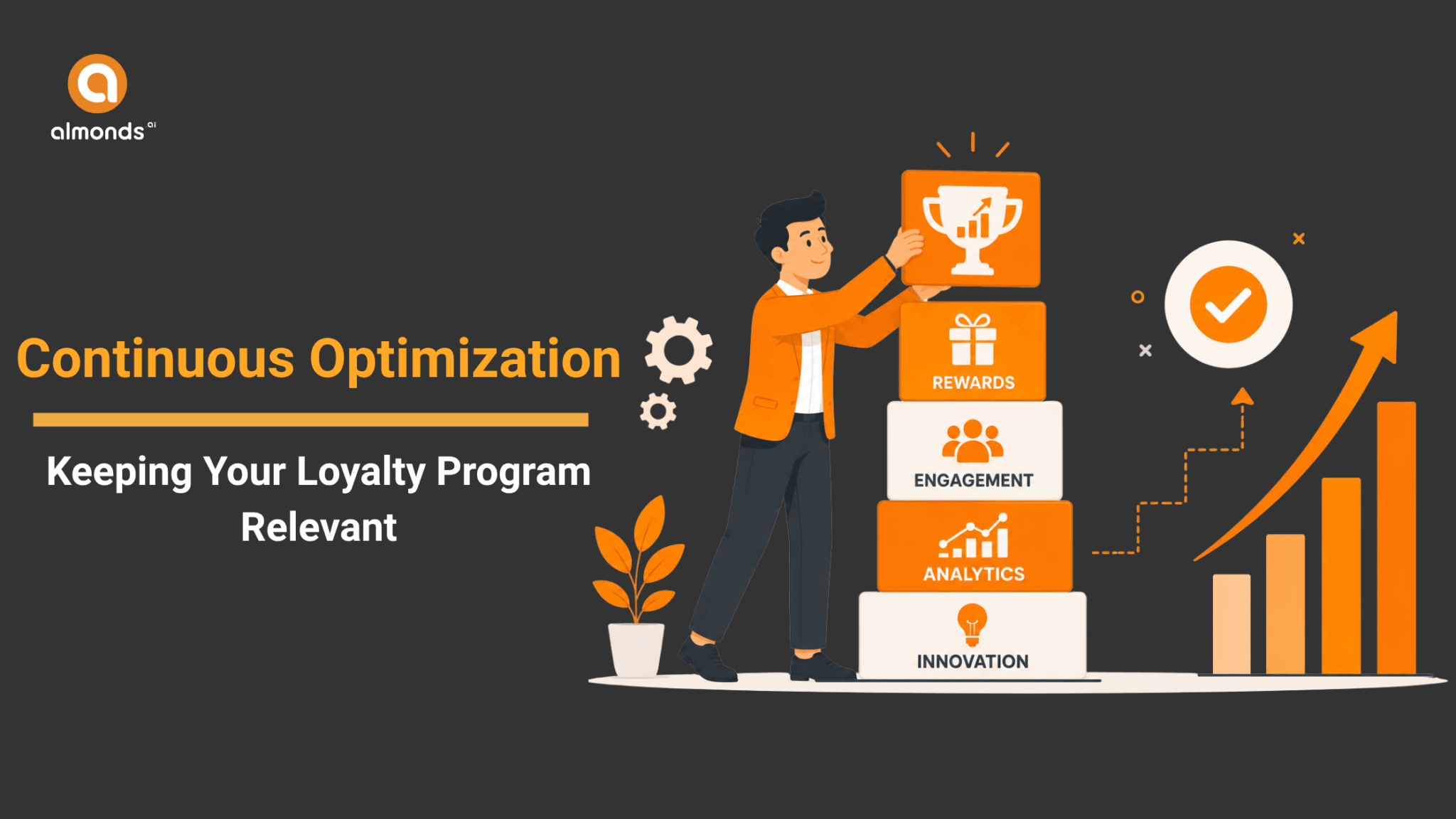

In an era of such rapid market changes, loyalty programs of any kind are no longer acceptable. Channel partners’ expectations are changing quickly; competition is growing, and digital behaviors are changing even faster. Optimization offers the best way for brands to retain their loyalty programs as fresh, engaging, and effective.
A loyalty program that has staying power that will help to generate repeat sales, heighten the customer LTV, and improve its emotional or behavioral engagement with customers. We will discuss why optimization is important, how to do it strategically, and the tactics that brands can use to keep their loyalty programs on target with customers and business objectives.
Why Continuous Optimization Matters in Channel Partner Loyalty?
Channel partner loyalty programs can quickly become stale if they remain unchanged. Incentives that once drove excitement, such as reward points, catalog benefits, or tier upgrades. It also may no longer motivate partners over time.
Many channel programs struggle with:
- Low engagement after enrollment
- Poor reward redemption
- Partners participating only for transactions, not brand advocacy
This happens because partner expectations evolve. Continuous optimization ensures that your channel loyalty program:
- Adapts to partner behavior: Sales patterns, order frequency, and product focus change over time, rewards and tiers should reflect this.
- Responds to market dynamics: Seasonality, competitive incentives, and regional market conditions directly impact partner motivation.
- Boosts participation and retention: Fresh, relevant rewards keep partners actively engaged and committed.
An optimized program feels dynamic, personalized, and valuable, not outdated or transactional.
Personalization: The Heart of Relevance
Today’s customers require a customer experience that feels personalized to their preference. One-size-fits-all incentives are quick to be forgotten. Personalization is therefore key to optimization.
- Dynamic reward offers: Instead of providing the same reward for all, tailor the reward to previous behavior, preferences, and/or lifecycle stage. For example, an “old timer” might be motivated with “experiential” rewards, whereas a “new” user may be motivated with “no-fuss” rewards.
- Behavior-based triggers: surface relevant rewards automatically based on triggers like anniversaries, unengaged windows, product milestones, etc.
- Smart recommendations: Recommendations are tailored to users by providing personalized suggestions based on AI-driven predictions.
Personalization is vital to making a loyalty program a worthwhile, repeatable experience and not a nice-to-have!
Experimentation and Iteration: Keep Programs Fresh
Channel partner loyalty optimization goes beyond a single project and is a project that should be on an ongoing basis. Brands that continually improve their programs are ahead.
Some key experimentation strategies are the following:
- A/B testing: Compare reward structures, point multipliers, or communication formats to identify what drives higher participation.
- Short-term campaigns: Add brief challenges or incentives to reinvigorate participation.
- Feedback loops with partners: Get feedback through surveys, CRM touch points, and regional sales teams.
Regular iteration ensures your loyalty program evolves alongside partner needs and market realities.
Reward Flexibility: Delivering Real Business Value
One of the major reasons channel loyalty programs lose traction is consumers’ perception of the reward value. This can be resolved with optimization by increasing flexibility in rewards.
Good channel partner loyalty programs consist of
- Tiered rewards: Take advantage of status-based rewards to motivate progression and continuous commitment.
- Reward with personal experiences: Provide special training, access to products, appreciation initiatives, or networking events.
- Instant rewards: Offer short-term incentives to keep things moving in addition to long-term targets.
A wide range of rewards means they are relevant for everyone and every incentive.
Align Loyalty With the End-to-End Partner Journey
Channel partner loyalty programs should never operate in isolation. The most successful programs are seamlessly integrated into the broader partner ecosystem.
Optimization becomes more powerful when loyalty aligns with:
- Consistent omnichannel experiences: App, email, sales teams, and in-store interactions should reinforce the same value proposition.
- Partner lifecycle stages: Onboarding, growth, maturity, and reactivation require different loyalty strategies.
- Brand ecosystems: Integrate loyalty into training, support, marketing initiatives, and partner communities.
This alignment ensures loyalty is not an add-on, but a core driver of partner success.
Conclusion
The ongoing optimization is the most important part to keep customers valuing, using, and promoting their loyalty program. We at Almond Ai use data, personalization, experimentation, and adaptable rewards, and link rewards to the wider customer experience for a loyalty program that continues to resonate with your audience and has a lasting effect.
When attention is limited and competition is intense, having a relevant loyalty program is not just savvy; it is a competitive edge. Utilizing the appropriate tools and techniques, brands have the potential to transform their loyalty programs to create meaningful and rewarding customer relationships.
FAQs
1.How does continuous optimization impact long-term customer loyalty?
Continuous optimization improves relevance and value over time, helping brands build stronger emotional connections, increase repeat purchases, and improve customer lifetime value consistently.
2.What role does AI play in optimizing loyalty programs?
AI helps analyze customer behavior, predict preferences, personalize rewards, and automate decision-making, allowing loyalty programs to adapt faster and perform better at scale.
3.How can brands measure the success of loyalty program optimization?
Success is measured using metrics like engagement rate, redemption rate, repeat purchase frequency, churn reduction, and overall contribution to customer lifetime value.
4.Can continuous optimization reduce loyalty program costs?
Yes, by focusing rewards on high-impact actions and valuable customers, brands avoid wasted incentives and improve ROI while delivering meaningful rewards efficiently.