
Retail execution has become one of the biggest challenges for FMCG, consumer goods, and manufacturing companies. It’s challenging to manage thousands of distributors, retailers, field sales representatives, and promotions across regions without the proper technology. Manual processes can result in late reporting, inconsistent in-store performance, stock-outs, and a lack of market performance visibility.
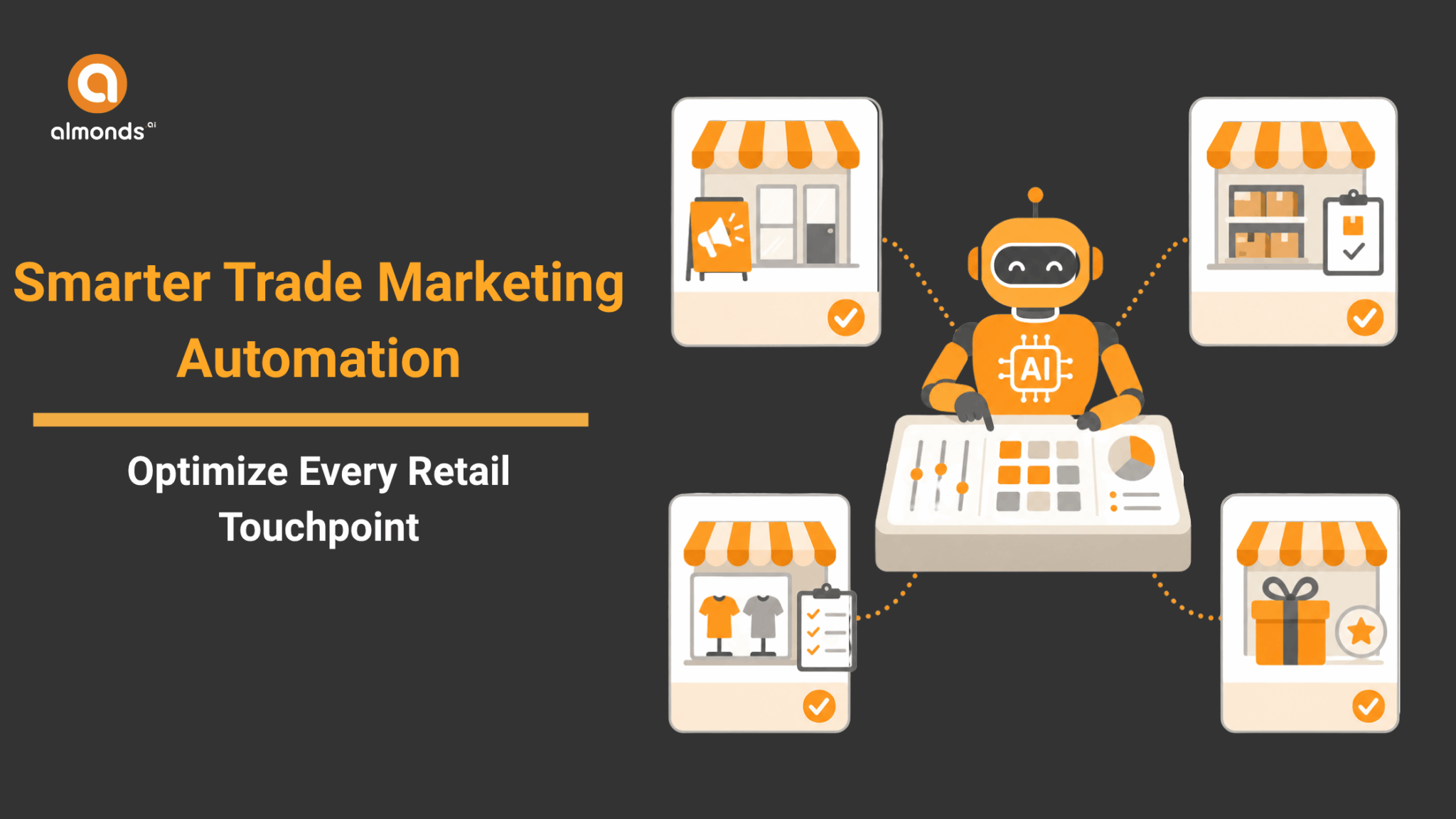
This is where AI-driven trade marketing automation is changing the game in retail. AI can help automate manual work, analyze real-time market data, forecast demand, optimize promotions, and boost productivity in the field.
Companies that adopt AI in sales and marketing can boost revenue by 5–15% and boost sales productivity by 10–20%, McKinsey says. AI-powered trade marketing automation is not only a technological solution but also a strategic imperative for brands with a distributed retail model.
Why Is Retail Execution Challenging Across Distributed Networks?
Today’s retail networks are typically made up of:
- Multiple distributors
- Regional sales teams
- Modern trade outlets
- General trade stores
- E-commerce partners
- Quick commerce platforms
Without central visibility, brands face difficulty in tracking the quality of execution from each outlet. Trade Marketing Automation with AI resolves these issues by integrating all stakeholders into a single smart platform.
1.Real-Time Visibility Across Every Retail Outlet
With AI-driven trade marketing automation, managers have real-time visibility of field operations via dashboards. They can track store traffic, product availability, shelf positioning, display adherence, sales data, and promotion adherence in real time.
Deloitte estimates that businesses that leverage real-time operational information can increase their decision-making process by as much as 30 percent. Instant insights allow brands to spot problems early, minimize execution gaps, and enhance retail performance in a distributed network.
2.Smarter Route Planning for Field Sales Teams
Field salespeople spend a considerable amount of time traveling from store to store. AI uses retailer priority, sales potential, traffic conditions, visit history, and location to suggest the most effective routes.
Research has showed that route planning with AI can boost productivity in the field by 20-30% and lower fuel and travel expenses in the industry. This helps in covering more stores, enhancing the sales coverage, and boosting the overall sales efficiency of the sales representatives.
3.Predictive Inventory Management
Out-of-stock products can result in lost sales and dissatisfied customers. With a focus on predictive stock shortage forecasting, AI constantly reviews past sales, seasonal demand fluctuations, retailer ordering trends, market trends, and stock levels to forecast future shortages.
AI-driven demand forecasting has been found to improve the accuracy of inventory by 20-50%. By replenishing actively, brands reduce stock-outs, increase product availability, and streamline their retail operations in all channels.
4.Intelligent Trade Promotion Management
Trade promotions make up a big portion of FMCG marketing budgets, and a lot of campaigns under this head have not yielded the desired results. AI assesses the performance of its promotions, retailer involvement, sales uplift, redemption rates, customer demand, and regional buying habits.
The ROI of these campaigns could be increased by 10-20% with AI’s marketing optimization capabilities, according to McKinsey. This will help brands make better use of their promotional budgets, ensuring that they are using them to drive sales, not waste them.
5.Automated Retail Audits
Manual audits are prone to error, and traditional retail audits are time-consuming. AI-powered trade marketing automation leverages computer vision to automatically check for shelf placement, planogram compliance, promotional displays, shelf share, and brand visibility.
Industry reports claim that AI with image recognition can save up to 80% of audit time and enhance the accuracy of the reporting. This will help you take corrective actions quickly and execute retail better.
6.Better Retailer Engagement
For successful trade marketing, strong retailer relationships are important. AI improves engagement by sending automated order reminders, personalized product recommendations, scheme updates, loyalty rewards, and performance insights.
According to Salesforce research, 73% of customers are expecting businesses to know their needs and expectations. One-to-one communication enables retailers to be informed, boost the involvement of retailers in trade programs, and deepen the brand’s relationship with the retailers.
7.Data-Driven Decision Making
AI transforms large amounts of retail data into actionable insights that enable businesses to make quicker decisions. Centralized dashboards enable managers to pinpoint profitable areas, lagging stores, trends in sales, product demand, distributor performance, and campaign performance.
Data-driven companies are three times more likely to make a substantial improvement in decision-making, PwC found. Improved insight enables brands to execute retail optimally, to design their trade spend in a more efficient fashion, and to boost overall business performance.
8.Better Compliance Over Retail Networks
It’s difficult to standardize the pricing, branding, and promotion strategy of thousands of retail locations. AI identifies compliance concerns like missing displays, out-of-date pricing, substandard shelf positioning, and missing promotional displays.
Based on industry studies, process automation can reduce execution errors by more than 50%. Instant alerts provide managers with immediate solutions to problems, maintain the brand standard, and provide enhanced retail execution in distributed networks.
Transform Retail Execution with Almonds Ai
Want to update your trade marketing approach? Almonds Ai is an AI-driven trade marketing automation platform that enhances retail execution in distributed networks for FMCG and consumer goods brands.
Whether you need real-time tracking of your field force, intelligent trade promotions, distributor engagement, predictive analytics, or actionable dashboards, Almonds Ai can help you optimize your business with these features.
With advanced AI capabilities and end-to-end automation, Almonds Ai helps brands make smarter decisions and achieve measurable growth in today’s competitive retail landscape.
Conclusion
When it comes to retail execution across a distributed network, it’s not just about spreadsheets and manual reporting. Brands are looking for intelligent systems that offer real-time visibility, automate repetitive tasks, enhance forecasting, and assist field teams in making quicker decisions.
AI trade marketing automation allows companies to streamline all facets of retail execution, ranging from inventory management to trade promotions, retailer engagement, and compliance monitoring. Automation and predictive intelligence can help brands increase efficiency, enhance distributor relationships, boost sales, and ensure all trade marketing spend is optimized.