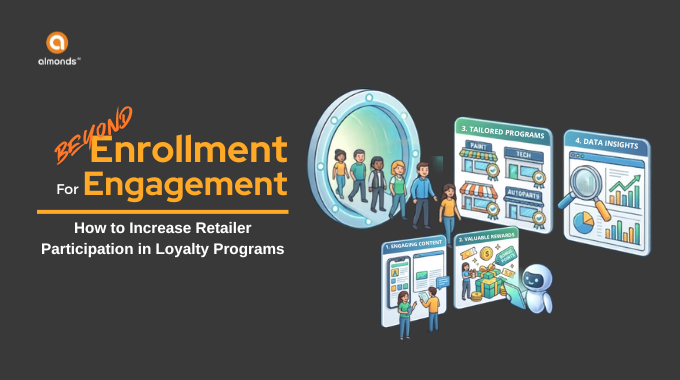

For many brands, launching a retailer loyalty program is no longer the biggest challenge. Companies across FMCG, electrical, building materials, automotive, agriculture, and consumer goods already understand the importance of engaging their retail network.
The real challenge starts after the program goes live. A brand may successfully onboard thousands of retailers, dealers, and channel partners, but business impact depends on how many partners actively participate, engage regularly, and continue strengthening their relationship with the brand.
In India’s distribution-driven market, retailers rarely represent only one company. A kirana retailer manages multiple FMCG brands, an electrical dealer works with several manufacturers, and an agri-input retailer recommends products from different seed, fertilizer, and crop protection companies. This creates a highly competitive environment where brands are not only competing for sales. They are competing for retailer attention, trust, and preference.
A retailer joining a loyalty program does not automatically mean the retailer is loyal. Registration only creates access. Engagement creates impact. This is why modern retailer loyalty programs are shifting their focus from increasing enrollment numbers to building active participation through better experiences, personalization, communication, and long-term value creation.
Why Retailer Participation Matters
Many organizations measure the success of a retailer loyalty program by the number of partners registered. While onboarding is an important milestone, it does not represent the actual strength of the relationship.
A retailer downloading an application, registering for a program, or receiving initial points only shows the beginning of participation. The real value comes when retailers repeatedly interact with the program, participate in campaigns, recommend products, and build stronger connections with the brand.
A company may have a large retailer database, but if a significant percentage of partners remain inactive after joining, the program fails to create its expected impact. Inactive partners increase operational costs without contributing meaningfully to business growth.
Successful channel loyalty programs measure engagement quality instead of only participation quantity. Metrics such as repeat interactions, campaign involvement, reward activity, partner retention, and product adoption provide a clearer picture of loyalty performance.
The objective is not simply having more retailers inside a program. The objective is having more retailers actively involved with the brand.
Why Retailers Stop Participating in Loyalty Programs
Low participation is often misunderstood as a lack of retailer interest. In reality, many retailers leave or become inactive because the program does not fit naturally into their daily business routine.
Retailers operate in fast-moving environments where they manage customers, inventory, suppliers, payments, and multiple brand relationships. Any loyalty program competing for their attention must provide clear and consistent value.
Most participation challenges happen because of four major reasons: low awareness, complicated experiences, irrelevant rewards, and delayed benefits.
Low Awareness After the Initial Program Launch
Many retailer loyalty programs start with strong momentum. Brands announce the program, sales teams educate partners, and retailers participate because the opportunity feels new. However, maintaining attention becomes more difficult after the first few months.
Retailers interact with multiple companies and receive several schemes throughout the year. Without regular communication, even a valuable loyalty program can slowly lose visibility.
This is especially important in Indian channel ecosystems, where field relationships and regular communication strongly influence retailer behavior. A program cannot depend only on launch excitement. It requires continuous reminders, updates, and meaningful engagement.
Brands that maintain consistent communication through digital platforms, sales teams, and personalized campaigns are more likely to keep retailers active beyond the initial enrollment stage.
Complicated Processes Reduce Retailer Engagement
Simplicity is one of the strongest drivers of loyalty program participation. Retailers are more likely to engage when the process requires minimum effort and provides maximum clarity. If they need to understand complex rules, complete multiple steps, or wait for manual approvals, participation naturally reduces.
A common mistake brands make is designing loyalty programs from an internal business perspective instead of the retailer’s perspective. The company may understand the program structure, but the retailer evaluates it differently:
- Is it easy to participate?
- Is the benefit clear?
- Is the effort worth the reward?
A successful retailer loyalty program removes unnecessary friction. The easier it becomes for retailers to participate, track progress, and receive benefits, the stronger the engagement becomes.
Why Reward Relevance Matters More Than Reward Quantity
Many brands assume low participation means they need bigger rewards. However, the issue is often not the value of the reward but the relevance of the reward.
Different retailers have different motivations. A small retailer may value practical benefits that support daily needs, while a high-performing dealer may value exclusive recognition, experiences, or business growth opportunities.
A generic reward structure treats every partner equally but does not motivate every partner equally. Modern channel loyalty programs are moving toward personalized reward strategies where engagement depends on partner behavior, preferences, and business potential.

This approach improves participation while helping brands optimize their loyalty investments.
How Delayed Rewards Affect Retailer Participation
Traditional channel schemes often operate with long reward cycles. A retailer completes an activity today but receives the benefit much later after verification, processing, or campaign completion.
While this approach works for certain incentive structures, long delays can reduce engagement because the connection between action and reward becomes weaker.
Retailers respond better when they can clearly see progress. Modern loyalty programs focus on creating shorter engagement loops through transparent tracking, milestone achievements, instant communication, and timely recognition.
This does not mean every reward needs to be instant. It means retailers should always understand where they stand and what value they are moving toward. Visibility creates motivation.
Personalization: The Missing Element in Many Retailer Loyalty Programs
Retail networks are highly diverse, especially in markets like India. A large urban dealer, regional distributor, small-town retailer, and rural shop owner may all participate in the same program, but their expectations are different.
When brands create identical experiences for every partner, engagement opportunities are lost. Personalization allows companies to create different journeys based on partner segments.
A newly onboarded retailer may need product education and early engagement support. A consistent performer may need recognition and growth opportunities. An inactive retailer may need a targeted reactivation approach.
The strongest retailer loyalty programs understand that different partners require different motivations.
How Brands Can Increase Retailer Participation in Loyalty Programs
Improving retailer participation requires brands to look beyond rewards and understand the complete partner experience. Retailers remain active when programs are simple, valuable, consistent, and connected to their business interests.
Build Continuous Engagement Beyond Seasonal Schemes
Many brands increase retailer communication during promotional periods but reduce engagement when campaigns end. This creates a transactional relationship.
Strong channel partner engagement requires year-round interactions through product education, recognition programs, feedback collection, digital activities, and community building.
Retailers who interact with a brand consistently are more likely to remember, recommend, and prioritize that brand.
Reward Behaviors That Support Business Growth
Sales performance will always remain important, but successful brands also encourage the behaviors that create sales.
A retailer who understands a product better can recommend it more effectively. A partner who participates in training develops stronger confidence. A retailer who shares feedback helps brands understand market needs. Modern loyalty programs reward actions such as:
- Product learning
- New launch participation
- Digital adoption
- Customer referrals
- Brand advocacy
This helps convert retailers from transactional sellers into active growth partners.
Using Gamification to Improve Retailer Engagement
Gamification in retailer loyalty programs is not only about games, contests, or leaderboards. Its real purpose is creating motivation through progress and achievement. Retailers are more likely to stay engaged when they can see their journey, understand milestones, and receive recognition for consistent participation.
For example, an electrical brand can create achievement levels for retailers based on product expertise. A building material company can recognize partners who regularly participate in learning and engagement activities.
Effective gamification connects partner motivation with business objectives.
Using Data Analytics to Improve Retailer Loyalty Performance
Many brands realize retailers are disengaged only after sales performance declines. By that stage, rebuilding the relationship becomes more difficult.
Data-driven loyalty programs help brands identify early engagement signals by analyzing participation patterns, campaign activity, reward behavior, and partner interactions. This allows brands to identify which partners need attention, which campaigns are performing well, and which engagement strategies need improvement.
The future of retailer loyalty will depend on understanding partner behavior, not only tracking transactions.
Building a Strong Retailer Engagement Framework
Successful retailer loyalty programs follow a structured approach where brands continuously improve partner relationships.
The framework includes understanding different retailer segments, activating them with simple experiences, maintaining engagement through relevant interactions, recognizing valuable partners, and helping high-performing retailers grow further.
This approach changes loyalty programs from short-term incentive campaigns into long-term channel development strategies.
Industries Where Retailer Loyalty Programs Create Strong Business Impact
FMCG Retailer Loyalty Programs
FMCG brands operate in highly competitive retail environments where visibility and recommendation influence buying decisions. Strong retailer engagement programs help brands improve participation and strengthen market presence.
Electrical and Electronics Retailer Loyalty Programs
Electrical brands depend on dealers, retailers, electricians, and contractors who influence product selection. Loyalty programs help improve product knowledge, preference, and long-term relationships.
Building Material Retailer Loyalty Programs
Paint, cement, plywood, tiles, and adhesive brands rely heavily on dealer and influencer networks. Retailer loyalty programs help maintain engagement across complex channel ecosystems.
Agriculture Retailer Loyalty Programs
These brands depend on retailers who influence farmer decisions. Agricultural Loyalty programs help improve product awareness, dealer relationships, and market adoption.
The Future of Retailer Loyalty Programs
The future of retailer loyalty will not be defined by the largest incentive budgets. It will be defined by the strongest partner relationships. As competition increases, brands will need to shift from occasional reward campaigns to continuous engagement ecosystems.
Future-ready retailer loyalty programs will focus on personalization, data intelligence, recognition, and meaningful partner experiences. The brands that understand their retailers better will create stronger channel networks and sustainable competitive advantages.
Conclusion
Increasing retailer participation requires more than launching attractive rewards or adding more partners into a program. Long-term success depends on creating experiences that retailers find simple, relevant, and valuable.
Modern retailer loyalty programs are evolving from incentive management systems into complete channel engagement strategies. The strongest brands will not only have the largest retailer networks. They will have the most engaged ones.
FAQs
What is retailer participation in loyalty programs?
Retailer participation refers to the active involvement of retailers in a loyalty program through activities such as purchases, campaigns, reward redemption, product learning, and ongoing brand engagement.
Why do retailers stop participating in loyalty programs?
Retailers often become inactive when programs have complicated processes, unclear communication, irrelevant rewards, delayed benefits, or limited engagement after launch.
How can brands increase retailer loyalty program engagement?
Brands can improve retailer engagement by simplifying participation, personalizing rewards, maintaining regular communication, recognizing achievements, and using data-driven engagement strategies.
What makes a successful retailer loyalty program?
A successful retailer loyalty program creates continuous engagement by combining rewards, recognition, personalization, simple experiences, and measurable business outcomes.
How does technology improve retailer loyalty programs?
Technology helps brands manage large retailer networks, automate rewards, understand partner behavior, personalize communication, and improve loyalty program performance.