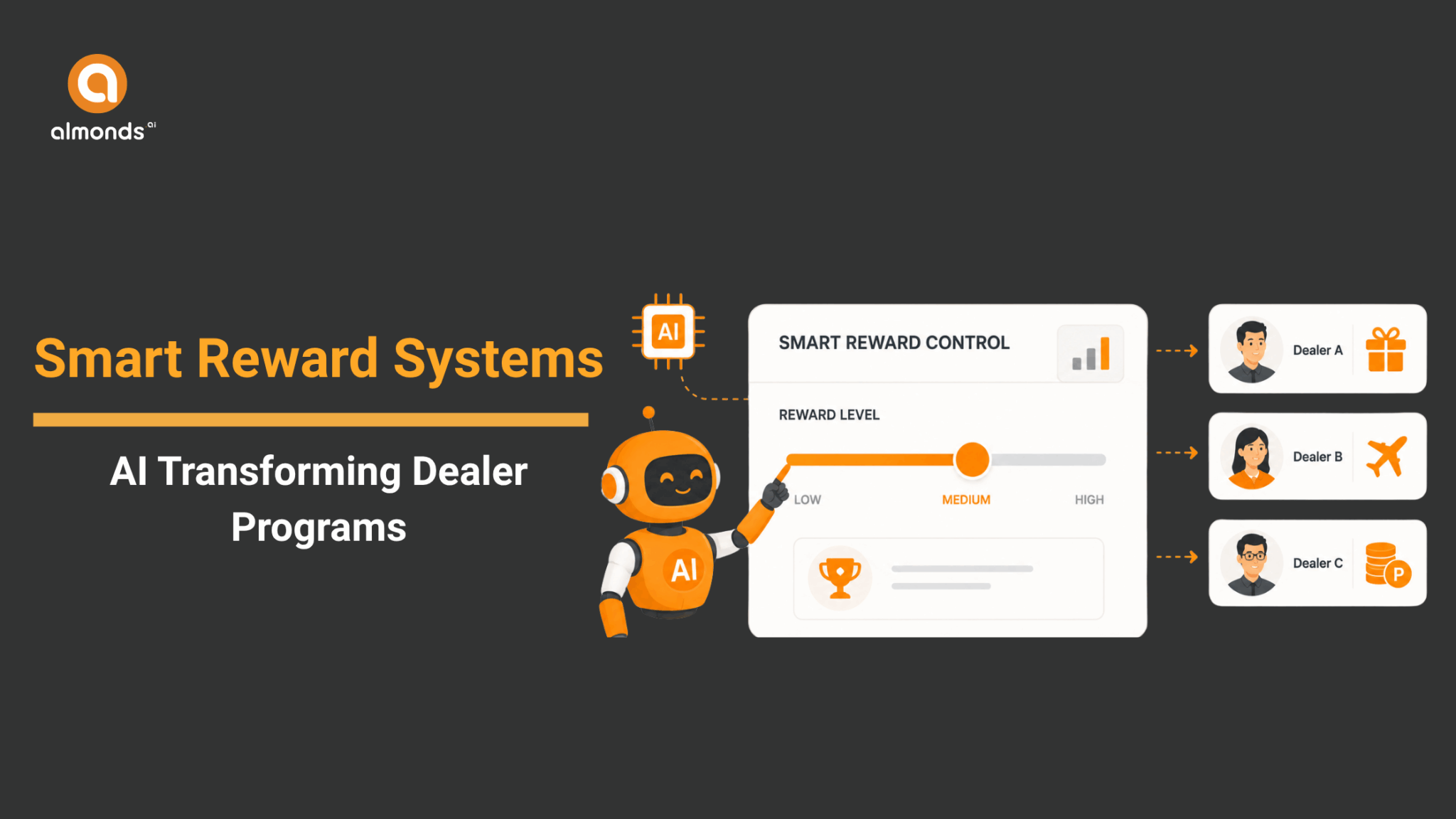

Among the key growth partners of brands, dealers have taken the stage. They are instrumental in opening up more markets, increasing product exposure, and moving on with steady sales. Conventional dealer incentive schemes and printed reward systems can no longer be sufficiently efficient to retain dealers, as well as to motivate them.
The current trend in brands is to go to AI-powered dealer loyalty programs to build smarter, faster, and more engaging dealer ecosystems. AI is transforming the way brands inspire dealers, monitor performance, and expand their distribution channels.
Why Traditional Dealer Loyalty Programs Fall Short?
The majority of outdated dealer loyalty programs are based on set targets, generic rewards, and delayed incentives. The programs are usually not flexible or real-time visible, and thus brands may not know how dealers behave or the actual impact on sales.
It is possible that without timely insights, the incentives can be handed out without motivating actual channel growth. This causes wastage of budgets and low participation of dealers. AI-based solutions neutralize these issues by bringing a level of intelligence, automation, and personalization to dealer loyalty programs.
Scalable Custom Dealer Engagement
Personalization is one of the largest benefits of AI-based loyalty programs. AI analyzes dealer data such as purchase history, preferred products, location trends, and performance levels to create customized incentive journeys.
Unlike providing incentives to all dealers, AI can allow brands to provide incentives with regard to individual motivations. This will result in increased engagement, improved participation, and increased alignment with sales goals.
Predictive Insights for Smarter Incentives
The use of AI does not just analyze previous data but also forecasts on the future. Predictive analytics enable the AI platforms to predict dealer behavior, spot potential drop-offs, and point to growth opportunities in regions or products.
As an example, AI can guess which dealers might decrease purchases or which products should be pushed more in particular markets. This enables the brands to create proactive campaigns, instead of just seeing previous performances but doing so as a way of targeting future sales.
Real-Time Performance Visibility
Transparency is essential for strong dealer relationships. AI-driven loyalty systems have real-time dashboards to monitor the progress of both dealers and brands.
Dealers can view targets, earned points, and available rewards in one place, while brands gain a clear view of regional and network-wide performance. This increased visibility in real-time enhances confidence, encourages more engagement, and promotes quicker decision-making.
Automated Program Management
It is costly and time-wasting to operate extensively large networks of dealers manually and is subject to errors. The key processes automated by AI are setting of targets, computing rewards, approvals, and detection of fraud.
Automation saves on operation and attains accuracy and equity, which are essential to continue financing a dealer and loyalty.
Smarter Reward Optimization
Rewards do not motivate to the same extent. The AI constantly estimates the patterns of reward redemption and engagement data to determine which of them works.
Based on these insights, AI can optimize reward catalogs, which are relevant, cost-effective, and impactful. This will assist brands to invest in rewards, which in reality will change dealer behavior rather than spending money on worthless incentives.
Improved Dealer Communication
Artificial intelligence-driven websites allow more intelligent and personalized communication with dealers. Dealers will receive relevant and timely messages through performance updates and target reminders along the course of the program life cycle.
This regular interaction keeps the dealers updated and motivated and in touch with them, not just isolated in the face of a reward redemption event.
Scalability of Cross-Dealer Networks
With the increasing number of businesses, it becomes complicated running loyalty programs with thousands of dealers. AI-based systems have a low scaling capacity and are capable of ensuring the consistency of their approaches by region, product, and performance.
The ability to scale makes AI necessary to a brand that operates across markets or has to maintain a vast ecosystem of dealers.
The Future of Dealer Loyalty Programs
AI is not only enhancing dealer loyalty programs, but it is also redefining them. AI can enhance the worth of loyalty programs by making them potent engines of growth through intelligent segmentation, predictive analytics, and automation.
The brands that implement AI-based systems of loyalty create stronger relationships with dealers, enhance channel performance, and have higher returns on incentive investments.
Final Thoughts
Nowadays, a competitive B2B world does not allow a smart, data-driven dealer loyalty program to be an option. AI-based solutions enable brands to outgrow the generic incentives and develop meaningful and performance-based dealer relationships.
Willing to revamp your dealer loyalty approach with AI? Collaborate with Almonds AI to develop knowledgeable, expandable, and output-based dealer loyalty initiatives producing quantifiable development.
Frequently Asked Questions
1.How does AI measure the ROI of dealer loyalty programs?
AI monitors dealer activity, sales optimism, redemption trends, and engagement tendencies on a real-time basis that enables the brands to have a direct correlation between incentive spending and revenue growth, as well as channel performance enhancement.
2.Will AI be able to foresee dealer churn?
Yes. Sense machines use past transactions, engagement rate, and behavioral patterns to determine the presence of early signs of disengagement. So that a brand can intervene in advance in an effort to provide a targeted incentive or message.
3.What does AI do to curb misuse or fraud in dealer loyalty programs?
AI detects abnormal patterns in transactions, redemptions, and claims using anomaly detection algorithms, helping brands prevent fraud, duplicate rewards, and unauthorized dealer activity.
4.Is AI able to optimize incentive budgets?
The AI constantly monitors the effectiveness of rewards and is able to change the incentive distribution immediately. It also has the budgets deployed on the highest-performing dealers, regions, and products, which have the greatest business impact.
5.What role can AI play in regional and market-level customization?
Going regional with AI would involve analysis of local sales trends, dealer maturity, and market demand. It would enable the brands to engage in customized loyalty campaigns and retain the central nature of managing the program.