
In the current competitive B2B environment, channel partner loyalty cannot be based on the largest discount or the most dazzling incentive anymore. Retailers, distributors, dealers, and wholesalers are seeking long-term value, rather than short-term returns.
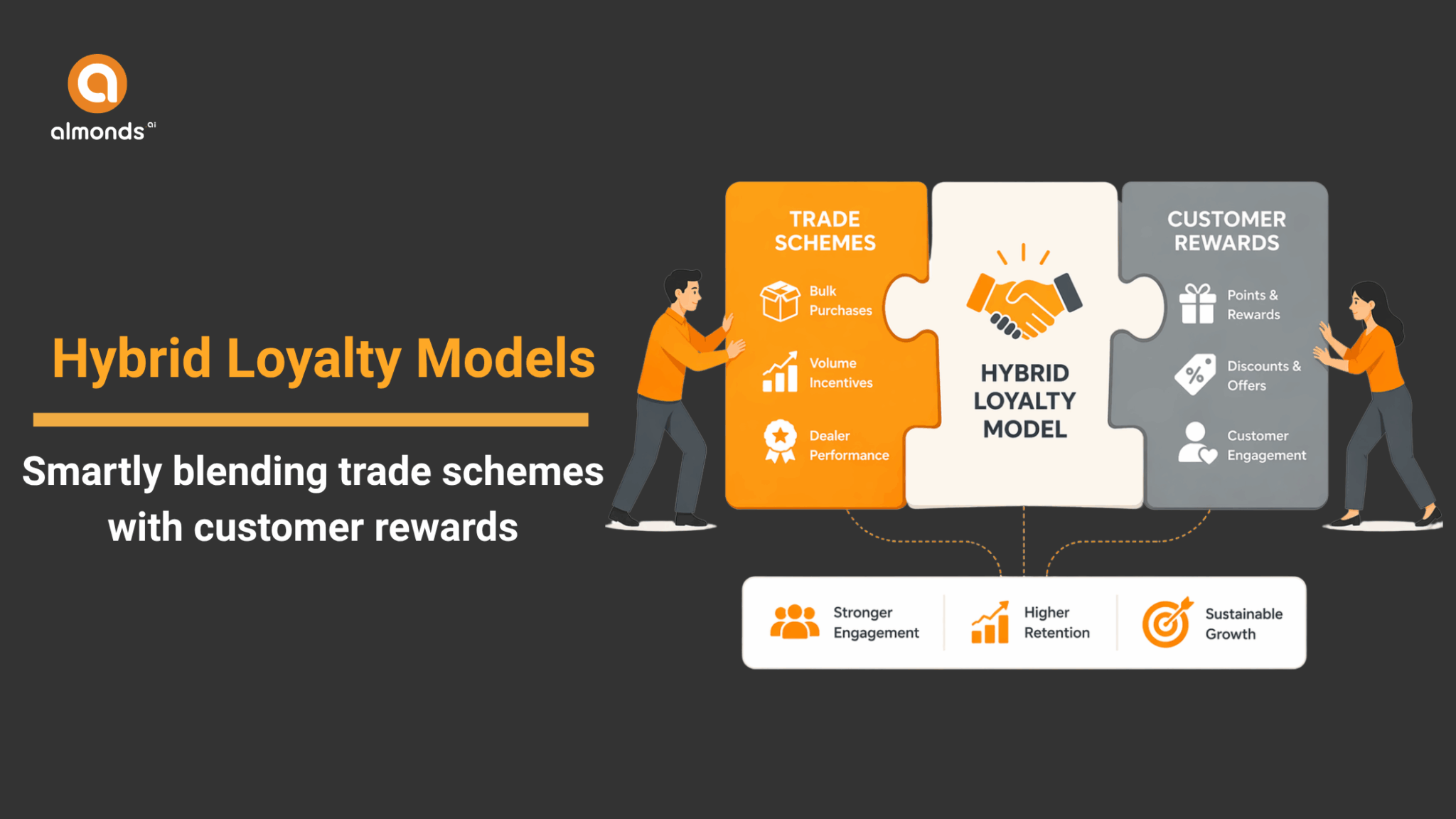
It is in this area that models of hybrid loyalty, a strategic combination of classic trade plans and formalized reward schemes, are redefining the interaction and retention of channel partners by the brand.
With the organizations that are dealers with B2B loyalty programs that are channel-specific, the hybrid loyalty models are a potent approach to influence sales, enhance engagement, and create a long-lasting relationship throughout the distribution channel.
Understanding Trade Schemes in B2B Loyalty
Channel partner engagement has always been based on trade schemes. They are normally short-term, transaction-based incentives aimed at driving volume and speeding up sales.
- Quantity-based discounts
- Slab-wise incentives
- Limited-period schemes
- Freebies or extra margins.
- Target-based cash payouts
- Advantages of Trade Schemes.
Strengths of Trade Schemes
- Deliver immediate motivation
- Promote surges in sales.
- Are simple to read and comprehend.
- Assist in selling surplus.
Limitations of Standalone Trade Schemes
- They encourage deal-hunting behavior, not loyalty.
- The channel partners will change brands readily when superior schemes are offered.
- No emotional or long brand commitment is developed.
- Hard to measure actual involvement except through quantity of sales.
- This is where organized rewards are involved.
Read More : https://www.linkedin.com/pulse/top-channel-loyalty-programs-india-globally-what-sets-best-apart-ixcyc/
The Role of Rewards-Based Loyalty Programs
The loyalty programs based on rewards aim to create a lasting interaction and reputation with the brand instead of a one-time transaction.
Key Characteristics of Rewards Programs
- Point accumulation over time
- Non-cash rewards such as vouchers, merchandise, travel, or experiences
- Recognition tiers (Silver, Gold, Platinum)
- Personalized incentives based on partner behavior
Benefits for Channel Partners
Rewards programs:
- Encourage repeat engagement
- Create a sense of achievement and progression
- Offer aspirational value beyond cash margins
- Build emotional loyalty to the brand
Challenges When Used Alone
While powerful, rewards programs alone may:
- Take time to show results
- Feel less impactful during high-pressure sales cycles
- Not fully replace the urgency created by trade schemes
This gap is exactly why hybrid loyalty models work so well.
What Are Hybrid Loyalty Models?
A hybrid loyalty program is a blend of instant satisfaction provided by trade schemes and long-term interaction of rewards programs into one unified approach.
Rather than making the trade-off between short-term incentives and long-term loyalty, brands are using both concurrently and bringing the immediate business objectives in line with long-term partner relationships.
Why Are Hybrid Loyalty Models Ideal for Channel Partners?
The channel partners have to work in a challenging environment: low margins, many relationships with the brand, and competition are always there. It is a combination of these realities that hybrid models can deal with.
1. Balancing Short-Term Sales and Long-Term Loyalty
Trade schemes drive immediate sales, and rewards keep partners engaged even during non-promotional times. This equilibrium assists brands:
- Achieve quarterly targets
- Reduce scheme dependency
- Retain partners year-round.
2.Appealing to Different Partner Motivations
- The same incentives do not motivate all partners.
- Others like immediate discounts and cash allowances.
- Others appreciate recognition, status, and aspirational rewards.
Hybrid models are able to serve both mindsets.
3.Reducing Brand Switching
By earning points, unlocking levels, or receiving special privileges, changing brands will be expensive not only in terms of money but also in terms of feelings and tactics.
4.Improved Data and Visibility
Combination programs produce more data:
- Sales behavior
- Engagement levels
- Scheme participation
- Reward redemption patterns
This information assists brands to refine future campaigns and customize offers.
Key Components of an Effective Hybrid Loyalty Model
1. Integrated Earning Mechanism
Channel partners should earn:
- Instant benefits through trade schemes (discounts, slabs)
- Long-term rewards (loyalty points) at the same time.
For example:
A distributor who meets a quarterly target will receive an upfront margin credit and will earn points towards premium rewards.
2.Tier-Based Recognition
Add levels, including
- Bronze
- Silver
- Gold
- Platinum
Higher tiers unlock:
- Improved trade scheme entitlement.
- Accelerated point earning
- Special privileges or rewards.
This promotes steady performance, not a single spike.
3.Effective Communication and Openness
Complex programs do not work without clarity. An effective hybrid model will guarantee:
- Simple scheme rules
- Live tracking of points and rewards.
- Defined benefit plans.
- Here, digital dashboards and mobile applications are essential.
4.Channel Segment Personalization
Distributors, retailers, and wholesalers possess varying interests. Hybrid models must permit:
- Customized trade schemes per segment
- Tailored reward catalogs
- Localized incentives
- Relevance and involvement are enhanced by personalization.
5.Seamless Digital Enablement
Software tracking murders loyalty programs. The modern hybrid models are based on:
- Automated point calculation
- Digital reward catalogs
- Instant notifications
- Data-driven insights
Measuring the Success of Hybrid Loyalty Programs
Brands should monitor the appropriate metrics to guarantee ROI:
- Incremental sales uplifts in and after schemes.
- Partner retention rates
- Recurring involvement in programs.
- Reward redemption frequency
- Product-category share of wallet.
Hybrid models have been shown to be more successful than individual schemes since they provide short-term and long-term interaction.
Common Mistakes to Avoid
- Unnecessarily complicating the program structure.
- Concentrating on high-volume partners.
- Delayed reward fulfillment
- Poor ground-level communication.
- Taking loyalty as a single campaign rather than a lasting strategy.
These traps need to be avoided in order to reap the maximum benefits of hybrid loyalty models.
The Future of B2B Channel Loyalty
With increasing competition and narrowing of margins, B2B brands can no longer afford to rely on discounts alone in achieving channel loyalty. The future lies in smart, data-driven hybrid loyalty models that do not see partners as sales channels only but also as long-term growth partners.
The combination of the urgency of trade schemes and the emotional appeal of the rewards will enable brands to develop loyalty that will stay beyond the cycle of schemes.
Conclusion
Hybrid loyalty models are no longer an option but a strategic requirement of brands that take channel partner engagement seriously. By thoughtfully blending trade schemes with rewards, businesses can drive immediate sales, foster long-term loyalty, and gain deeper insights into partner behavior.
For organizations looking to design, manage, and scale B2B loyalty programs for channel partners, leveraging the right technology platform is critical. Partner with Almond AI to create data-driven, scalable, and personalized B2B loyalty solutions that truly engage retailers, distributors, and dealers beyond discounts.
FAQs
1. What are hybrid loyalty models in B2B?
Hybrid loyalty models combine trade schemes with reward programs, offering channel partners instant sales incentives while building long-term engagement, repeat purchases, and stronger brand preference across retailers and distributors networks.
2. How do hybrid loyalty programs benefit channel partners?
Unlike traditional trade schemes, hybrid programs reward consistent performance, tier progression, and engagement behaviors, reducing brand switching and creating sustainable loyalty among distributors, dealers, and retailers across diverse channel ecosystems.
3. Why is technology important for hybrid B2B loyalty programs?
Technology enables real-time tracking, automated point calculation, transparent dashboards, and personalized offers, making hybrid B2B loyalty programs easy to manage, scalable, and measurable for brands and channel partners everywhere globally.
4. Which businesses should adopt hybrid loyalty models?
Hybrid loyalty models suit retailers, distributors, wholesalers, and dealers seeking higher margins, recognition, and rewards, while brands gain better data, improved retention, and predictable sales growth across competitive B2B markets.
5. How can platforms like Almond Ai support hybrid loyalty programs?
Platforms like Almond Ai help brands design, automate, and optimize hybrid loyalty programs, integrating trade schemes, rewards, analytics, and personalization to maximize channel partner engagement and long-term ROI sustainably globally.