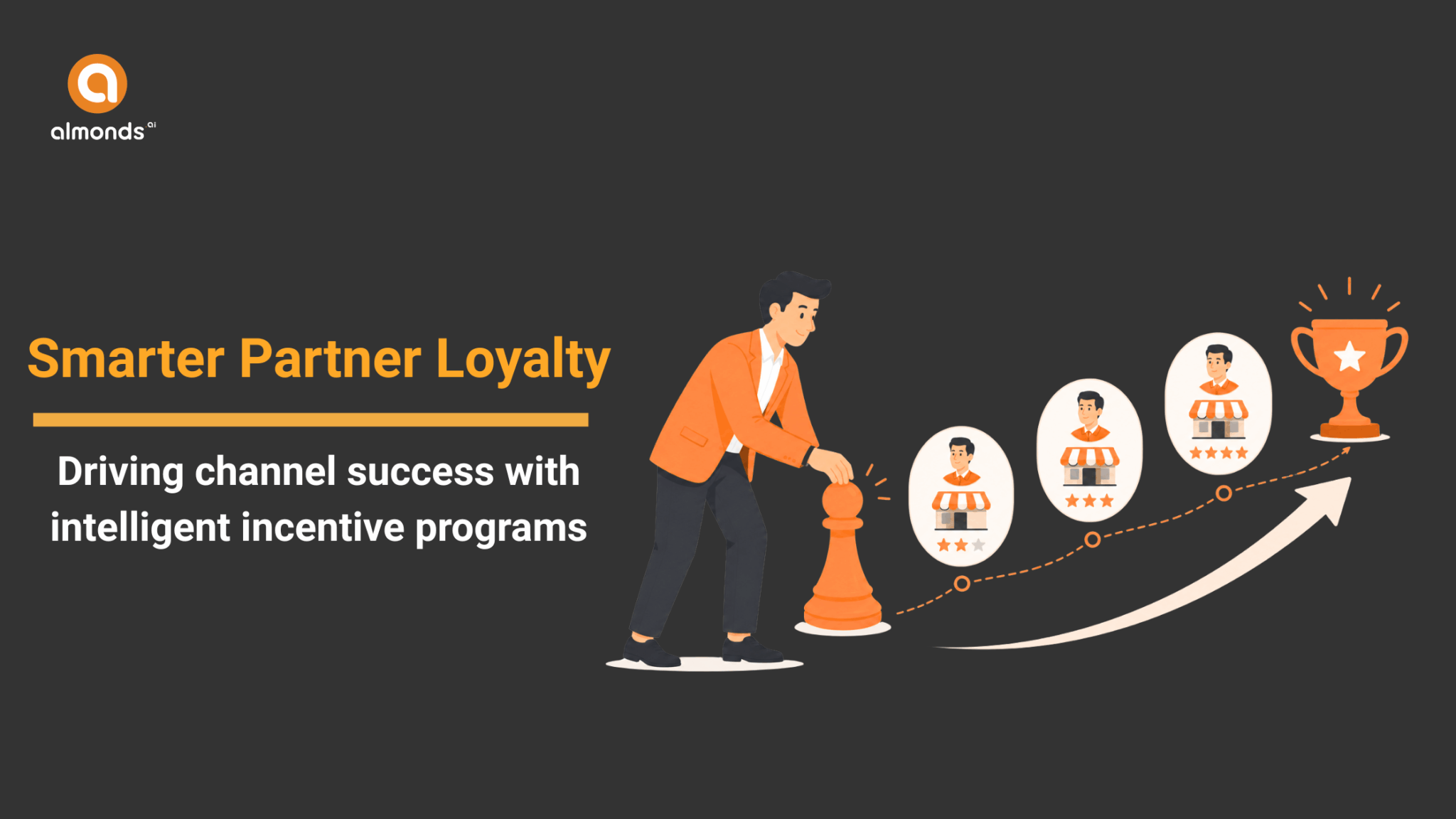

The modern B2B landscape is highly competitive, and securing customers is just half the challenge. The real challenge lies in winning the channel—your distributors, retailers, dealers, and resellers who directly influence market reach and revenue.
In increasingly commoditized products and lower margins, companies can no longer depend on simple incentives or one-size-fits-all rewards. That’s where channel partner loyalty programs come in handy!
These programs can be more than just transactional incentives when they’re well-designed and data-driven. They create lasting connections, ensure steady results, and have channel partners become advocates.
Why Has the Channel Game Changed?
The traditional channel management strategy was based on incentives, discounts, and quarterly schemes. These techniques can provide short-term spikes, but they are not effective in building lasting loyalty. Today’s channel partners are expecting the following:
- Personalized engagement
- Transparent reward structures
- Digital-first experiences
- Recognition beyond just sales numbers
Modern channel partner loyalty programs address these expectations by combining technology, behavioral insights, and strategic rewards to keep partners motivated year-round.
What makes a “smart” channel partner loyalty program?
A better strategy for managing loyalty programs for channel partners is to measure results, rather than activities. Here are some of the things that make a successful program different from an old-fashioned program:
1.Data-Driven Partner Segmentation
Each partner does not need to contribute equally. Smart programs try to “segment” partners based on behavior, geography, and performance. This will make sure that incentives are relevant and attainable to each group.
2.Personalized Rewards and Journeys
Rewards that are not specific are not motivators to action. The best channel partner loyalty programs feature tailored catalogs, experiential incentives, and milestone reward recognition connected to channel partner motivation.
3.Continuous Engagement (Not One-Time Campaigns)
It’s always-on engagement, via points, challenges, learning modules, and recognition, which keeps partners engaged even when sales are slow.
4.Clear Visibility and Transparency
It is always important for partners to be aware of where they stand. Trust and participation are fostered by creating dashboards, tracking points in real time, and providing instant gratification.
Common Mistakes Brands Still Make
Many loyalty programs for channel partners never reach their full value because of strategic and execution mistakes that are easy to avoid. Once you recognize these errors, you can design a program that will be effective in engaging your partners and growing your business.
Treating Loyalty as a Cost Center
Many brands are just considering loyalty programs as a cost rather than a revenue source. If channel partner loyalty programs are viewed as a “freebie” rather than an investment in growth, they are not well-defined, have little measurement, and are not supported by leadership and leading to poor ROI.
Focusing Only on Short-Term Schemes
Low long-term vision for running limited time schemes causes inconsistent engagement. The best channel partner loyalty programs are always on, and they promote ongoing partnerships rather than quick sales bursts.
Overcomplicating Rules and Rewards
Conditions for earning rewards are complicated, and rewards are not clearly defined. When you can’t figure out how to collect a reward, or maybe how to use the reward to benefit others, motivation inevitably fades.
Ignoring Non-Sales Behaviors
Loyalty isn’t just measured by sales. Most programs flounder because they overlook the behaviors that are essential to a successful channel: completion rates, onboarding rates, promoting products, and providing data.
Lack of Scalable Technology
Limited reach and visibility due to manual processes and disjointed tools. Channel partner loyalty programs must be scalable, intelligent, and able to be adapted to business model, tier, and region.
The Role of Technology in Scaling Loyalty
Manual management is not possible as channel ecosystems increase. Technology enables brands to:
- Automate reward calculations
- Start campaigns in markets in no time at all.
- Monitor ROI and partner performance in real-time.
- Engage in a personalized way on a large scale.
AI-powered platforms go the extra mile by learning from data, forecasting partner actions, and automatically optimizing campaigns to make channel partner loyalty programs smarter and more effective over time.
Turning Partners Into Advocates
Repeat sales are the end game of any loyalty program—but it’s not the beginning. If the partners feel appreciated, acknowledged, and rewarded appropriately, they will endorse your brand over others. Smart channel partner loyalty programs encourage:
- Product recommendations
- Participation in launches and promotions
- Knowledge sharing & training completion
- Strong loyalty towards the brand. Long-term commitment with the brand.
- This establishes a virtuous cycle of trust, performance, and growth.
Are You Ready to Build Smarter Channel Loyalty?
If you’re looking to move beyond basic incentives and create meaningful, measurable engagement with your distributors and retailers, it’s time to rethink your approach. Almonds.ai empowers companies to create and administer intelligent, scalable, and performance-based B2B channel partner loyalty programs. Almonds empowers brands to convert partners into long-term growth allies through AI-driven insights, seamless automation, and a deep understanding of channel ecosystems. Start winning the channel game—smarter, faster, and more effectively—with Almonds.ai.