
Distributor’s purchases are declining. The CRM shows that the sales team has visited the distributor several times, and the loyalty platform records regular engagement. Yet nobody can confidently explain why the business is slowing down. Is demand weakening, is the distributor facing an operational problem, or is the sales team spending time on the wrong opportunity?
This is a common type of problem in distribution-led businesses. Different systems record different parts of the partner relationship, but those records do not always connect well enough to explain what is happening across the channel.
The challenge is not necessarily a shortage of technology. A company may already have a customer relationship management (CRM) system, a distributor management system (DMS), an enterprise resource planning (ERP) platform, a loyalty solution and several reporting tools. The difficulty lies in turning their separate records into a consistent view of the same partner, transaction and business outcome.
Salesforce’s State of Sales, Seventh Edition (2026) reports that sales teams using multiple standalone tools average eight tools per team. The report also identifies lost revenue opportunities and hindered decision-making among the consequences associated with disconnected data. These are survey findings, rather than universal benchmarks, but they illustrate the problem businesses face when information remains fragmented.
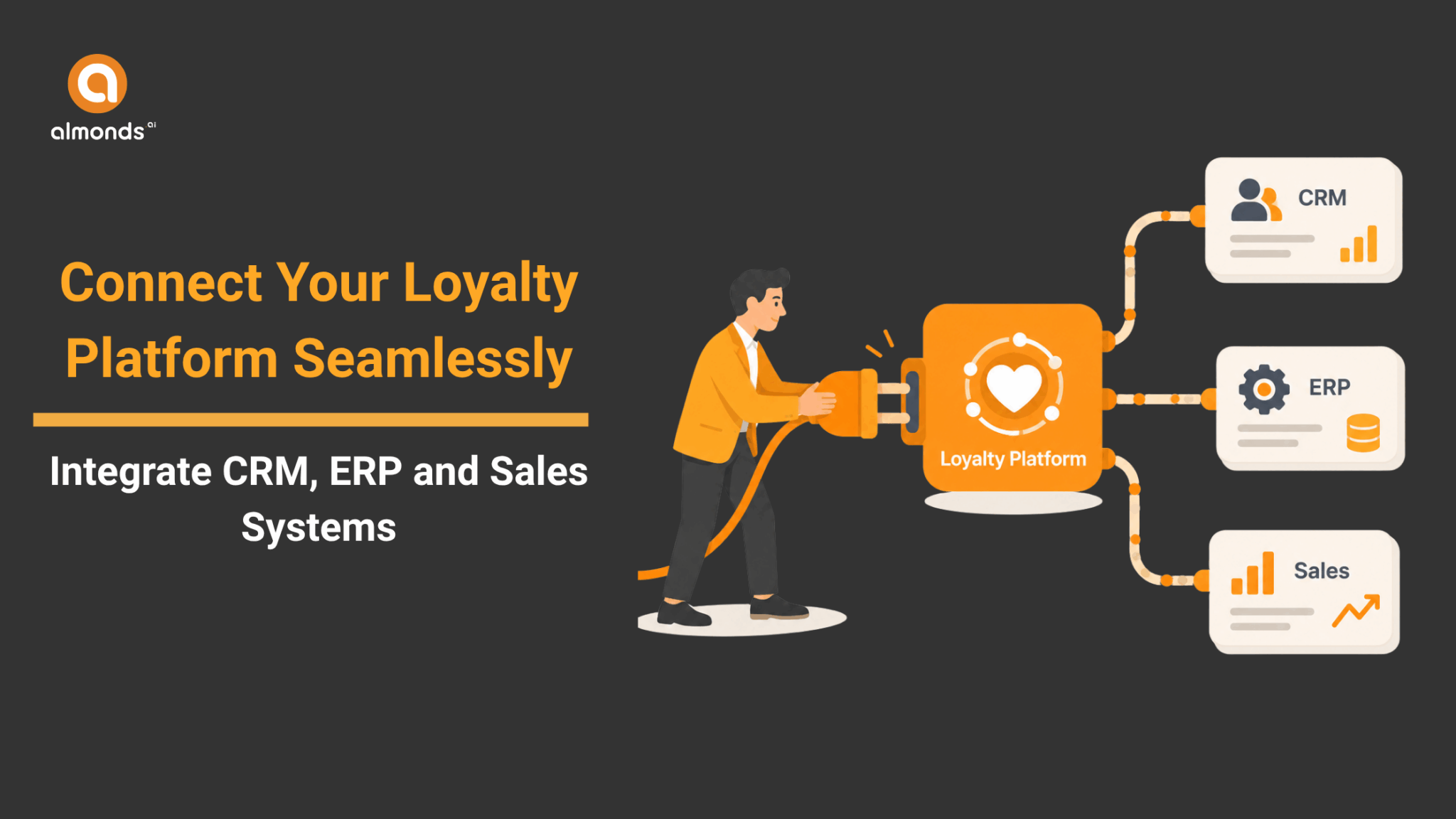
Channel sales data integration is about connecting those separate records so that businesses can understand partner performance, investigate changes and make better commercial decisions. The goal is not to put every available data point on one dashboard. It is to make the information from different systems useful together.
What Data Should CRM, DMS and Loyalty Systems Share?
Each system serves a different purpose. Integration becomes useful when the business understands which information belongs in each system, which identifiers connect the records and which decisions require data from more than one source.
| System | Information it typically holds | Business questions it helps answer |
| CRM | Partner profiles, contacts, sales visits, opportunities and relationship history | What is happening in the relationship? |
| DMS | Distributor orders, invoices, inventory and sales transactions supported by the system | What is happening in distribution and sales? |
| Loyalty platform | Enrollment, qualifying transactions, engagement, points and redemptions | How are partners responding to the program? |
| ERP | Financial records, invoicing, product and account information | What is the financial and operational position? |
| BI or analytics platform | Combined reports, trends and calculated metrics | What is changing, and where should management investigate? |
The exact division of responsibilities varies by organisation. For example, a DMS may capture secondary sales and outlet-level transactions, while another business may receive that information through a separate retail or field-sales system.
The important point is to establish which system is authoritative for each data element. If CRM and DMS both contain a distributor’s name, that does not mean both should independently determine the distributor’s identity.
What data should come from CRM?
CRM data can provide context about the relationship. It may show the distributor’s territory, assigned sales representative, recent visits, open issues, commercial opportunities and relationship history.
When connected with transaction data, these records can help a manager investigate whether a change in sales coincides with changes in field activity or relationship management. They do not prove the cause by themselves, but they make the investigation more informed.
What data should come from DMS and ERP?
These systems can provide information about orders, invoices, product movement, inventory and financial transactions, depending on their configuration. They help establish what happened commercially and operationally.
However, a purchase from the brand should not automatically be treated as proof of downstream demand. Brands need to distinguish upstream transactions from secondary sales or retail sell-out wherever those data are available.
What data should come from a loyalty platform?
A loyalty platform can provide information about enrollment, qualifying purchases, engagement, reward earning and redemption. When linked to commercial records, this information can help a brand examine whether program participation coincides with changes in purchasing behaviour or partner performance.
The distinction is important: a partner who earns or redeems rewards is demonstrably participating in the program, but that activity alone does not establish incremental sales or profitability.
Why Integrating Systems Is Not Enough to Fix Channel Data
A connection between two systems does not guarantee that the information they exchange is correct or consistent. If the source records contain duplicates, outdated attributes or conflicting definitions, integration can distribute those problems more widely.
GS1’s system architecture separates master data, transaction data and visibility-event data, and explains how shared identifiers and agreed information structures help different systems exchange and interpret information. For channel businesses, this distinction has practical consequences.
How duplicate distributor and retailer records distort reporting
Suppose a distributor appears in CRM as “Shree Enterprises,” in DMS as “Shree Enterprises Pvt Ltd,” and in the loyalty platform under an older account code. A report that treats these as three separate entities may understate the distributor’s total activity. An overly aggressive matching rule could create the opposite problem by merging two different businesses.
Both errors can affect partner rankings, sales reporting, reward calculations and territory analysis. The solution is to establish reliable partner identifiers and matching rules. Where a match is uncertain, it should be flagged for review rather than silently accepted.
Why inconsistent definitions create misleading reports
Identity is only one part of the problem. Systems can also disagree about what a metric means.
One report might classify a partner as active if it has logged in during the last 30 days. Another might classify the same partner as active only if it has completed a qualifying purchase. Both definitions can be valid for different purposes, but they cannot be compared without clarification.
Similar issues arise with sales-period cut-offs, product hierarchies, outlet classifications, returns and the distinction between orders and invoices. Before combining reports, the business must agree on the definitions that matter.
What is master data management, and why does it matter?
Master data management (MDM) is the process of maintaining consistent, trusted records of key business entities, such as partners, products, customers, and locations, across systems.
For channel sales, a useful master data model should connect the distributor to its branches, retailers, territories, and relevant account identifiers. It should also preserve the relationships between products, transactions and the partners involved.
This does not always require a large new technology implementation. Some businesses can begin with a common identifier, documented matching rules and clear data ownership. More complex networks may require dedicated MDM capabilities.
How Should Businesses Connect CRM, DMS and Loyalty Data?
The most effective starting point is a specific business decision, not a list of systems to integrate. A company trying to identify declining distributors may need a different first phase from one trying to reconcile reward liabilities or improve outlet coverage.
Step 1: Identify the business decisions the integration must improve
Choose two or three priority questions. For example, which distributors are losing momentum, which territories have weak coverage, or whether partners who adopt a new product are generating more business over time.
These questions determine which data is necessary, how frequently it needs to be updated and which measures should be calculated. Without that discipline, integration projects can accumulate data without improving decisions.
Step 2: Establish common partner, outlet, and product identifiers
Identify the records that need to connect across systems. Establish a trusted partner ID, define how branch and outlet relationships are represented, and map product codes where different systems use different identifiers.
Do not assume that matching names is sufficient. Use existing account IDs where possible, document mapping rules and route uncertain matches for review.
Step 3: Standardise data definitions and reporting periods
Agree on definitions for metrics such as active partner, productive outlet, net sales, qualifying transaction and engagement. Also specify how reporting periods, returns, cancellations and late-arriving transactions are handled.
These decisions should be documented and applied consistently. Otherwise, a connected dashboard may display numbers that appear comparable but were calculated differently.
Step 4: Integrate and validate the data
Data may move through application programming interfaces (APIs), scheduled file transfers, event-based integrations or a central analytical platform. The appropriate method depends on the source systems, update requirements, security constraints and available technical resources.
Start with a small, useful data flow and validate it against the source systems. Check record counts, transaction totals, missing identifiers, duplicate matches and update delays before using the combined data for management decisions.
Step 5: Assign data ownership and monitor quality
Every important data element should have an accountable owner. For example, Sales Operations may own partner hierarchy rules, Finance may own financial definitions, and the technology team may manage data transfer and validation.
Monitor whether records are complete, accurate, consistent and timely. When the source data changes or a new system is introduced, repeat the checks rather than assuming the original integration will remain reliable.
What Channel Insights Become Possible When These Systems Are Connected?
The value of integration becomes clearer when it changes what a sales or channel manager can investigate.
Identify partners whose sales are declining despite continued engagement
A connected view can bring together purchase trends, CRM visits, unresolved issues and loyalty engagement. If a partner remains active in the program while commercial performance declines, the sales team can investigate supply, pricing, assortment, local demand or relationship problems.
The data helps identify where attention is needed. It should not automatically assign a cause without supporting evidence.
Distinguish genuine growth from incentive-driven activity
Brands can compare qualifying transactions, downstream sales where available, incentive costs, and channel partner engagement to understand how program activity relates to business performance.
This is a stronger starting point than measuring redemption alone. However, demonstrating that an incentive caused additional sales still requires an appropriate baseline or comparison method.
Find gaps in territory and outlet coverage
Connecting partner hierarchies, outlet records, sales transactions and field activity can reveal markets where coverage is low or recorded outlets are not generating productive business.
It can also help distinguish a territory with genuine demand constraints from one where distribution, availability or field execution deserves further investigation.
Improve partner segmentation and resource allocation
A combined view can help brands compare current sales, growth trends, coverage, engagement and profitability rather than relying on one ranking metric.
This is useful when deciding where additional sales support, training or development investment may be warranted. The resulting segmentation should reflect the company’s commercial objectives and the quality of the underlying data.
How Do You Measure the Business Value of Channel Data Integration?
Integration should be evaluated on whether it improves the business process it was intended to support. Technical delivery is necessary, but a system can go live successfully without changing the quality or speed of commercial decisions.
A practical measurement plan should include both data-quality indicators and business outcomes.
| Measure | What it evaluates |
| Partner-record match rate | How many relevant records can be linked reliably |
| Duplicate-record rate | Whether conflicting identities are being reduced |
| Data completeness | Whether required fields are available |
| Data freshness | Whether information arrives in time for decisions |
| Reconciliation exceptions | Whether combined figures agree with source systems |
| Reporting time | Whether teams can prepare reports more efficiently |
| Decision adoption | Whether managers use the connected insights |
| Business outcome | Whether the project improves targeted commercial result |
These are proposed measurement categories, not universal industry benchmarks. The business should establish its baseline and define realistic targets before implementation.
A useful Indian example is Tata Consumer Products’ MAVIC sales and distribution platform. In its published case study, the company reports that automating distributor validation, account creation and activation reduced distributor onboarding from approximately one week to under 45 minutes.
That is a concrete operational result from improving a sales and distribution process. It should not be interpreted as a guaranteed outcome from every data integration project; the broader lesson is to identify a measurable process problem and assess whether the new system improves it.
Should You Build a Central Data Platform or Integrate Existing Systems?
Not every business needs to replace its CRM, DMS or loyalty platform. In many cases, the better first step is to connect the existing systems around a clearly defined commercial use case.
A business with a few stable systems and straightforward reporting needs may be able to start with targeted integrations and a shared analytical layer. A larger organisation with many brands, territories, partner hierarchies and inconsistent records may need stronger data governance, master data management or a central data platform.
The decision should depend on the complexity of the network, the reliability of the source data, the required update frequency and the business questions that need answering. The right architecture is the simplest one that reliably supports the decisions the business needs to make.
How Does Connected Channel Data Prepare a Business for AI?
Connected data can create the foundation for analytics that identify unusual sales changes, flag declining partner activity or help prioritise accounts for further investigation.
But AI does not remove the need for reliable identities, consistent definitions and appropriate context. If a distributor’s transactions are split across duplicate records, an analytical model may interpret the partner as weaker than it is. If the data is delayed, a recommendation may arrive too late to be useful.
The practical sequence is therefore to establish trustworthy data, connect it around meaningful business questions, validate the resulting insights and then introduce automation or predictive analysis where it adds value.
Frequently Asked Questions
What is channel sales data integration?
Channel sales data integration connects information from systems such as CRM, DMS, ERP and loyalty platforms so that businesses can analyse partner activity, transactions and performance together. Its purpose is to improve reporting and commercial decisions, not simply to move records between applications.
What is the difference between CRM and DMS?
A CRM typically manages partner relationships, contacts, sales activities and opportunities. A DMS typically supports distribution processes such as orders, invoicing, inventory and distributor transactions, depending on the system. They serve different purposes and can complement each other when their data is connected appropriately.
Why should CRM and distributor management systems be integrated?
Integration can connect relationship activity with commercial performance. It helps businesses investigate changes in distributor purchases, identify gaps in reporting and give sales managers a more complete view of partner relationships.
How can businesses integrate loyalty data with sales data?
Businesses can link loyalty records to verified partner identifiers and relevant transaction data, then compare engagement and reward activity with commercial outcomes. The approach must account for qualifying transaction rules, duplicate records and the difference between participation and incremental business impact.
What is master data management in channel sales?
Master data management establishes and maintains consistent records for important entities such as distributors, retailers, products and territories. It helps different systems refer to the same business entity reliably and reduces errors caused by conflicting or duplicate records.
How do duplicate partner records affect sales reporting?
Duplicate records can split a partner’s transactions across multiple accounts, distort partner rankings and produce inaccurate engagement or performance reports. Reliable identifiers, documented matching rules and a process for reviewing uncertain matches help address the problem.
What data should be included in a channel sales dashboard?
A useful dashboard may include partner identity, territory, sales trends, orders, inventory where available, outlet coverage, product movement, engagement and profitability. The right selection depends on the decisions the dashboard is intended to support and the reliability of the underlying data.
How can businesses measure the ROI of data integration?
Measure the project’s cost alongside improvements such as reduced reporting time, fewer reconciliation errors, better data completeness and improved use of commercial insights. Where the objective is financial growth, establish a baseline and use an appropriate comparison method rather than attributing every post-implementation improvement to integration.
Can AI improve channel sales analytics?
AI can help identify patterns, flag unusual changes, and prioritise partners for investigation. Its usefulness depends on data quality, consistent definitions, and appropriate business context; it cannot reliably compensate for fundamentally incorrect or disconnected records.