
India’s FMCG and packaged goods market doesn’t fail because of weak products or pricing. It fails when brands misunderstand one fundamental truth:

Yet most channel loyalty programs still treat retailers, distributors, mechanics, and influencers as if they’re interchangeable participants in the same scheme.
They are not. In a market with 13+ million retailers, fragmented distribution, thin margins, and intense brand clutter, channel loyalty isn’t about running more schemes. It’s about designing different channel partner engagement systems that reflect how value actually flows through the channel.
This is where many brands oversimplify and where competitive advantage is quietly created or lost.
Treating Channel Loyalty as a Uniform Incentive Problem
Most loyalty programs are designed backwards. They start with:
- What reward can we offer?
- What point structure should we run?
- How do we scale this across the network?
But effective channel loyalty starts with a different question:
 A retailer deciding what to stock, a distributor deciding what to push, and an influencer deciding what to recommend are solving three completely different problems every day.
When brands apply the same incentive logic across all of them, engagement becomes shallow, participation drops, and loyalty turns transactional.
Retailer Loyalty Programs
Winning the Counter, Not Just the Order
Retailers are the final gatekeepers of demand. In India, where over 85% of FMCG sales still pass through general trade, what gets sold often depends on what the retailer remembers, trusts, and feels rewarded for pushing.
However, retailer motivation isn’t driven by absolute margins alone. Field studies across FMCG categories consistently show that retailers prioritize brands that offer:
- Predictable rewards
- Fast validation
- Low effort participation
- Recognition for consistency, not just volume
Retailer loyalty programs work best when they reinforce habitual behavior:
- Reordering the same brand repeatedly
- Giving shelf visibility without constant negotiation
- Recommending the brand confidently to walk-in customers
Programs that rely only on quarterly slab-based schemes miss this entirely. They reward spikes, not consistency — which is exactly why retailer engagement disappears between schemes.
Distributor Loyalty Programs
Aligning Priority, Not Just Margin
Distributors don’t sell brands. They allocate attention. Every distributor manages dozens of SKUs competing for the same sales force time, credit bandwidth, and logistical focus. In practice, this means:
- Some brands get pushed aggressively
- Some get serviced passively
- Some quietly stagnate
Contrary to popular belief, higher margins alone don’t guarantee priority. Distributors respond to clarity, predictability, and reduced operational friction. Effective distributor loyalty programs focus on:
- Consistent secondary movement
- Route-level performance visibility
- Timely incentives aligned to brand priorities
- Reduced disputes over claims and targets
When distributor loyalty is designed correctly, it stops being an expense line and becomes a control system for secondary sales behavior — something most SMB brands struggle to achieve.
Influencer Loyalty Programs: Capturing Demand Before the Counter
In categories like automotive aftermarket, electricals, hardware, appliances, and even personal care, the real decision is often made before the retailer interaction.
Mechanics, electricians, painters, and local influencers shape brand choice long before a product reaches the billing counter.
Yet many brands still treat influencer programs as peripheral experiments instead of core demand drivers.
Influencer loyalty works when it:
- Recognizes influence, not just sales volume
- Rewards recommend behavior consistently
- Builds emotional attachment through status and recognition
- Educates while incentivizing
In India’s fragmented markets, these influencers often have more impact on brand choice than national advertising — and ignoring them creates invisible demand leakage.
Why Layered Loyalty Design Is No Longer Optional
The most resilient FMCG brands aren’t running “schemes.” They’re running multi-layer loyalty ecosystems. Think of channel loyalty not as a single program, but as a stack of coordinated systems, each aligned to a specific role:
- Retailer loyalty drives availability and recall
- Distributor loyalty drives push and reach
- Influencer loyalty drives preference and pull
- Field force incentives drive execution discipline
Each layer operates independently, but feeds into a unified data and engagement backbone. Brands that fail to separate these layers often overpay for results they don’t control, while under-investing in behaviors that actually move the market.
Where Most Brands Oversimplify (And Pay the Price)
Across FMCG and packaged goods, three patterns show up repeatedly:
- The same scheme, with different partner types, leads to confusion, low participation, and declining ROI.
- Delayed rewards and manual validation break trust faster than low incentives ever could.
- Lack of behavioral data forces brands to rely on distributors for insights, often too late to act.
In India’s fast-moving markets, loyalty without visibility becomes blind spend.
Shift Brands Should Know Into 2026
What’s changing now — and will accelerate through 2026 — is not just technology adoption, but mindset.
Leading brands are moving from:
- Event-based schemes → always-on engagement
- Generic incentives → behavior-driven rewards
- Manual programs → automated loyalty infrastructure
- Distributor-dependent visibility → direct channel intelligence
This shift is especially critical for SMB and mid-sized brands competing against national players with larger budgets.
Why Loyalty Infrastructure Matters More Than Loyalty Spend
The brands winning tomorrow won’t be the ones spending more on incentives; they’ll be the ones designing loyalty systems that work continuously, predictably, and transparently.
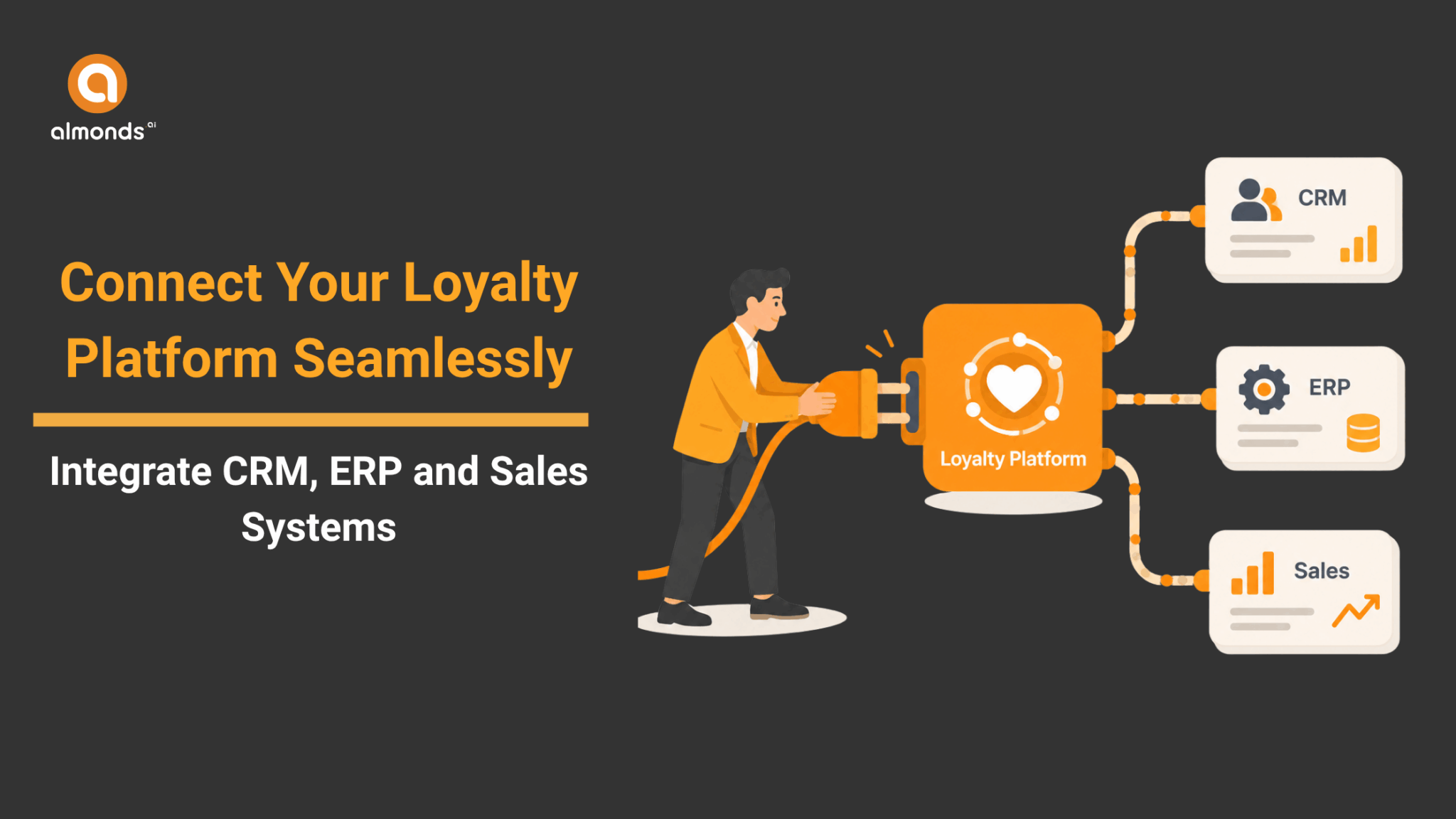
Modern SaaS-based channel loyalty platforms make this possible by:
- Enabling instant reward fulfillment
- Automating validation and fraud checks
- Creating real-time dashboards across partner types
- Supporting gamification and micro-engagement
- Scaling without adding manpower
This is not about running better schemes. It’s about building behavioral infrastructure inside the channel.
Final Thought
In India’s channel-driven markets, loyalty has evolved beyond promotions and payouts. It’s now a core capability, one that determines:
- Which brands get stocked
- Which brands get pushed
- Which brands get remembered
- And ultimately, which brands grow sustainably
Designing channel loyalty programs with nuance, differentiation, and intent isn’t optional anymore. It’s the difference between being present in the market and being chosen in it.