Team Almond - Almonds Ai - Page 3

Almonds Ai releases Channel Loyalty Report 2026 analyzing India’s evolving channel loyalty ecosystem. Click Here

Categories
Blogs

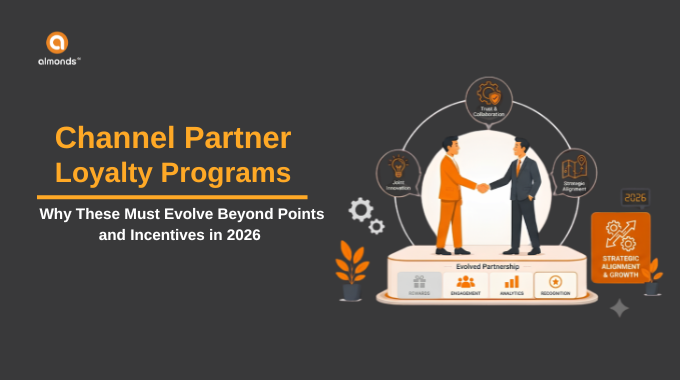
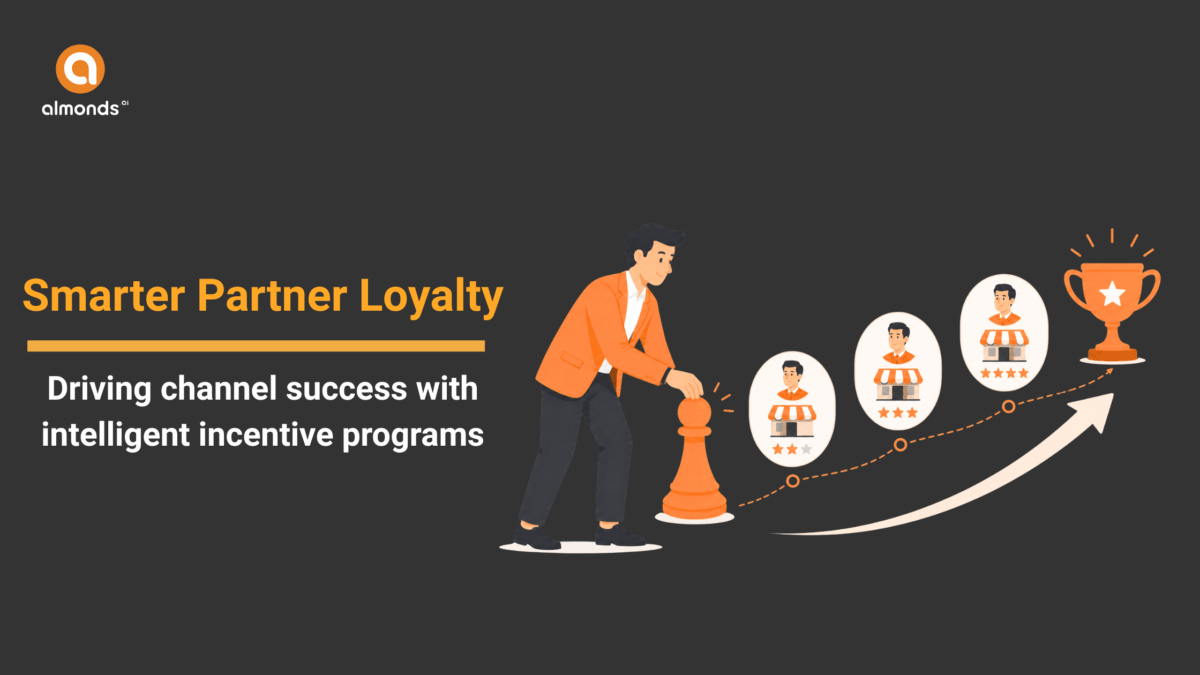
Why Channel Partner Loyalty Programs Must Evolve Beyond Points and Incentives in 2026

For years, channel partner loyalty programs have played an important role in helping brands strengthen relationships with distributors, dealers, retailers, contractors, and influencers. 

The traditional approach was simple. Set sales targets. Reward achievements. Provide incentives. This model helped brands improve short-term sales performance and encourage participation. However, channel ecosystems have become far more complex. 

Today, a distributor manages multiple brands. A retailer receives incentive schemes from several companies. An electrician, mechanic, or contractor may participate in multiple reward programs at the same time. 

This creates a new challenge for brands. Your channel partners may be enrolled in your program, but are they actively engaged with your brand? 

Many organizations measure loyalty by registrations, points issued, or rewards redeemed. However, these metrics do not always represent true channel partner loyalty. A partner can redeem rewards and still shift business when another brand provides a better incentive. 

This is why leading organizations are redesigning channel partner loyalty programs from simple reward systems into intelligent engagement platforms focused on behavior, relationships, and long-term growth. 


Why Traditional Channel Partner Loyalty Programs Are Losing Impact 

Most traditional channel partner loyalty programs are built around transaction-based incentives. The more partners sell, the more they earn. While sales incentives remain important, relying only on transactions creates several challenges. Many brands experience: 

  • High enrollment but low active participation
  • Dependence on increasing incentive budgets
  • Limited visibility into partner behavior
  • Difficulty engaging smaller partners
  • Weak connection beyond schemes 

In highly competitive industries such as FMCG, automotive, electricals, and building materials, partners often work with competing brands simultaneously. If loyalty exists only because of incentives, the relationship becomes vulnerable. 

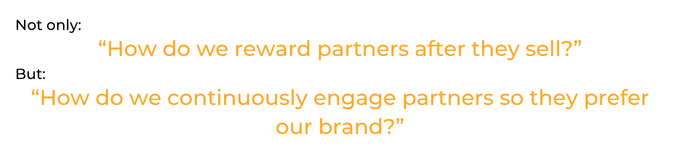
A competitor with a better short-term offer can easily influence partner preference. Modern channel loyalty strategies focus on answering a different question: 

Channel partner loyalty programs shifting from rewarding sales transactions to creating continuous partner engagement and stronger brand preference.


The Biggest Challenge: Channel Engagement Gap 

One of the biggest issues brands face is the gap between channel partner enrollment and partner engagement. Launching a loyalty program can bring thousands of dealers or retailers onto a platform. But after launch, many brands struggle with: 

  • How frequently do channel partners participate
  • Whether they understand new products
  • Whether they complete training
  • Whether they recommend the brand
  • Whether they remain active after the campaigns end 

This engagement gap directly affects business outcomes. 

A highly engaged partner does more than complete transactions. They recommend products, educate customers, participate in campaigns, and become a long-term growth contributor. That is why channel partner engagement is becoming a strategic priority rather than only a sales support activity. 


From Sales-Based Rewards to Behavior-Based Channel Loyalty 

The future of channel partner loyalty programs is behavior-driven. 

Sales will always remain important, but sales results are often influenced by activities that happen much earlier. For example, a retailer who understands a product better is more likely to recommend it. 

A contractor who receives regular training is more likely to trust the brand. A distributor who actively participates in campaigns becomes easier to retain. Modern programs reward actions such as: 

  • Product training completion
  • New product adoption
  • Retail visibility improvement
  • Customer referrals
  • Digital platform usage
  • Feedback participation
  • Brand advocacy 

This creates continuous engagement rather than occasional interactions during sales campaigns. The objective is simple. Reward the behaviors that create better business outcomes. 


Personalization Is Becoming Essential in Channel Partner Loyalty Programs 

A common mistake brands make is treating every channel partner the same. A large distributor, a regional dealer, and a small retailer do not have the same motivation. Their business size, challenges, purchase behavior, and expectations are different. 

A one-size-fits-all loyalty program often fails because it ignores these differences. Modern channel loyalty platforms use data to create personalized engagement journeys.

For example, a new retailer may receive onboarding activities and product education. A growing dealer may receive achievement challenges. A top-performing distributor may receive exclusive recognition benefits. This creates a more relevant experience for every partner segment. 

The future of channel loyalty is not about offering everyone the same reward. It is about creating the right motivation for every partner.  


Role of AI in Modern Channel Partner Loyalty Programs 

Managing thousands or millions of channel partners manually is extremely difficult. This is where artificial intelligence is transforming loyalty management. AI-powered channel loyalty platforms help brands understand partner behavior at scale. AI can help identify: 

  • Which partners are becoming inactive
  • Which partners have growth potential
  • Which incentives perform better
  • Which campaigns drive engagement
  • Which partners need attention 

Instead of running the same campaign for everyone, brands can create smarter engagement strategies based on real data. AI transforms loyalty from reactive reward distribution into predictive partner management. 


Gamification: Moving Beyond Leaderboards and Spin Wheels 

Gamification has become an important part of channel partner engagement. However, effective gamification is not simply adding badges or lucky draws. The purpose of gamification is to create motivation and consistency. Modern channel loyalty programs use: 

  • Achievement journeys
  • Learning milestones
  • Progress tracking
  • Performance challenges
  • Recognition levels 

These mechanics encourage partners to stay involved even outside sales cycles. For example, an electrical brand can create learning challenges for electricians. An automotive company can create certification journeys for mechanics. 

A building materials brand can recognize contractors based on expertise and participation. Gamification works best when it supports business objectives rather than acting as entertainment. 


How Different Industries Are Transforming Channel Loyalty 

FMCG Channel Loyalty Programs 

FMCG brands use channel partner loyalty programs to improve retailer engagement, increase product visibility, and strengthen distribution relationships. Channel programs now focus on retailer activation, campaign participation, and market expansion. 

Building Material Loyalty Programs 

Building material companies engage dealers, contractors, painters, electricians, and architects through training, rewards, and recognition programs. The goal is to create brand preference in a highly competitive market. 

Automotive Channel Loyalty Programs 

Automotive brands use loyalty platforms to engage dealers, mechanics, workshops, and spare parts retailers. Programs encourage product knowledge, genuine parts adoption, and long-term relationships. 

Electrical and Electronics Loyalty Programs 

Electrical brands increasingly engage electricians, contractors, and retailers through digital platforms that combine rewards, education, and community building. 


Metrics Brands Should Track Beyond Reward Redemption 

Traditional loyalty measurement focuses heavily on: 

  • Points issued.
  • Points redeemed.
  • Sales generated. 

Modern channel partner loyalty programs measure deeper indicators. Brands should track: 

  • Active partner percentage
  • Engagement frequency
  • Training participation
  • Campaign completion
  • Partner retention rate
  • Product adoption
  • Sales growth by segment
  • Partner lifetime value 

These metrics provide a clearer understanding of relationship strength. 


The Future of Channel Partner Loyalty Programs: 2026 and Beyond 

The next generation of channel partner loyalty programs will be defined by who creates the strongest partner relationships, not by who provides the biggest rewards. Future-ready programs will combine: 

  • AI-powered personalization
  • Behavioral engagement
  • Gamification
  • Channel partner analytics
  • Recognition and Community
  • Continuous communication 

Brands that understand their partners better will build stronger distribution networks and gain a competitive advantage. 


Conclusion 

Channel partner loyalty is entering a new phase. Points and incentives will continue to play an important role, but they cannot be the only foundation of loyalty. A truly successful channel partner loyalty program creates engagement before, during, and after every transaction. 

Future-ready channel partner loyalty programs focus on stronger relationships, smarter engagement strategies, and long-term partner value beyond incentives.
Because the future of channel loyalty is not about rewarding transactions. It is about building partnerships.
494 Post views
Categories
Blogs

Winning the Channel Game With Smarter Partner Loyalty Programs

The modern B2B landscape is highly competitive, and securing customers is just half the challenge. The real challenge lies in winning the channel—your distributors, retailers, dealers, and resellers who directly influence market reach and revenue. 

In increasingly commoditized products and lower margins, companies can no longer depend on simple incentives or one-size-fits-all rewards. That’s where channel partner loyalty programs come in handy!

These programs can be more than just transactional incentives when they’re well-designed and data-driven. They create lasting connections, ensure steady results, and have channel partners become advocates.

Why Has the Channel Game Changed?

The traditional channel management strategy was based on incentives, discounts, and quarterly schemes. These techniques can provide short-term spikes, but they are not effective in building lasting loyalty. Today’s channel partners are expecting the following:

  • Personalized engagement
  • Transparent reward structures
  • Digital-first experiences
  • Recognition beyond just sales numbers

Modern channel partner loyalty programs address these expectations by combining technology, behavioral insights, and strategic rewards to keep partners motivated year-round.

What makes a “smart” channel partner loyalty program?

A better strategy for managing loyalty programs for channel partners is to measure results, rather than activities. Here are some of the things that make a successful program different from an old-fashioned program:

1.Data-Driven Partner Segmentation

Each partner does not need to contribute equally. Smart programs try to “segment” partners based on behavior, geography, and performance. This will make sure that incentives are relevant and attainable to each group.

2.Personalized Rewards and Journeys

Rewards that are not specific are not motivators to action. The best channel partner loyalty programs feature tailored catalogs, experiential incentives, and milestone reward recognition connected to channel partner motivation.

3.Continuous Engagement (Not One-Time Campaigns)

It’s always-on engagement, via points, challenges, learning modules, and recognition, which keeps partners engaged even when sales are slow.

4.Clear Visibility and Transparency

It is always important for partners to be aware of where they stand. Trust and participation are fostered by creating dashboards, tracking points in real time, and providing instant gratification.

Common Mistakes Brands Still Make

Many loyalty programs for channel partners never reach their full value because of strategic and execution mistakes that are easy to avoid. Once you recognize these errors, you can design a program that will be effective in engaging your partners and growing your business.

Treating Loyalty as a Cost Center

Many brands are just considering loyalty programs as a cost rather than a revenue source. If channel partner loyalty programs are viewed as a “freebie” rather than an investment in growth, they are not well-defined, have little measurement, and are not supported by leadership and leading to poor ROI.

Focusing Only on Short-Term Schemes

Low long-term vision for running limited time schemes causes inconsistent engagement. The best channel partner loyalty programs are always on, and they promote ongoing partnerships rather than quick sales bursts.

Overcomplicating Rules and Rewards

Conditions for earning rewards are complicated, and rewards are not clearly defined. When you can’t figure out how to collect a reward, or maybe how to use the reward to benefit others, motivation inevitably fades.

Ignoring Non-Sales Behaviors

Loyalty isn’t just measured by sales. Most programs flounder because they overlook the behaviors that are essential to a successful channel: completion rates, onboarding rates, promoting products, and providing data.

Lack of Scalable Technology

Limited reach and visibility due to manual processes and disjointed tools. Channel partner loyalty programs must be scalable, intelligent, and able to be adapted to business model, tier, and region.

The Role of Technology in Scaling Loyalty

Manual management is not possible as channel ecosystems increase. Technology enables brands to:

  • Automate reward calculations
  • Start campaigns in markets in no time at all.
  • Monitor ROI and partner performance in real-time.
  • Engage in a personalized way on a large scale.

AI-powered platforms go the extra mile by learning from data, forecasting partner actions, and automatically optimizing campaigns to make channel partner loyalty programs smarter and more effective over time.

Turning Partners Into Advocates

Repeat sales are the end game of any loyalty program—but it’s not the beginning. If the partners feel appreciated, acknowledged, and rewarded appropriately, they will endorse your brand over others. Smart channel partner loyalty programs encourage:

  • Product recommendations
  • Participation in launches and promotions
  • Knowledge sharing & training completion
  • Strong loyalty towards the brand. Long-term commitment with the brand.
  • This establishes a virtuous cycle of trust, performance, and growth.

Are You Ready to Build Smarter Channel Loyalty?

If you’re looking to move beyond basic incentives and create meaningful, measurable engagement with your distributors and retailers, it’s time to rethink your approach. Almonds.ai empowers companies to create and administer intelligent, scalable, and performance-based B2B channel partner loyalty programs. Almonds empowers brands to convert partners into long-term growth allies through AI-driven insights, seamless automation, and a deep understanding of channel ecosystems. Start winning the channel game—smarter, faster, and more effectively—with Almonds.ai.

505 Post views
Categories
Blogs

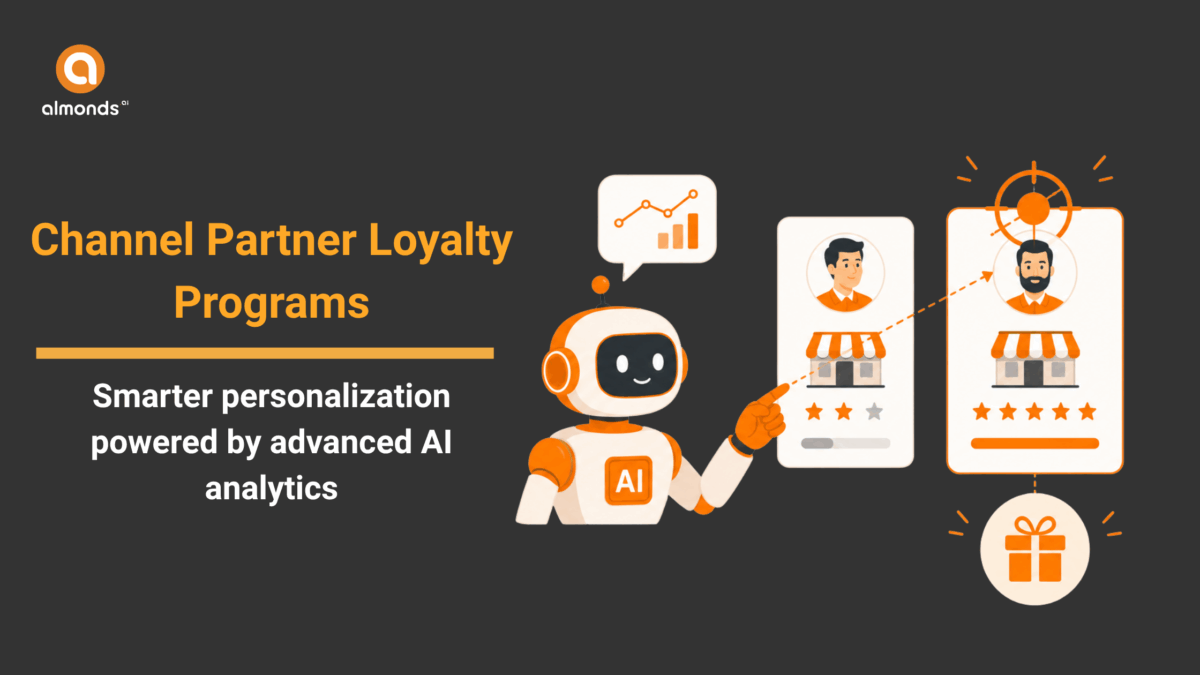
How to Personalize Channel Partner Loyalty Programs Using AI Insights

Channel partners, including distributors, retailers, resellers, and dealers, are vital to revenue and market growth in today’s highly competitive B2B environment. But it is no longer possible to motivate and retain these partners with generic incentives and one-size-fits-all schemes. That’s where AI-driven channel partner loyalty programs are revolutionizing success.

The mission at Almonds.ai is straightforward: create B2B loyalty programs just for channel partners. AI-powered intelligence allows brands to now engage, reward, and communicate at scale and transform transactional relationships into long-term partnerships.

Why Does Personalization Matter in B2B Channel Partner Loyalty Programs?

The B2B relationship is complex, as opposed to B2C loyalty. Channel partners vary in size, geography, sales capability, focus, and maturity. Because of unequal treatment, the incentives are not always leveraged, participation is low, and partners become disengaged. Customized channel partner loyalty programs can enable brands to:

  • Pay partners in proportion to contribution, not assumption.
  • Use incentives to align with business goals.
  • Enhance trust and commitment for long-term planning.
  • Incentivize targeted actions like upselling, new product adoption, or market penetration.

This personalization can only be achieved with AI insights, which is impossible to do manually.

1. Segment Channel Partners Intelligently Using AI

Traditional segmentation typically uses region-based and sales-size-based criteria to group partners together. AI delves deeper by examining several data points simultaneously, like growth rate, buying behavior, and engagement. This enables companies to determine high-growth partners, low-performance partners, and high-potential partners. In doing so, channel partner loyalty programs can be more relevant and effective for each channel partner group, with the right rewards, challenges, and communication.

2. Customize Rewards by Partner’s Choice

Not all channel partner loyalty programs are motivated by the same rewards. AI insights guide understanding what is most important to the individual partners. Some distributors may want a higher margin, or retailers may want business tools, training, and/or experiences. Rewards at the regional level may lead to better responses. AI-driven channel partner loyalty programs tailor rewards to these preferences, boost engagement and happiness, and maintain affordability.

3. Deliver Dynamic and Real-Time Incentives

Yearly loyalty programs don’t always appeal to the partners. AI allows for live incentives for partner actions. Rewards for channel partner loyalty programs are immediate for minor successes. 

They are offered for short periods during peak sales, and they are personalized challenges when performance declines. They are dynamic channel partner loyalty programs that help the partners stay motivated all year round and not just at the quarter-end or annual goals.

4. Connect Loyalty Programs to Business Strategy

AI can assist businesses in creating loyalty initiatives that align with business goals rather than just sales figures. Rewards can be tied to behaviors such as boosting sales of new products, selling slow-moving items, entering new markets, or repeat purchases. Rewards are linked to certain behavior and encourage channel partner loyalty programs to act in a manner that will help reach longer-term business goals and build stronger partnerships.

5. Predict Partner Behavior and Prevent Drop-Off

By monitoring shifts in sales, activity, or participation, AI can predict when a channel partner may be in danger of dropping out. This enables brands to act promptly, providing the appropriate rewards or support to help. Proactive engagement is used to avoid drop-offs and to build relationships. Predictive insights help you focus on retaining current channel partners, rather than acquiring new ones, through channel partner loyalty programs.

6. Provide Personalized Communication and Nudges

AI also tailors communication, not only the rewards. Partners get messages according to their advancement, objectives, and execution. This includes customizable dashboards, reminders for attainable rewards, and performance metrics specific to their job. Leveraging clear and relevant communication is also a great way to establish trust and transparency, thus creating more engaging and understandable channel partner loyalty programs.

7. Measure and continuously optimize what works

AI monitors a partner’s reaction to rewards and incentives in real time. Brands can determine which ones are driving sales and which ones aren’t. This makes it easier to make improvements to reward systems, take out ineffective rewards, and boost ROI. With AI, channel partner loyalty programs can be easily tailored to the individual partner and continuously changed according to market dynamics and partner behavior.

Why AI-Powered Personalization Is Critical for B2B Loyalty Success?

In B2B ecosystems, loyalty is built on relevance, fairness, and long-term value. AI-powered personalization ensures:

  • Partners feel understood, not treated as numbers
  • Rewards drive measurable business outcomes
  • Loyalty programs scale without operational complexity

This is especially important in channel-driven industries where partner performance directly impacts revenue growth.

Power Smarter Channel Partner Loyalty Programs with Almonds AI

The primary mission of Almonds is to develop AI-based B2B loyalty programs specifically for channel partners such as retailers, distributors, dealers, and resellers. We enable businesses to transcend generic incentives and create intelligent, personalized loyalty ecosystems that impact business.

Almonds helps brands leverage AI insights to create, automate, and optimize channel partner loyalty initiatives that boost engagement, deepen bonds, and ensure long-term growth. Looking to leverage AI for personalization and revolutionize the channel strategy? Explore how almonds can elevate your loyalty ecosystem:

534 Post views
Categories
Blogs

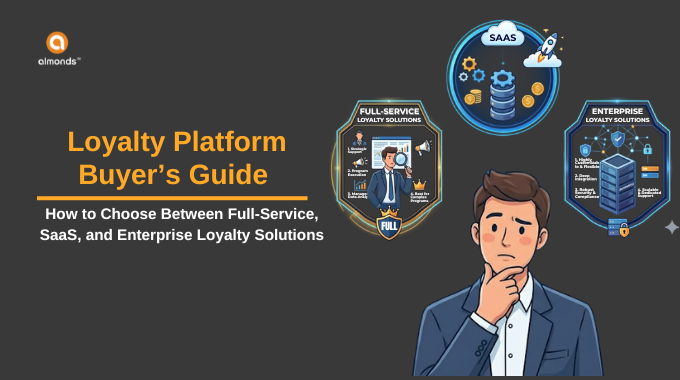
The Loyalty Platform Buyer’s Guide 2026: How to Choose the Right Loyalty Solution for Your Business

The loyalty technology market has evolved significantly over the last decade. What was once a simple points-and-rewards system has become a sophisticated engagement ecosystem powered by AI, personalization, analytics, gamification, and real-time behavioral insights.  

For brands evaluating loyalty platforms today, the challenge is no longer whether to launch a loyalty program. The challenge is selecting the right operating model. 

Should you invest in an enterprise-grade loyalty platform that offers maximum flexibility but requires significant internal resources? Should you choose a SaaS solution that enables rapid deployment and self-service management? Or should you partner with a full-service loyalty provider that combines technology, strategy, operations, rewards, analytics, and program execution? 

The answer depends on your organization’s goals, resources, budget, timeline, and internal capabilities. This guide explores the modern loyalty platform landscape and provides a practical framework for evaluating solutions across enterprise, SaaS, and full-service models. 

Key Takeaways 

  • Loyalty programs are increasingly evolving into engagement platforms that drive retention, advocacy, channel performance, and revenue growth.
  • AI, personalization, behavioral analytics, and gamification are becoming standard requirements rather than premium features.
  • Many loyalty programs fail because organizations underestimate the operational complexity required for sustainable engagement.
  • Enterprise platforms offer maximum flexibility but require substantial internal ownership and investment.
  • SaaS platforms provide speed and affordability but may limit customization and strategic support.
  • Full-service loyalty platforms bridge the gap by combining technology with strategy, execution, analytics, and operational management.
  • Selecting the right solution depends less on platform features and more on organizational readiness. 
Loyalty Industry Overview 

The Evolution of Loyalty Platforms in India 

Loyalty programs have changed dramatically over the past decade. Historically, loyalty programs focused on transactions. Customers earned points, redeemed rewards, and repeated purchases. Similarly, channel loyalty programs rewarded dealers, distributors, and retailers based on sales performance. 

Today, loyalty platforms are expected to do much more. Modern loyalty programs drive engagement, influence behavior, improve retention, gather behavior intelligence, strengthen relationships, and support business growth across multiple dimensions. 

This shift has been driven by several market forces. Channel partner’s expectations have increased. Channel ecosystems have become more competitive. Data availability has expanded. Digital engagement has accelerated. Organizations now expect loyalty programs to contribute directly to measurable business outcomes. 

As a result, loyalty platforms have evolved from reward engines into engagement ecosystems. 


Common Loyalty Platform Uses

Channel Partner Engagement 

Manufacturers and distribution-led businesses use loyalty platforms to increase dealer participation, distributor engagement, training completion, product adoption, and sales performance. 

Sales Incentive Programs 

Organizations use loyalty platforms to motivate sales teams through performance-based incentives, recognition programs, achievement tracking, and rewards. 

Customer Loyalty Programs 

Retailers, consumer brands, and service providers use loyalty ecosystems to increase retention, encourage repeat purchases, and improve customer lifetime value. 

Employee Engagement Programs 

Companies increasingly use loyalty technology to support employee recognition, learning programs, wellness initiatives, and performance engagement. 


The Loyalty Platform Challenge 

Why Traditional Loyalty Program Approaches Often Fail 

Many organizations begin loyalty initiatives with the assumption that launching a platform is the primary challenge.  

In reality, launching the loyalty platform is often the easiest part. Sustaining engagement, managing rewards, ensuring compliance, maintaining relevance, analyzing performance, and continuously optimizing the program require significant effort. This is where many loyalty initiatives struggle. Common challenges include: 

  • Low program participation after launch
  • Poor reward redemption rates
  • Limited internal resources
  • Difficulty measuring ROI
  • Fragmented technology ecosystems
  • Lack of personalization
  • Compliance and governance concerns
  • Limited engagement beyond incentives

Technology alone rarely solves these problems. Success requires a combination of platform capabilities, strategic planning, operational execution, analytics, and ongoing optimization. This is why understanding different solution models is critical before selecting a provider. 


Understanding the Loyalty Platform Landscape 

Enterprise Loyalty Platforms 

Enterprise loyalty platforms are designed for large organizations with extensive operational requirements, complex integrations, and dedicated internal teams. These solutions prioritize flexibility, scalability, and customization. 

Organizations typically configure loyalty logic, engagement journeys, reward structures, integrations, and analytics frameworks according to their specific requirements.  

Typical Features 
  • Advanced loyalty engines
  • Enterprise-grade integrations
  • Complex segmentation
  • Real-time personalization
  • Multi-country support
  • Large-scale member management
  • Advanced reporting and analytics
Advantages 

Enterprise platforms provide maximum control and customization. Organizations can tailor virtually every aspect of the program to align with their business requirements. These solutions are often well suited for global enterprises managing millions of members across multiple markets. 

Limitations 

Enterprise implementations are typically resource-intensive. Organizations often require: 

  • Dedicated loyalty teams
  • IT resources
  • Analytics specialists
  • Integration support
  • Ongoing operational management

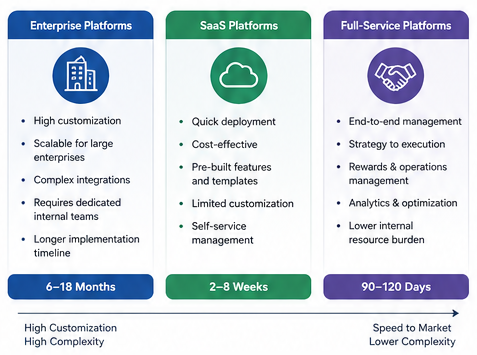
Implementation timelines frequently range from six to eighteen months. 

Ideal Use Cases 

Enterprise loyalty platforms are best suited for organizations requiring extensive customization, complex system integrations, and large-scale global program management. 


SaaS Loyalty Platforms 

SaaS loyalty platforms prioritize speed, simplicity, and affordability. These solutions enable organizations to launch loyalty programs quickly using predefined frameworks, templates, and self-service administration tools. 

Typical Features 
  • Pre-built loyalty workflows
  • Self-service management
  • Basic analytics
  • Standard integrations
  • Reward management
  • Campaign creation tools 
Advantages 

SaaS platforms offer faster deployment and lower upfront costs. Organizations can often launch programs within weeks rather than months. The operational burden is lower than enterprise solutions, making SaaS attractive for growing organizations with limited internal resources. 

Limitations 

Customization is often constrained by platform architecture. As programs become more sophisticated, organizations may encounter limitations related to integrations, personalization, analytics, and engagement design. 

Ideal Use Cases 

SaaS platforms are well suited for organizations seeking rapid deployment, standard loyalty functionality, and lower operational complexity. 


Full-Service Loyalty Platforms 

Full-service loyalty platforms combine technology, strategy, execution, analytics, rewards management, and operational support within a unified engagement model. Instead of simply providing software, full-service providers help organizations design, launch, manage, optimize, and scale loyalty programs.  

Typical Features 
  • End-to-end program design
  • Technology platform
  • Strategic consulting
  • Rewards management
  • Creative services
  • Compliance support
  • Analytics and optimization
  • Ongoing program management 
Advantages 

Organizations gain access to technology and expertise without building extensive internal loyalty operations. The provider assumes responsibility for many aspects of implementation and ongoing management. This significantly reduces execution risk while accelerating time-to-value. 

Limitations 

Organizations may have less direct operational control compared to enterprise platforms. Success depends on selecting a partner with strong loyalty expertise and proven execution capabilities. 

Ideal Use Cases 

Full-service platforms are particularly effective for: 

  • Channel loyalty programs
  • Dealer and distributor engagement
  • Retail loyalty programs
  • Employee engagement initiatives
  • Mid-market and enterprise brands seeking strategic support without enterprise-level complexity 
Loyalty Platform Comparison 

Dimension 
Enterprise Tier 
SaaS Tier 
Full-Service Tier 
Primary Buyer  Large Enterprises  SMB & Mid-Market  Mid-Market & Enterprise 
Implementation Timeline  6–18 Months  2–8 Weeks  90–120 Days 
Annual Platform Cost  $200K–$1M+  $5K–$50K/Month  Variable Managed Cost 
Internal Resources Required  High  Low to Moderate  Low 
Customization Depth  Very High  Limited  High 
Strategic Support  Limited  Optional  Included 
Analytics & Optimization  Internal Ownership  Platform-Based  Managed Service 
Rewards Management  Internal  Platform Supported  Fully Managed 
Ideal Program Complexity  Very High  Low to Medium  Medium to High 
Risk Profile  High  Moderate  Moderate to Low 


Key Capabilities to Evaluate Before Choosing a Loyalty Platform 

Selecting a loyalty platform should not begin with a feature checklist. It should begin with understanding the business outcomes the program is expected to deliver. 

Many organizations become distracted by loyalty mechanics such as points, tiers, and rewards while overlooking the capabilities required to sustain engagement, measure performance, and scale successfully.  

The following areas deserve careful evaluation during the buying process. 

1. Personalization and AI Capabilities 

Modern loyalty programs are increasingly expected to deliver personalized experiences. Customers, channel partners, and employees engage more when communications, rewards, and engagement journeys reflect their behaviors and preferences. When evaluating providers, organizations should consider: 

  • Behavioral segmentation capabilities
  • AI-driven recommendations
  • Predictive engagement models
  • Personalized campaign automation
  • Trigger-based communications
  • Dynamic reward allocation 

Platforms that rely solely on static campaigns often struggle to maintain long-term engagement. 

2. Rewards and Catalog Flexibility 

Rewards remain one of the most visible components of a loyalty program. However, managing rewards across geographies, member types, currencies, and compliance requirements can quickly become complex. Key evaluation criteria include: 

  • Global reward coverage
  • Digital and physical reward options
  • Gift cards and merchandise
  • Travel and experience rewards
  • Localized fulfillment
  • Multi-currency support
  • Vendor management capabilities 

Organizations operating across multiple markets should pay particular attention to fulfillment infrastructure and reward delivery reliability. 

3. Engagement and Gamification 

Modern loyalty programs increasingly focus on behavioral engagement rather than transactional rewards alone. Buyers should evaluate whether platforms support: 

  • Challenges and missions
  • Progression systems
  • Achievement tracking
  • Tier-based engagement
  • Recognition programs
  • Learning and certification journeys
  • Community engagement capabilities 

Loyalty programs that successfully combine rewards with engagement mechanics typically achieve stronger participation and retention outcomes. 

4. Analytics and Reporting 

One of the most common reasons loyalty programs underperform is a lack of visibility into program effectiveness. Organizations should look for platforms that provide: 

  • Real-time dashboards
  • Participation analytics
  • Engagement reporting
  • Redemption insights
  • Retention tracking
  • ROI measurement
  • Predictive analytics 

Analytics should support decision-making rather than simply reporting historical activity. 

5. Integration Ecosystem 

Loyalty platforms rarely operate in isolation. Organizations often require integrations with: 

  • CRM systems
  • ERP platforms
  • E-commerce platforms
  • POS systems
  • Marketing automation tools
  • Customer data platforms
  • Learning management systems

The depth and complexity of required integrations often influence which solution category is most appropriate. 

6. Scalability and Global Readiness 

Programs that begin with a few thousand members may eventually support hundreds of thousands or millions of participants. Buyers should assess: 

  • Member scalability
  • Global deployment support
  • Localization capabilities
  • Regulatory compliance
  • Data security standards
  • Multi-language functionality 

A platform that supports today’s requirements but cannot support tomorrow’s growth may create significant migration challenges later. 


7. Buyer’s Decision Framework 

The most successful loyalty technology decisions begin with organizational alignment rather than vendor evaluation. Before selecting a platform, decision-makers should answer five critical questions. 

8. How Complex Is the Program? 

Organizations should evaluate whether they require: 

  • Simple earn-and-burn loyalty
  • Channel partner engagement
  • Multi-tier loyalty programs
  • Behavioral engagement journeys
  • Multi-country deployments 

Complexity often determines whether SaaS, full-service, or enterprise solutions are most appropriate. 

9. What Internal Resources Are Available? 

Many loyalty initiatives underestimate operational requirements. Consider whether internal teams can support: 

  • Program management
  • Campaign execution
  • Analytics
  • Creative development
  • Compliance oversight
  • Reward fulfillment
  • Technical administration 

If internal resources are limited, full-service providers often deliver stronger outcomes. 

10. How Important Is Speed to Market? 

Organizations launching a program quickly may prioritize deployment speed. Typical timelines include: 

Solution Type 
Typical Launch Timeline 
SaaS Platform  2–8 Weeks 
Full-Service Platform  90–120 Days 
Enterprise Platform  6–18 Months 

Time-to-value can be a significant factor when evaluating options. 

11. How Much Customization Is Required? 

Some organizations require highly customized loyalty ecosystems. Others prioritize speed, simplicity, and operational efficiency. Customization requirements often determine whether enterprise platforms or managed full-service solutions are the better fit. 

What Business Outcomes Matter Most? 

Decision-makers should clearly define success metrics before selecting technology. Common objectives include: 

  • Increased retention
  • Improved engagement
  • Higher sales performance
  • Channel activation
  • Customer lifetime value growth
  • Channel partner participation
  • Employee engagement 

The platform should align with the desired outcomes rather than simply providing features. 


a) ROI and Business Impact 

The most effective loyalty programs create measurable business value. While results vary by industry and program design, successful initiatives typically improve performance across several dimensions. 

b) Engagement Impact 

Organizations often see: 

  • Higher active participation rates
  • Increased campaign engagement
  • Improved program adoption
  • Stronger behavioral participation 

Programs that combine personalization and behavioral engagement frequently outperform traditional transactional loyalty models. 

c) Retention Impact 

Retention improvements can produce significant financial benefits. Research consistently shows that increasing retention often generates a greater impact on profitability than acquiring new customers or partners. 

Loyalty programs help strengthen relationships by increasing engagement frequency and reducing churn risk. 

d) Revenue Impact 

Well-designed loyalty ecosystems can contribute to: 

  • Increased repeat purchases
  • Higher average transaction values
  • Greater share of wallet
  • Improved channel performance
  • Increased partner advocacy 

The impact becomes particularly significant when loyalty programs influence behavior rather than simply rewarding transactions. 


Why Almonds AI 

Choosing a loyalty platform is about more than technology. Success depends on combining engagement strategy, analytics, rewards, and execution. Almonds AI helps organizations build loyalty and engagement programs that drive measurable business outcomes through: 

  • ChannelVerse: A full-service platform combining strategy, implementation, operations, analytics, and program management.
  • Kounter: A SaaS platform designed for rapid deployment and self-service management.
  • AI-driven Engagement: Personalization, behavioral insights, and analytics to improve participation and retention.
  • Global Rewards Infrastructure: Scalable reward fulfillment across multiple countries and categories.
  • Channel Expertise: Deep experience in dealer, distributor, sales incentive, and partner engagement programs. 

This flexible approach allows organizations to choose the model that best fits their goals, resources, and program complexity. 


The Right Loyalty Platform Is About Operating Model

The loyalty platform market offers more choices than ever before. Enterprise solutions provide extensive customization and scalability. SaaS platforms offer speed and simplicity. Full-service providers bridge the gap by combining technology with strategy and execution. 

The right choice depends on your organization’s goals, resources, timeline, and operational readiness. The most successful loyalty programs are not necessarily built on the most sophisticated technology. They are built on the right combination of platform capabilities, strategic alignment, operational support, and engagement expertise. 

Organizations evaluating loyalty platforms should focus less on feature comparisons and more on selecting the operating model that best supports long-term business outcomes. Because in loyalty, success is rarely determined by software alone. It is determined by the ability to create meaningful engagement at a scale.

FAQs

How long does it take to implement a loyalty platform?

Implementation timelines depend on the solution type. SaaS loyalty platforms can often be launched within two to eight weeks. Full-service loyalty platforms typically require 90 to 120 days to design, configure, integrate, and launch. Enterprise loyalty platforms may take six to eighteen months due to customization requirements, data migration, system integrations, and change management processes.

How much does a loyalty platform cost?

The cost of a loyalty platform varies significantly based on the deployment model. SaaS platforms may range from a few thousand dollars per month to enterprise subscriptions. Enterprise loyalty platforms often require annual licensing fees, implementation costs, and dedicated internal resources. Full-service loyalty platforms generally bundle technology, strategy, analytics, and program management into a managed service model, making total costs more predictable.

How long does it take to implement a loyalty platform?

Implementation timelines depend on the solution type. SaaS loyalty platforms can often be launched within two to eight weeks. Full-service loyalty platforms typically require 90 to 120 days to design, configure, integrate, and launch. Enterprise loyalty platforms may take six to eighteen months due to customization requirements, data migration, system integrations, and change management processes.

What is the difference between ChannelVerse and Kounter?

ChannelVerse is a full-service loyalty and engagement platform that combines technology, strategy, implementation, analytics, rewards management, and ongoing program execution. Kounter is a SaaS loyalty platform designed for organizations that want greater control over program management and faster deployment. The choice depends on whether an organization requires a managed loyalty operating model or a self-service platform approach.

557 Post views
Categories
Blogs

The Role of Loyalty Platforms in Channel Partner-Led Growth Models

B2B businesses are increasingly moving away from direct sales and toward channel partner-led growth approaches in today’s cutthroat competitive B2B environment. Today, distributors, resellers, agents, and channel partners are key to expanding reach, enhancing customer acquisition, and creating sustainable revenue. 

But it’s not straight-forward to handle and motivate these partners on scale. This is where a channel partner loyalty program is a great weapon for growth.

Today, loyalty platforms are more than just reward engines, they are strategic tools that fortify relationships, enhance partner engagement, and drive partner actions to meet business objectives. Let’s uncover how loyalty platforms are driving partner-led growth and why businesses in the modern age can’t afford to overlook them.

Understanding Channel Partner-Led Growth Models

Channel partner-led growth is about enabling and empowering external partners to sell, promote, and support your product or service. Brands don’t control every touchpoint; they depend on partners for driving demand and closing deals.

This model is scalable and has the advantage of speeding up the expansion process, but it also has some disadvantages, such as:

  • Inconsistent partner engagement
  • Not knowing what is happening with partners.
  • Little motivation as a result of lack of incentives.
  • Struggles to keep partners in line with brand goals.

This is where channel partner loyalty programs come in between strategy and execution.

What are Channel Partner Loyalty Programs?

Channel partner loyalty programs are specific initiatives that reward, recognize, and incentivize partners for specific behaviors, such as sales growth, completion of product training, lead generation, and brand advocacy.

With a digital loyalty platform, these programs are not just about points and rewards. They facilitate communication, performance monitoring, and long-term relationship development.

How can loyalty platforms drive partner growth?


1.Driving Consistent Channel Partner Engagement

Keeping partners regularly engaged is one of the main hurdles of partner-led growth. Loyalty platforms serve as a centralized, user-friendly location for partners to view their rewards, participate in sales challenges, and receive updates and resources. This maintains communication clear and constant. A well-designed channel partner loyalty program can help keep partners engaged with your brand, making them more active, informed, and willing to engage in the program regularly.

2.Aligning Channel Partner Behavior with Business Goals

Loyalty platforms can support businesses by directing partner actions in the right direction. Companies can encourage partner behavior through rewards for actions such as new products, new regions, and closing higher-value deals. Channel partner loyalty programs guarantee that loyalty programs are targeted on activities that have significance to the business. This alignment minimizes confusion, eliminates wasted effort, and allows everyone to act towards the same growth objectives.

3.Enhancing Performance Transparency and Visibility

It is vital to have clean data to support successful partner-led growth. Loyalty platforms offer live analytics of partner performance, campaign engagement, and reward usage. Partners will be able to view progress, and businesses will have simple progress tracking. This transparency helps establish trust and eliminates the element of surprise. With clear visibility, channel partner loyalty programs clarify the definition of success and promote rewards based on performance.

4.Enhancing Partner Motivation Through Meaningful Rewards

Today’s partners are looking for rewards that seem personally rewarding. Today, loyalty programs come with a range of options, from digital gift cards and travel experiences to items and skill-based recognition. Increased motivation occurs as a natural consequence when rewards align with partner preferences. Good channel partner loyalty program designs make incentives into the rewards and get partners to do more than just accept them as routine or boring.

5.Support for Scalable Partner Management

Partner networks expand—it gets time-consuming and error-prone to manage them manually. Loyalty platforms streamline processes like calculating incentives (calculations), onboarding, and managing campaigns and rewards (delivery). This decreases workload and will ensure accuracy. Scalable channel partner loyalty programs enable the gradual growth of your business’ channel partners without adding complexity or losing control of your engagement and performance.

6.Improving Partner Relationships over Time

Partner relationships are established over time, not just on the basis of short-term incentives. Engagement is fostered over the long term through loyalty platforms: tiered rewards, milestone recognition, and ongoing appreciation. These features make partners feel valued more than their sales. As time goes by, channel partner loyalty programs contribute to the creation of loyal channel partners that remain committed, engaged, and aligned to your organization’s growth.

The Strategic Advantage of Technology-Driven Loyalty Platforms

Traditional loyalty programs are not successful because they tend to be under-automated, less personal, and less insightful. These gaps are addressed by modern loyalty platforms that combine analytics, gamification, and omnichannel engagement.

They also assist brands to adjust swiftly, whether they’re introducing new campaigns, changing reward policies, or reacting to market changes. In this partner-led growth model, agility is key, and channel partner loyalty programs with technology are just that.

Final Thoughts

A good partnership is built on good relationships. Loyalty platforms play a crucial role in shaping these relationships, offering structure, motivation, and quantifiable results. This is where, with the right channel partner loyalty program, businesses can reap greater engagement, performance, and growth within their partner system.

Rethink the partner strategy and create loyalty that translates to tangible business outcomes with a powerful loyalty platform designed to transform channel partnerships.

Build smarter channel partner loyalty programs today: Almonds AI Loyalty Platform

FAQs

1.How do channel partner loyalty programs influence channel partner behavior?

They reward specific actions like product focus, upselling, or market expansion, guiding partners toward business priorities.

2.How do loyalty platforms improve partner sales performance?

By using incentives, gamification, and visibility, partners stay motivated, competitive, and focused on achieving higher targets.

3.Can channel partner loyalty programs reduce partner churn?

Yes, consistent rewards, recognition, and engagement build stronger relationships, reducing the chances of partners switching brands.

4.How are channel partner loyalty programs measured for success?

Success is tracked through sales growth, engagement levels, participation rates, and reward redemption data.

5.Are channel partner loyalty programs suitable for large partner networks?

Yes, digital platforms automate processes, making it easy to manage, track, and scale large partner ecosystems.


611 Post views
Categories
Blogs

Channel Loyalty Programs are More Than Rewards: Why Enrollment Doesn’t Always Mean Loyalty

The dangerous blind spot in modern channel loyalty programs. Why the very same dealers actively claiming your rewards are still quietly choosing your competitors.

Many channel loyalty programs appear successful on paper. Thousands of dealers are enrolled. Distributors actively claim rewards. Retailers participate in campaigns. Redemption numbers look healthy. App downloads continue to grow. Yet many brands face a surprising reality. 

The same channel partners who actively participate in a loyalty program often continue buying from competing brands. They respond to whichever scheme is most attractive at a given time. Their enrollment remains visible, but their loyalty remains uncertain. 

This exposes one of the most misunderstood concepts in channel loyalty. Enrollment is a behavior. Loyalty is a relationship. The two are connected, but they are not the same. 

A dealer redeeming points does not automatically indicate brand preference. A distributor claiming rewards does not guarantee long-term commitment. A retailer joining a campaign does not necessarily mean they will prioritize your products over competitors. 

Unfortunately, many organizations measure enrollment and assume they have earned loyalty. This assumption creates a dangerous blind spot. 

As channel ecosystems become more competitive, brands need to look beyond enrollment numbers, reward redemptions, and campaign activity. They need to understand what actually creates partner preference.  

Enrollment can be bought. Loyalty must be earned. 


Why Reward Programs Create Activity but Not Always Loyalty 

Rewards remain one of the most effective tools for driving short-term engagement. They encourage enrollment, accelerate campaign adoption, and influence purchasing decisions. In many industries, rewards are essential for maintaining competitive relevance within the channel. 

The problem begins when organizations expect rewards to do more than they are designed to do. Rewards are excellent at influencing behavior. They are less effective at creating emotional commitment. 

This distinction matters because channel partners rarely operate in isolation. Dealers, distributors, and retailers often engage with multiple brands simultaneously. Many participate in several loyalty programs at the same time. 

When loyalty depends entirely on incentives, they naturally compare offers. The relationship becomes transactional. A slightly better scheme from a competitor can quickly shift attention. This does not mean rewards are ineffective. It simply means they are only one part of a larger loyalty equation. 

The strongest channel relationships are built on factors that competitors cannot easily replicate through incentives alone. 


Transactional Enrollment Ends When Rewards End 

Transactional enrollment is driven by immediate value. 

A dealer pushes a product because a campaign is running. A distributor increases purchases because a quarterly incentive is available. A retailer participates because the reward threshold is attractive. 

These activities generate results, but they often disappear once the campaign ends. This is why some loyalty programs experience dramatic fluctuations in engagement. Enrollment rises during promotional periods and declines immediately afterward. 

The program succeeds at creating activity but struggles to create consistency. Transactional enrollment has value, but it should never be mistaken for long-term loyalty. 


Genuine Loyalty Influences Everyday Buying Decisions 

Real loyalty becomes visible when incentives are no longer the only factor influencing behavior. 

It appears when a dealer recommends a brand because they trust it. It appears when a distributor prioritizes a product because they believe in its value. It appears when a retailer consistently supports a brand despite competitive pressure. 

These decisions happen every day across channel ecosystems. They rarely appear in loyalty dashboards, but they often have a greater impact on business growth than campaign enrollment alone. 

The strongest brands understand this distinction. They focus not only on generating activity but also on strengthening preference. 


The Three Levels of Channel Loyalty 

Not all loyalty is equal. Understanding the different stages of loyalty helps explain why some channel partner relationships remain fragile while others become long-term strategic assets. 

Level One: Incentive in Loyalty 

At this stage, enrollment is driven primarily by rewards. 

Channel partners engage because there is a financial benefit attached to a specific action. They respond to incentives, promotions, and short-term opportunities. 

Most loyalty programs successfully achieve this level. The challenge is that incentive loyalty is highly vulnerable to competitive offers. If another brand provides greater value, engagement can shift quickly. 


Level Two: Engagement in Loyalty 

Engagement in loyalty develops when they interact regularly with the brand beyond individual campaigns. They participate in training programs. They engage with communications. They contribute to initiatives and remain active within the ecosystem. 

At this stage, the relationship becomes stronger because engagement is no longer tied exclusively to rewards. The brand becomes part of the partner’s ongoing business activity. 


Level Three: Advocacy through Loyalty Program 

Advocacy loyalty represents the highest level of commitment. 

Channel partners actively support the brand because they believe in it. They recommend products, defend the relationship during difficult periods, and prioritize the brand even when alternatives are available. 

Advocacy cannot be purchased through rewards alone. It develops through trust, recognition, support, and consistent positive experiences. This is where true channel loyalty lives. 


The Recognition Gap in Modern Channel Loyalty Programs 

One of the most overlooked drivers of loyalty is recognition. Many programs focus heavily on rewards but invest very little in making channel partners feel genuinely valued. 

This creates what can be described as a recognition gap. They participate. They generate sales. They recommend products. They contribute to growth. Yet many feel invisible. Recognition matters because people want to know that their efforts are seen. 

A distributor who receives meaningful acknowledgment for performance often feels more connected to a brand than one who simply receives another reward. A dealer who is recognized for expertise may feel stronger loyalty than one who receives a slightly larger incentive. 

Recognition satisfies a psychological need that rewards alone cannot address. It creates emotional value. This is one reason modern channel loyalty programs increasingly incorporate status levels, achievement recognition, exclusive communities, and leadership forums. 

The goal is not simply to reward behavior. The goal is to make channel partners feel valued. 


Why Relationships Still Matter in a Digital Loyalty World 

Technology has transformed channel engagement. Mobile apps, automated campaigns, digital rewards, and analytics have improved efficiency and scale. But technology has not eliminated the importance of relationships. 

In fact, relationships often become more important as digital interactions increase. When channel partners describe brands they genuinely prefer, they rarely focus only on rewards. 

  • They talk about responsiveness. 
  • They talk about support.
  • They talk about trust.
  • They talk about how the brand behaves when problems arise. 

These factors create emotional confidence. Trust is difficult to measure, but it strongly influences long-term loyalty. Channel partners remember whether a brand supported them during challenging periods. They remember whether commitments were honored. They remember whether communication remained transparent. 

Relationships create resilience. When loyalty depends entirely on incentives, competitive pressure can quickly disrupt engagement. When loyalty is supported by trust, relationships become much harder to replace. 


What High-Performing Channel Loyalty Programs Do Differently 

The most successful loyalty programs understand that rewards are only one component of engagement. Instead of focusing exclusively on transactions, they create experiences that strengthen partner relationships over time. 

They make progress visible. They recognize contribution. They create opportunities for growth. They communicate consistently. They make enrollment feel meaningful.  

Most importantly, they understand that loyalty develops through repeated positive experiences rather than isolated incentives. This is why leading organizations increasingly focus on engagement quality instead of enrollment volume alone. The objective is not simply to increase activity. The objective is to strengthen relationships. 


Measuring Real Loyalty Instead of Enrollment

Many brands continue measuring loyalty through operational metrics. Enrollment numbers, reward redemptions, app activity, and campaign enrollment all provide useful information. However, these metrics tell only part of the story. 

Organizations also need to understand retention, enrollment consistency, advocacy behavior, engagement frequency, and relationship strength. These indicators provide a clearer picture of genuine loyalty. Modern analytics platforms are helping organizations move beyond transactional reporting toward behavioral understanding. 

Rather than asking how many channel partners participated, brands can begin asking why they participated and what drives continued engagement. This shift helps organizations identify loyalty risks before they become retention problems. It also helps create more relevant engagement strategies. 

Many modern loyalty ecosystems, including those developed by Almonds Ai, increasingly focus on understanding enrollment behavior because long-term loyalty depends on more than transactions alone. 


The Future of Channel Loyalty: From Reward Programs to Relationship Programs 

The future of channel loyalty will not belong to brands with the largest reward budgets. It will belong to brands that understand partner behavior better than their competitors. 

Rewards will continue to play an important role. But rewards alone will become less effective as partner expectations continue to evolve. The next generation of loyalty programs will focus more on recognition, personalization, trust, community, and engagement quality. 

Organizations will increasingly use analytics to understand motivation, identify engagement barriers, and create more meaningful channel partner experiences. The goal will shift from managing reward programs to strengthening relationships. This is a fundamental change in how loyalty is being defined. 


Conclusion 

Enrollment Is a Metric. Loyalty Is an Outcome. 

Many channel loyalty programs generate activity. Far fewer create genuine loyalty. Enrollment numbers, campaign enrollment, and reward redemptions are useful indicators, but they should never be mistaken for long-term partner commitment. 

True loyalty appears when dealers, distributors, and retailers continue choosing a brand because they trust it, value the relationship, and believe in the partnership. That kind of loyalty cannot be created through incentives alone. It is built through recognition, consistency, support, transparency, and meaningful engagement over time.  

Enrollment may be measurable. Loyalty must be earned.

608 Post views
Categories
Blogs

Common Myths About Channel Loyalty Programs Debunked

Channel partner ecosystems are vital to the growth of companies; in fact, just as interconnected as their relationships with their customers. Many organizations use channel partner loyalty programs to forge more robust partnerships with resellers, distributors, and other channel partners. These programs are not optional; they reward performance, support collaborations, and drive revenue. However, there are still misconceptions out there that hang on to these programs, and they are becoming increasingly significant. 

There are still business leaders who remain reluctant to invest in formal loyalty programs due to the myths that don’t stand up. Here are some of the most common misconceptions we wish to dispel and how an intelligent platform like Almonds.ai can help to maximize channel loyalty success.

Myth #1: Channel Loyalty Programs Are Too Expensive to Implement

The fact that channel partner loyalty programs are too costly to maintain is another common misconception. The perceived hefty initial investment may be enough to prevent organizations from implementing a loyalty program.

Reality:

Today’s loyalty platforms are versatile and adaptable, so you only pay for the attributes that you utilize. The traditional expenses of manual tracking, incentive payments, and partner communication have been significantly cut down with the help of cloud-based solutions and automation. Rather than paying for administrative overhead, you are spending on a system that will motivate measurable partner engagement and partner development.

Furthermore, good programs often recoup their investment by contributing to the growth of partner sales, retention, and efficiency. Tools such as Almonds.ai allow you to handle rewards, tiers, and tracking of performance without having to invest in a costly internal IT build-out.

Myth #2: Loyalty Programs Work the Same for Every Channel

There’s another common misconception: channel partner loyalty programs are the same across industry, partner type, and market stage.

Reality:

All channel partner ecosystems are different. An all-encompassing loyalty initiative often doesn’t resonate with the ideal channel partners or fit the sales cycles and market characteristics. In other words, a big distributor might be more interested in a volume-based incentive, while a niche value-added reseller might prefer a training certification or marketing development fund.

The secret is flexibility, your loyalty program should have customizable payouts and levels and cater to varying partner motivations. With advanced platforms such as Almonds.ai, you can tailor programs to specific segments, monitor several KPIs, and adjust strategies as needed based on performance data.

Myth #3: Loyalty Programs Are Only About Rewards

Many companies view channel partner loyalty programs simply as a list of perks- discounts, bonuses, or merchandise-offered to partners who hit sales targets.

Reality:

Rewards are significant, but loyalty programs are about relationships and joint success. Good programs also feature:

  • Recognition: Channel partner commitment is reinforced by public recognition.
  • Education & Enablement: Training incentives build channel partner capability and product knowledge.
  • Channel partner incentives and shared goals: Channel partner incentives and shared goals lead to deeper partner collaboration.
  • Feedback Channels: Keep the lines of communication open to make program adjustments according to partners’ needs.

A great loyalty platform should provide analytics, automated engagement journeys, and customizable experiences, all of which serve to reinforce loyalty over time, and Almonds.ai delivers that with its ability to deliver you actionable insights and program personalization at scale.

Myth #4: Channel Partners Don’t Care About Loyalty Programs

This myth implies that partners are only concerned with price & margins and not engagement programs/reward structures.

Reality:

Channel partners are dogmatically loyal to loyalty programs, but only if they apply to them, are obvious, or are difficult to join. Confusion regarding rules, few rewards, or time-consuming redemption can lead to rapid partner disengagement.

Channel partners are consistently found to desire:

  • Effective and clear rewards.
  • Rewards for programs of activities they do in fact engage in
  • Instant feedback on their performance and rewards
  • Recognition for loyalty and long-term commitment.

When done right, loyalty programs build trust, boost satisfaction, and drive sales results. Seamless technology platforms, such as dashboards, automated tracking and personalized milestones, enable true engagement.

Myth #5: Loyalty Programs Just Drive Short-term Sales

A few business leaders argue that loyalty programs only affect short-term sales data, such as a quarterly sales surge.

Reality:

Channel partner loyalty programs are indeed effective in driving sales in the short term, but they are most effective in the long run when it comes to relationship building. Routine education, regular achievement, or strategic working all foster commitment beyond a single transaction in the loyalty program.

  • Long-term benefits include:
  • Better retention of partners.
  • Greater integration of your brand.
  • Increased advocacy and referrals
  • Improved forecasting and demand planning.
  • Stronger partner-level insights

This strategic value is more than just quick wins; it’s about fostering a network of partners who view your business as a growth engine, not just another supplier.

Myth #6: Data and Analytics Don’t Matter in Channel Loyalty

It is a challenge for some organizations to recognize the value of data in channel partner loyalty programs.

Reality:

The key to understanding what motivates partners, what rewards work, and where there are gaps in the program is data. You can’t tweak incentive levels, maximize your spend, or predict the positive impact of your outlay without analytics.

Loyalty platforms like Almonds.ai allow you to leverage real-time performance metrics, segment your partners, and gain predictive analytics to continuously refine your loyalty strategy. The result? Greater ROI and adaptive programs that change to meet market demands.

Final Thoughts

Channel partner loyalty programs are not outmoded, costly, or ineffective. Instead, they can be a potent tool for driving business growth if they are carefully engineered to be flexible, informed by analytics, and rule-based by partners.

If you are looking to overcome the misconceptions in your business and adopt a scalable and effective loyalty program, then you should look into Almonds.ai. Its experience in loyalty automation and partner engagement can help you build programs that scale with your goals and delight your partners every step of the way. Looking to change behavior in your partner ecosystem? Explore solutions to loyalty with Almonds.ai.

587 Post views
Categories
Blogs

Continuous Optimization: Keeping Your Loyalty Program Relevant

In an era of such rapid market changes, loyalty programs of any kind are no longer acceptable. Channel partners’ expectations are changing quickly; competition is growing, and digital behaviors are changing even faster. Optimization offers the best way for brands to retain their loyalty programs as fresh, engaging, and effective.

A loyalty program that has staying power that will help to generate repeat sales, heighten the customer LTV, and improve its emotional or behavioral engagement with customers. We will discuss why optimization is important, how to do it strategically, and the tactics that brands can use to keep their loyalty programs on target with customers and business objectives.

Why Continuous Optimization Matters in Channel Partner Loyalty?

Channel partner loyalty programs can quickly become stale if they remain unchanged. Incentives that once drove excitement, such as reward points, catalog benefits, or tier upgrades. It also may no longer motivate partners over time.

Many channel programs struggle with:

  • Low engagement after enrollment
  • Poor reward redemption
  • Partners participating only for transactions, not brand advocacy

This happens because partner expectations evolve. Continuous optimization ensures that your channel loyalty program:

  • Adapts to partner behavior: Sales patterns, order frequency, and product focus change over time, rewards and tiers should reflect this.
  • Responds to market dynamics: Seasonality, competitive incentives, and regional market conditions directly impact partner motivation.
  • Boosts participation and retention: Fresh, relevant rewards keep partners actively engaged and committed.

An optimized program feels dynamic, personalized, and valuable, not outdated or transactional.

Personalization: The Heart of Relevance

Today’s customers require a customer experience that feels personalized to their preference. One-size-fits-all incentives are quick to be forgotten. Personalization is therefore key to optimization.

  • Dynamic reward offers: Instead of providing the same reward for all, tailor the reward to previous behavior, preferences, and/or lifecycle stage. For example, an “old timer” might be motivated with “experiential” rewards, whereas a “new” user may be motivated with “no-fuss” rewards.
  • Behavior-based triggers: surface relevant rewards automatically based on triggers like anniversaries, unengaged windows, product milestones, etc.
  • Smart recommendations: Recommendations are tailored to users by providing personalized suggestions based on AI-driven predictions.

Personalization is vital to making a loyalty program a worthwhile, repeatable experience and not a nice-to-have!

Experimentation and Iteration: Keep Programs Fresh

Channel partner loyalty optimization goes beyond a single project and is a project that should be on an ongoing basis. Brands that continually improve their programs are ahead.

Some key experimentation strategies are the following:

  • A/B testing: Compare reward structures, point multipliers, or communication formats to identify what drives higher participation.
  • Short-term campaigns: Add brief challenges or incentives to reinvigorate participation.
  • Feedback loops with partners: Get feedback through surveys, CRM touch points, and regional sales teams.

Regular iteration ensures your loyalty program evolves alongside partner needs and market realities.

Reward Flexibility: Delivering Real Business Value

One of the major reasons channel loyalty programs lose traction is consumers’ perception of the reward value. This can be resolved with optimization by increasing flexibility in rewards.

Good channel partner loyalty programs consist of

  • Tiered rewards: Take advantage of status-based rewards to motivate progression and continuous commitment.
  • Reward with personal experiences: Provide special training, access to products, appreciation initiatives, or networking events.
  • Instant rewards: Offer short-term incentives to keep things moving in addition to long-term targets.

A wide range of rewards means they are relevant for everyone and every incentive.

Align Loyalty With the End-to-End Partner Journey

Channel partner loyalty programs should never operate in isolation. The most successful programs are seamlessly integrated into the broader partner ecosystem.

Optimization becomes more powerful when loyalty aligns with:

  • Consistent omnichannel experiences: App, email, sales teams, and in-store interactions should reinforce the same value proposition.
  • Partner lifecycle stages: Onboarding, growth, maturity, and reactivation require different loyalty strategies.
  • Brand ecosystems: Integrate loyalty into training, support, marketing initiatives, and partner communities.

This alignment ensures loyalty is not an add-on, but a core driver of partner success.

Conclusion

The ongoing optimization is the most important part to keep customers valuing, using, and promoting their loyalty program. We at Almond Ai use data, personalization, experimentation, and adaptable rewards, and link rewards to the wider customer experience for a loyalty program that continues to resonate with your audience and has a lasting effect.

When attention is limited and competition is intense, having a relevant loyalty program is not just savvy; it is a competitive edge. Utilizing the appropriate tools and techniques, brands have the potential to transform their loyalty programs to create meaningful and rewarding customer relationships.

FAQs

1.How does continuous optimization impact long-term customer loyalty?

Continuous optimization improves relevance and value over time, helping brands build stronger emotional connections, increase repeat purchases, and improve customer lifetime value consistently.

2.What role does AI play in optimizing loyalty programs?

AI helps analyze customer behavior, predict preferences, personalize rewards, and automate decision-making, allowing loyalty programs to adapt faster and perform better at scale.

3.How can brands measure the success of loyalty program optimization?

Success is measured using metrics like engagement rate, redemption rate, repeat purchase frequency, churn reduction, and overall contribution to customer lifetime value.

4.Can continuous optimization reduce loyalty program costs?

Yes, by focusing rewards on high-impact actions and valuable customers, brands avoid wasted incentives and improve ROI while delivering meaningful rewards efficiently.


612 Post views
Categories
Blogs

Why Understanding Channel Partner Psychology Matters More Than Ever

Brands spend significant budgets on incentives, points, cashback, gift catalogs, travel benefits, and promotional campaigns. Yet many still struggle with the same challenge: keeping dealers, distributors, and retailers consistently engaged. This happens because loyalty is often treated as a reward problem when it is actually a behavior problem. 

A distributor may participate in a program because of rewards. A dealer may claim points because they are available. A retailer may join a campaign because the incentive is attractive. But none of these actions automatically create long-term loyalty. 

True channel loyalty appears when partners repeatedly choose to engage with a brand even when alternatives exist. 

This distinction has become increasingly important in today’s market. Dealers and distributors are exposed to multiple brands, competing incentive programs, and constant promotional activity. In many industries, channel partners work with several brands simultaneously. As a result, loyalty can no longer depend only on financial incentives. 

Research from Bain & Company famously found that increasing retention by just 5% can increase profitability by 25% to 95%. While this research is often applied to customers, the principle is equally relevant in channel ecosystems. Retaining and growing an engaged partner network is often more profitable than constantly acquiring and activating new partners. 

The challenge is that engagement cannot be purchased indefinitely. 

At some point, brands need to understand what truly motivates their channel partners. The answer lies in psychology. The strongest loyalty programs do not simply reward transactions. They understand human behavior. They recognize what drives participation, what creates commitment, and what turns a partner from a passive participant into an active advocate. 

Understanding these psychological drivers is becoming one of the biggest competitive advantages in modern channel loyalty strategy. 


The Biggest Myth in Channel Loyalty: More Rewards Create More Loyalty 

One of the most common assumptions in channel engagement is that higher rewards automatically create stronger loyalty. The logic seems straightforward. If participation declines, increase incentives. If sales slow down, launch a bigger campaign. If engagement drops, add more rewards. 

In reality, this approach often creates dependency rather than loyalty. Many loyalty programs reach a point where partners participate only when incentives are high. The moment rewards become less attractive, engagement declines. This creates a cycle where brands continuously increase costs without necessarily building stronger relationships. 

The problem is not that rewards are ineffective. Rewards play an important role in channel loyalty programs. The problem is assuming that rewards alone are enough. 

Behavioral research has repeatedly shown that external incentives can influence short-term behavior, but long-term commitment often depends on deeper psychological factors such as recognition, achievement, trust, and belonging. 

This is why two programs with similar rewards can produce completely different results. 

One program creates active participation, strong advocacy, and consistent engagement. The other generates occasional transactions but struggles to maintain momentum. The difference usually comes down to understanding what motivates people beyond financial gain. 

Transactional Loyalty Is Easy to Buy and Easy to Lose 

Transactional loyalty exists when participation depends primarily on incentives.  

A dealer promotes a product because the reward is attractive. A distributor focuses on a specific brand because the scheme is currently better than competing offers. While this can increase short-term sales, it creates a fragile relationship.  

The moment another brand offers a better incentive, loyalty becomes vulnerable. This is why many organizations experience fluctuating engagement despite increasing reward investments. Partners remain active only while the immediate benefit outweighs competing opportunities. 

Transactional loyalty has value, but it rarely creates long-term commitment. 

Emotional Loyalty Creates Long-Term Advocacy 

Emotional loyalty develops when partners feel connected to a brand beyond the reward structure. This does not mean dealers or distributors ignore financial benefits. Commercial incentives will always matter. However, emotional loyalty influences how partners behave when rewards are similar across competing brands. 

It affects which products receive greater attention, which brands get recommended to customers, and which relationships remain strong during difficult market conditions. 

Channel partners who feel valued, recognized, and connected often become advocates rather than participants. This is where the strongest loyalty programs separate themselves from average ones. They understand that incentives may start the relationship, but psychology strengthens it. 


The Five Psychological Drivers That Influence Channel Partner Behavior 

Most channel loyalty programs are designed around rewards. The highest-performing programs are designed around motivation. 

When we look closely at successful dealer loyalty programs, distributor engagement initiatives, and channel partner ecosystems, five psychological drivers appear consistently. 

These drivers influence participation regardless of industry, geography, or reward structure. Understanding them helps explain why some programs generate sustained engagement while others struggle to maintain activity. 

Progress

People Stay Engaged When They Can See Growth 

Human beings are naturally motivated by progress. When people can clearly see improvement, advancement, or movement toward a goal, they are more likely to continue participating. This principle explains why progress bars, levels, milestones, certifications, and achievement journeys work so effectively. 

In channel loyalty programs, visible progress transforms participation from a series of isolated actions into a meaningful journey. A dealer who sees advancement toward a higher tier feels invested in continuing. A distributor who tracks achievement milestones develops a sense of momentum. A retailer who can visualize growth becomes more engaged with the process. 

This is one reason gamification works when designed correctly. 

The most effective gamification systems are not built around random rewards. They are built around visible progress. Progress creates motivation because people do not want to lose momentum once they have invested effort. The psychological value of advancement often becomes more powerful than the reward itself. 

Recognition

Why Status Often Matters More Than Rewards 

Many organizations underestimate the importance of recognition in channel engagement. Yet recognition is one of the strongest drivers of human behavior. Gallup research consistently shows that people who receive meaningful recognition are more engaged and more likely to remain committed to an organization. Similar patterns appear in channel ecosystems. 

Dealers, distributors, and retailers operate within professional communities. Their reputation matters. Their expertise matters. Their standing within the network matters. Recognition acknowledges these contributions. 

When loyalty programs publicly celebrate achievements, highlight top contributors, or create meaningful status levels, they satisfy a psychological need that rewards alone cannot address. 

Recognition tells partners that their efforts are visible and valued. That feeling often creates stronger engagement than incremental incentive increases. 

Achievement

The Need to Accomplish Something Meaningful 

While progress shows movement, achievement provides a sense of accomplishment. This distinction is important because people do not stay engaged simply to move forward. They stay engaged because they want to achieve something that feels meaningful. 

In channel ecosystems, achievement often goes beyond sales performance. Dealers and distributors want to be seen as experts in their category. They want to master products, develop market knowledge, and build credibility within their network. 

This is why certification programs, learning journeys, product knowledge challenges, and expertise-based recognition systems are becoming increasingly popular within channel loyalty programs. 

Achievement creates a stronger emotional connection than rewards because it contributes to professional identity. A reward is consumed and forgotten. An achievement becomes part of how partners view themselves. 

The best loyalty programs understand this difference. Instead of rewarding only outcomes, they create opportunities for partners to learn, improve, and demonstrate expertise. This transforms engagement from a transaction into personal growth. 

Belonging

Loyalty Strengthens When Partners Feel Part of a Community 

One of the least discussed drivers of channel loyalty is belonging. Human beings are social by nature. People are more likely to remain engaged when they feel connected to a larger group with shared goals, experiences, or values. 

Many traditional loyalty programs focus entirely on the relationship between the brand and the partner. Modern engagement strategies are increasingly recognizing the value of building connections between partners themselves. 

This can take many forms. Regional communities, partner councils, exclusive events, knowledge-sharing forums, and collaborative challenges all help create a sense of belonging. 

The psychological impact is significant. When partners feel they are part of a community, participation becomes more meaningful. The relationship extends beyond rewards and transactions. The loyalty program becomes a platform for connection, recognition, and shared success. 

Research across membership organizations, professional communities, and loyalty ecosystems consistently shows stronger retention among individuals who feel connected to a larger group. For channel loyalty programs, this means that community-building is no longer a nice-to-have initiative. It is becoming an important engagement strategy. 

Fairness

The Most Overlooked Driver of Loyalty 

Many loyalty programs focus heavily on rewards but overlook fairness. This is a mistake. People are highly sensitive to fairness. They evaluate whether opportunities are equal, whether rules are transparent, and whether recognition is earned fairly. 

Even generous reward programs can create dissatisfaction if partners believe the system favors certain participants or lacks transparency. 

Fairness influences trust. When dealers and distributors trust the program structure, they participate more confidently. They understand how rewards are earned, how performance is measured, and how recognition is awarded. 

When fairness is absent, engagement suffers. Partners may question reward calculations. They may lose confidence in campaign outcomes. They may disengage because they feel their efforts are not recognized appropriately. 

The most successful channel loyalty programs create clarity around participation rules, reward structures, and performance measurement. Transparency strengthens trust, and trust strengthens loyalty. 


What High-Performing Channel Loyalty Programs Do Differently 

When we examine successful channel loyalty programs across industries, a common pattern emerges. The highest-performing programs do not compete solely on rewards. They create experiences that satisfy multiple psychological drivers simultaneously. 

  • They make progress visible.
  • They provide meaningful recognition.
  • They create opportunities for achievement.
  • They build communities.
  • They reinforce fairness. 

Most importantly, they treat engagement as an ongoing process rather than a campaign objective. This is one reason many organizations are rethinking how they design loyalty programs. Traditional reward structures remain important, but they are increasingly becoming only one component of a broader engagement strategy. 

The most effective programs understand that participation is not a one-time event. It is a behavior that must be reinforced consistently. This shift is also influencing how brands evaluate success. 

Historically, loyalty programs focused heavily on metrics such as enrollments, points issued, and reward redemptions. Modern organizations are paying closer attention to participation rates, engagement frequency, partner activity levels, and behavioral trends. 

The focus is moving from transactions to engagement quality. 


The Role of Analytics in Understanding Partner Motivation 

One of the biggest challenges in channel loyalty is understanding why partners behave the way they do. Most organizations can see outcomes. They can see sales numbers, reward redemptions, and participation reports. 

  1. What they often struggle to understand is the motivation behind those outcomes.
  2. Why are some dealers consistently engaged while others become inactive?
  3. Why do certain campaigns perform exceptionally well while others receive limited participation?
  4. Why do some partners continue engaging even when rewards are similar across competing brands? 

Answering these questions requires more than reporting. It requires behavioral insight. This is where analytics is becoming increasingly important in modern channel loyalty programs. 

Advanced loyalty analytics can identify participation patterns, engagement trends, activity gaps, and behavioral signals across partner ecosystems. These insights help organizations understand which psychological drivers are influencing engagement and where intervention may be required. 

For example, declining participation may indicate a lack of progression opportunities. Low campaign engagement may suggest weak relevance. High enrollment combined with low activity often signals a motivation problem rather than a technology problem. 

Organizations that use analytics effectively gain a significant advantage because they can design engagement strategies based on actual partner behavior rather than assumptions. 

This is one of the reasons platforms developed by organizations such as Almonds Ai increasingly focus on engagement intelligence rather than simply reward management. The future of loyalty depends on understanding behavior, not just tracking transactions. 


The Future of Channel Loyalty

From Incentives to Behavioral Engagement 

The next generation of channel loyalty programs will look very different from the programs many organizations operate today. Rewards will remain important, but they will no longer be the primary differentiator. 

The competitive advantage will come from understanding motivation. As partner ecosystems become more digital and more competitive, organizations will need to create engagement experiences that feel relevant, personalized, and meaningful. 

This shift is already happening. Modern loyalty programs are investing more in behavioral analytics, personalized engagement journeys, recognition systems, gamification frameworks, and community-building initiatives. 

Artificial intelligence will accelerate this trend by helping organizations identify participation patterns, predict disengagement, and personalize engagement at scale. The most successful loyalty programs over the next decade will not necessarily be the ones with the largest reward budgets. 

They will be the ones that understand their partners best. They will understand what motivates participation, what builds trust, and what strengthens long-term engagement. 

In other words, they will understand psychology.  


Conclusion

Loyalty Starts in the Mind Before It Appears in Sales Numbers 

Many organizations view loyalty as a rewards challenge. The reality is more complex. Rewards influence behavior, but they rarely explain it completely. 

The strongest dealer loyalty programs, distributor loyalty programs, and channel engagement strategies recognize that loyalty is driven by a combination of progress, recognition, achievement, belonging, and fairness. These psychological drivers influence how partners participate, how they perceive value, and how they develop long-term commitment. 

This is why two loyalty programs with similar rewards can produce very different outcomes. One creates transactions. The other creates engagement. As channel ecosystems continue evolving, brands that understand partner psychology will gain a significant advantage. 

They will build stronger relationships, create more meaningful engagement experiences, and develop loyalty programs that remain effective long after the initial excitement of rewards fades. Because loyalty does not begin with points, incentives, or catalogs. It begins with understanding what motivates people.

666 Post views
Categories
Blogs

B2B Loyalty Program Management: What Works and What Doesn’t

Creating sustainable loyalty within complex distribution networks can mean the difference between stagnation and accelerated revenue growth for manufacturers and brands. However, there are some unique challenges and nuances to B2B loyalty as compared with consumer loyalty.

In this article, we explore both the successes and the stumbles of B2B loyalty programs, as well as show how savvy brands are using Almond AI to transform partners into growth drivers.

Why do B2B loyalty programs matter for channel partners?

It is not the brands that are selling to the end users; it is the channel partners that are selling. This results in a multi-layered sales process and points to the dependence of brand success on partner motivation and performance. Here are some of the reasons why B2B loyalty is important:

1.Sustained Commitment Across the Distribution Chain

Channel partners are purchasing based on profitability, support, and long-term incentives, not just individuals. Having a good loyalty program will help partners to prefer your products over your rivals.

2.Predictable Sales and Forecasting

With engaged and committed partners, ordering becomes more predictable, leading to better forecasting and inventory optimization.

3.Better Brand Advocacy

Loyal distributors and retailers don’t simply sell; they champion the brand. They recommend the brand to their customers and offer invaluable on-ground insights.

4.Competitive Advantage

In a competitive market, loyalty programs that reward desired behaviors provide brands with an edge, keeping channel partners engaged and competitors at bay.

What Works in B2B Loyalty Program Management

Not all loyalty programs are created equal. There are some qualities of the ones that really encourage partner participation and revenues:

1.Rewarding Strategic Behaviors, Not Just Purchase Volume

Many B2B loyalty efforts squander due to the fact that they are based on only quantity rebates, which means that partners are just rewarded for purchasing more. Volume incentives are important, but the top loyalty programs also encourage the following kinds of business conduct:

  • High sell-through rates
  • Reliable, on-time reporting and compliance.
  • Retention of customers and repeat orders.
  • Upselling premium products
  • Attending trainings and certifications

These behaviors are among those that have been integrated into the reward system of programs; doing so fosters greater partnerships and sustainable growth.

2.Personalized Engagement at Scale

B2B networks should not be treated as uniform. The needs of the top distributor and small retailer are very different. A one-size-fits-all reward tier isn’t going to facilitate real engagement universally.

What works instead is data-driven personalization, tailoring incentives based on partner size, market region, sales history, and performance patterns. Platforms that offer multiple splits and different reward pathways per partner have much greater engagement and increasing loyalty.

3.Actionable Incentives Other than Cash Rebates

While financial rewards are vital, channel partners are now more driven by the value-added rewards such as

  • Marketing development funds (MDF)
  • Co-branded promotional campaigns
  • During peak hours: Apply a priority to bookings.
  • Tiered service support
  • Exclusive access to new releases of products exclusively available to them.
  • Kick open higher margins with training certification.

These incentives foster long-term alignable behavior, not transactional behavior.

4.Real-Time Transparency and Easy Tracking

Channel partners don’t like uncertainty. Without a transparent process of what happens with rewards, tiers, or qualification measurements, engagement decreases. A best-in-class B2B loyalty solution will offer an intuitive dashboard, through which partners can:

  • Real-time performance monitoring.
  • Recognize behaviors that lead to a reward.
  • Track reward redemption
  • Evaluate progress towards targets.

Transparency fosters trust and the partners’ continued commitment to the program.

5.Seamless Earning and Redemption Experience

Today’s partners want the same type of experiences of a consumer loyalty program, which is digital, seamless, and instant. Programs built into common daily sales tools, such as automated reward tracking and digital reward redemptions, see a huge boost in participation.

6.Performance Insights That Drive Better Decisions

Loyalty programs are a treasure trove of data. The best brand marketers apply insights gleaned from the world of loyalty to:

  • Identify high-potential partners
  • Make predictions regarding future sales.
  • Tune incentives to ROI—fine-tune incentives based on ROI.
  • Identify behavioral trends that lead to repeat customers.

This strategy, based on data, improves the loyalty program and the overall go-to-market strategy.

What Doesn’t Work (And Why)

Just as there are proven strategies for success, there are common pitfalls that derail loyalty programs, especially in B2B contexts.

1.One-Size-Fits-All Reward Structures

Treating all partners alike on the basis of size and market role. level of performance, etc., reduces motivation. Two companies, the small regional retailer and the national distributor, have dramatically different objectives and competencies. A single-rewards system can result in a loss of motivation for both.

2.Overemphasis on Purchase Volume Alone

Rewards for volume result in store stockpiles not sell-through. This can lead to temporary growth in numbers, which may not reflect true demand from the market, that will adversely impact the revenue and inventory well-being for long-term purposes.

3.Lack of Clear Program Rules

Ambiguous qualification criteria, excluding partners from benefits they believed they earned, or delaying reward payouts all erode trust. The loyalty program must be reversible and fair; if it’s not, then people will be upset and stop participating.

4.Manual or Disconnected Processes

Using spreadsheets, manual processes, or siloed systems introduces friction. Users become confused, and administrators spend hours reconciling data. The result? Limited program adoption rates, significant admin expense, and low ROI.

5.Ignoring Partner Feedback

Loyalty programs are not a “set and forget” type of program. The lack of partner inputs and a lack of iterations reduce the ability to adapt to partner requirements and market conditions.

How Smart Brands Are Winning With Almond AI

To navigate the complexity of B2B loyalty program management, leading brands are turning to Almond AI, a platform built specifically for channel partner loyalty in B2B environments.

1.Intelligent Partner Segmentation

Smart segmentation enables Almond AI to learn about partner behavior, potential, and growth patterns, which in turn helps shape personalized reward journeys that resonate with each partner.

2.Dynamic Incentive Structures

Almond AI removes the static tiers and allows behavior-based incentives, where partners are rewarded not only for purchases but also for actions that bring real business value, such as training completion, sell-through efficiency, and marketing participation.

3.Real-Time Dashboards & Transparency

Partners can see the real-time tracking, rewards, and performance metrics. This clarity offers trust and motivation, not confusion and disengagement.

4.Plug-In Integrations for Seamless Experience

Almond AI works seamlessly with minimal manual tracking in existing ERP systems, CRM platforms, and sales systems. Adoption and participation with partners is achieved through a frictionless reward journey.

5.Actionable Analytics for Continuous Improvement

Almond AI isn’t merely a loyalty management tool; it’s a loyalty analytics tool. Brands can discover points and start cultivating high-value partners early and then customize rewards with metrics based on real action.

Conclusion

B2B loyalty program management is not just about rewards; it’s about building alignment, encouraging behaviors that drive sustainable revenue, and strengthening relationships with partners who are critical to your success.

Programs that are behavior-driven, transparent, integrated into partners’ daily workflow, and personalized are all “what works.” One-size-fits-all manual processes, unclear rules, and relying too much on volume rewards do not.

When your brand is ready to abandon the typical incentives and start creating a loyal channel partner program that is attractive to today’s channel, it’s time to move beyond generic solutions. Take B2B partner engagement and B2B loyalty strategy to the next level with Almond AI. Explore Almond AI today, where better loyalty means better growth.

FAQs

1.How do B2B loyalty programs improve channel partner retention?

They add value over time via ‘always’ incentives, recognition, and business support, asking partners to place the brand and not others on their top plates and then expecting repeat business.

2.Can small retailers benefit from B2B loyalty programs?

Yes. An effective program sets achievable goals, appropriate incentives, and customized partner engagement strategies for small retailers.

3.How often should B2B loyalty incentives be refreshed?

Incentives need to be reevaluated on a quarterly basis, in real-time with market conditions, partner expectations, and sales goals, to ensure the program remains exciting and relevant.

4.What KPIs should brands track in B2B loyalty programs?

Key KPIs include partner engagement rate, sell-through growth, repeat purchase frequency, incentive ROI, training participation, and tier movement across the partner network.

5.Can B2B loyalty programs help the new product launches?

Yes. Loyalty programs can motivate channel partners to sell earlier, complete training, run demos, and complete early adoption and can help to speed up market penetration.

694 Post views
//Gautam Jain Code from mail (vikul,sunil seth)